Tuesday 21st April 2026
Infrastructure’s next chapter: investing in the foundations of an uncertain future

Infrastructure is no longer just defensive. Adam Reisler of StepStone Group argues it now sits at the heart of the structural forces reshaping the global economy.
Private infrastructure has spent two decades building a reputation as one of the most dependable asset classes in portfolios. Investors traditionally valued it for predictable cash flows, inflation protection and defensive characteristics during market stress.
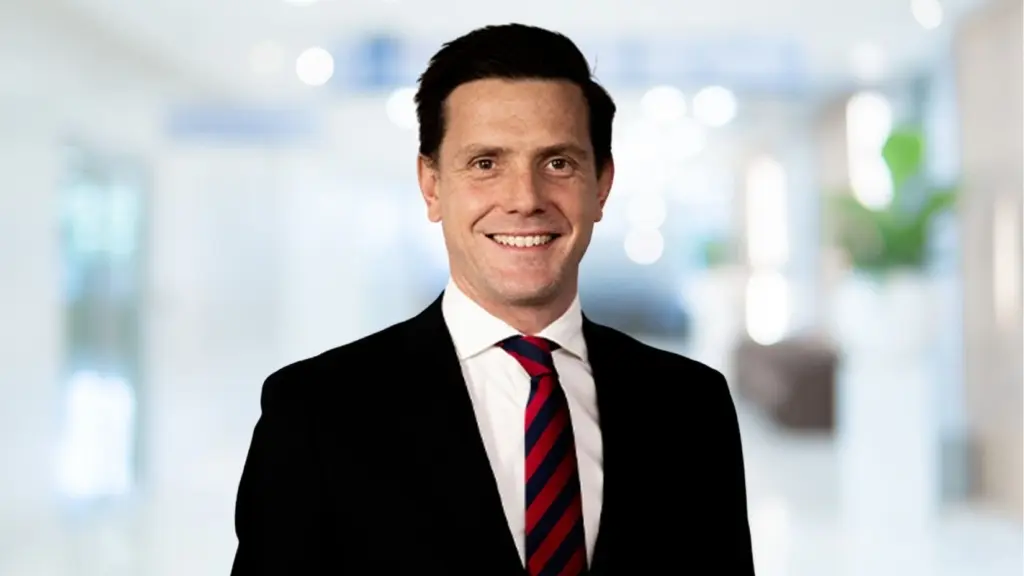
Today, however, the investment case is evolving. According to Adam Reisler, partner at StepStone Group, infrastructure is no longer simply a defensive allocation. Instead, it is increasingly becoming a gateway to some of the most powerful structural themes reshaping the global economy.
For financial advisers navigating uncertain markets, that shift could prove significant. Infrastructure offers a way to gain exposure to transformative technologies while maintaining the defensive characteristics that first attracted institutional investors.
Reisler argues that the current investment environment only strengthens the case.
“The world is moving faster than it ever has and is also moving slower than it ever will. As advisers we are meant to guide clients about the future, but the reality is we probably have no idea what the next five to ten years will look like, or even the next 24 months.”
In that context, infrastructure may provide an attractive combination of exposure and protection.
From defensive asset to structural growth story
Infrastructure has grown rapidly within private markets over the past two decades. Allocations have expanded steadily as investors recognised its diversification benefits and stable income profile. Today it is among the fastest-growing segments in private markets and is approaching the scale of some of the largest alternative asset classes.
Historically, investors focused on infrastructure for its resilience. Assets such as utilities, transport networks and regulated services often delivered stable revenues even during periods of economic volatility.
The data appears to support that thesis. Infrastructure has historically experienced lower drawdowns than many other asset classes during periods such as the global financial crisis and the COVID market shock.
Inflation protection has also been a defining feature. Many infrastructure assets benefit from pricing structures or contracts linked directly to inflation.
According to StepStone analysis, earnings growth across infrastructure sectors has historically outpaced inflation significantly during periods of rising prices. Reisler says this combination of resilience and growth has become increasingly attractive as economic uncertainty persists.
“Infrastructure has proven to be defensive, low-correlation and inflation-protected,” he explains. “But now we also have a compelling story about how it sits at the centre of the megatrends shaping the global economy.”
The capital demands of a changing world
The growth outlook for infrastructure investment is being driven by enormous global capital requirements. Energy systems, transportation networks and digital infrastructure all require substantial upgrades or expansion.
Transportation alone is expected to require more than US$2 trillion ($2.8 trillion) of annual investment over coming decades. Population growth, urbanisation and the transition to lower-carbon systems are all driving that demand.
At the same time, digital infrastructure is expanding rapidly. Data creation continues to accelerate, and computing power is expected to increase dramatically in the years ahead.
In the United States, installed IT capacity in data centres could more than triple by 2030. Building that capacity may require more than US$500 billion ($704 billion) in private capital. Energy systems face an even larger investment gap. Trillions of dollars in spending will be required globally to modernise electricity grids, expand renewable generation and support rising demand. Artificial intelligence is intensifying that demand further. Massive computing infrastructure requires enormous amounts of energy and grid capacity.
Reisler notes that the conversation around AI infrastructure is often misunderstood. “When the leaders of major technology companies meet to discuss the future of AI, the conversation is not really about technology; it is about energy,” he says.
In the United States alone, electricity demand could rise dramatically after two decades of minimal growth. That shift highlights the scale of infrastructure investment required.
Innovation reshaping the asset class
Infrastructure investing itself is also evolving. What was once viewed as a relatively static asset class is increasingly being shaped by technological innovation and new investment models.
For investors, this means identifying assets that sit at the intersection of traditional infrastructure and emerging technology trends.
One example is the growing integration between digital infrastructure and energy systems. Data centres require vast electricity supplies, prompting new approaches to generation and grid management.
StepStone has explored partnerships that combine these sectors. One initiative involves a collaboration with Alphabet, Google’s parent company, to develop a large-scale ‘virtual power plant’ network.
The system connects millions of homes through smart devices and energy management software.
“We now have grid capacity under management that is larger than the Hoover Dam,” Reisler explains. “By adjusting power usage in millions of homes by fractions of a degree, we can deliver the same capacity as a traditional generation asset.”
Such solutions highlight how infrastructure assets are evolving alongside technological change. They also demonstrate how private capital can help address energy and grid constraints without relying solely on traditional power generation.
Another emerging theme involves the next generation of data centres. These facilities are increasingly designed to operate in ways that support the broader energy grid. New facilities can dynamically adjust computing loads or energy usage in response to grid conditions. In doing so they can help stabilise electricity networks while improving utilisation of computing infrastructure.
For investors, these developments underscore the importance of selective deployment. Reisler notes that while opportunities in sectors such as data centres are expanding rapidly, disciplined manager selection remains critical.
“We might evaluate 50 data centre opportunities and invest in only five of them,” he says. “You still need to be thoughtful about sponsors, locations and technologies, even in a market with strong structural demand.”
Playing the future without predicting it
For advisers, infrastructure’s appeal may ultimately lie in its ability to bridge uncertainty.
Technological change is accelerating. New industries are emerging while others are being disrupted. Predicting the ultimate winners is becoming increasingly difficult. Infrastructure offers an alternative approach. Rather than trying to forecast which technologies will dominate, investors can focus on the essential systems that enable them.
Infrastructure assets support the foundations of modern economies. They power cities, move goods, enable communication and increasingly support the digital systems shaping the future.
For investors seeking both resilience and growth, that combination may be difficult to ignore.

Laurence Parker-Brown is head of content at The Inside Network and managing editor of The Inside Adviser and Investor Strategy News.