Monday 22nd June 2026
The Egyptian wheat loan that can answer a key challenge in client portfolios
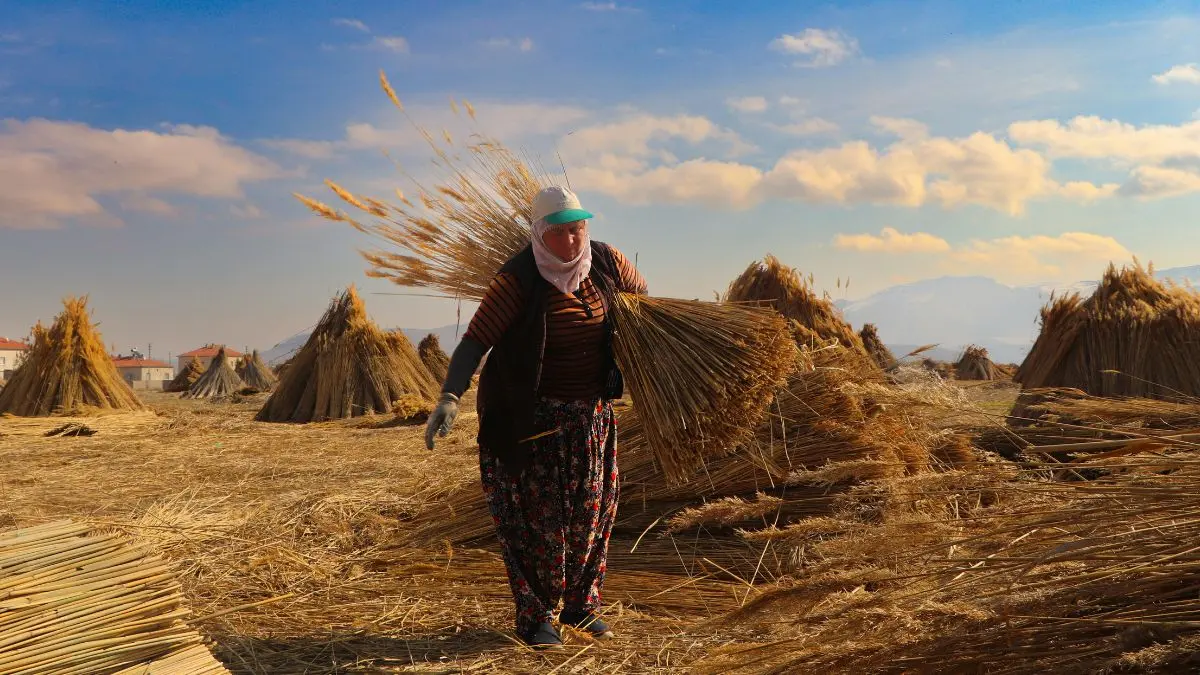
Egypt was the sovereign headline, but the wheat facility shows why investors can seek comfort in analysing the guarantees, collateral, creditor status and cash-flow control.
Advisers are conditioned to look at emerging-market credit through a familiar lens. The first questions are usually about sovereign risk, currency pressure, budget deficits and political stability. Those questions matter, but they do not always tell the full story.
In structured trade finance, the country label can be less important than the legal protections, cash-flow mechanics and collateral package sitting underneath the transaction.
That principle sits at the centre of a Federated Hermes case study on a US$1.3 billion syndicated trade finance facility used to support wheat purchases for the Egyptian government. On the surface, the transaction looks like Egyptian exposure.
A closer reading suggests something more specific. A short-term financing arrangement linked to an essential commodity, supported by a multilateral development bank, protected by a sovereign guarantee and secured by title over goods in transit.
Beyond the sovereign label
The starting point is Egypt’s bread programme, which is not a marginal item in the country’s food system. During Ramadan, demand for subsidised bread rises as families gather to break their fast. Roughly half of Egypt’s 120 million population lives at or near the poverty line, making the government’s baladi bread subsidy programme a cornerstone of the national diet.
The scale of that programme is significant. It produces around 100 billion subsidised loaves a year and requires approximately 8.5 million metric tonnes of wheat. Domestic production accounts for only around 3.5 million tonnes, leaving Egypt reliant on imports of roughly 5 million tonnes annually, more than any other country.
The point is not merely that this is an essential commodity. It is that the transaction financed a defined trade flow rather than an open-ended fiscal obligation.
Egypt’s state buyer sources wheat through competitive international tenders. Volatile grain prices, together with a weaker Egyptian pound, have increased the cost and complexity of those purchases. The financing therefore sat at the intersection of sovereign need, commodity supply and trade execution.
The case study shows that the facility generated a yield above comparable unsecured US dollar Egyptian sovereign bonds on similar timescales. That is the detail likely to catch investor attention. But the more important question is why advisers should evaluate a structured trade finance facility differently from a conventional unsecured sovereign bond.
The protection was in the plumbing
The structure tells a different story. Ahead of Ramadan last year, Federated Hermes joined a consortium of global banks in providing the US$1.3 billion facility to the trade finance arm of a leading multilateral development bank. That development bank then financed wheat purchases for Egypt’s state buyer.
This is materially different from simply buying an unsecured Egyptian sovereign bond in the secondary market. The Egyptian state buyer borrowed from an A1-rated trade finance arm of a multilateral development bank, of which Egypt has been a member since 1974.
Over that period, Egypt has had no history of payment delays or defaults to the institution, which also conferred preferred creditor status on the transaction.
The loan carried an unconditional and irrevocable guarantee from Egypt’s Ministry of Finance, clearly defined use of proceeds and comprehensive covenants. The development bank paid suppliers directly. The state buyer then committed to repurchase the wheat after 12 months at a mark-up of 12-month SOFR plus 4 per cent.
In practical terms, that protection came through several layers. The financing was secured by title over the commodities during transportation, supported by sales contracts and protected by full insurance on shipments.
This is where the transaction becomes useful as a case study. The relevant due diligence questions are not confined to the name of the country or the level of yield. They include who pays the supplier, who controls title, what happens to the commodity in transit, what covenants apply, who guarantees repayment and whether preferred creditor status applies.
What the deal tells us
The credit backdrop still matters. Egypt’s nominal GDP is approximately US$349 billion, and GDP increased by 4.4 per cent in 2025. The International Monetary Fund has also provided support. Egypt has been able to draw around US$2.3 billion from an earlier approved loan, after the fund noted progress in restoring economic stability and reducing inflation. Net international reserves exceeded US$50 billion in October 2025.
But the takeaway is that structured trade finance is not a simple substitute for sovereign debt. It is a different kind of exposure. In this case, the yield advantage over comparable unsecured US dollar Egyptian sovereign bonds reflected three things: the legal structure, the preferred creditor status of the multilateral development bank’s trade finance arm, and the essential nature of wheat as the underlying commodity.
These qualities do not of course, remove all risk. Wheat prices can move, currencies can weaken, and budgets can come under pressure. The emerging market political risk does not disappear because a transaction is structured. But it does show why the architecture of a trade finance loan can change the risk discussion.
Wheat prices move. Currencies weaken. Budgets come under pressure. And emerging-market political risk does not disappear because a transaction is structured. Not general borrowing.
Federated Hermes has been active in the institutional trade finance market since launching its strategy in 2009. The same team has worked with a multilateral development bank for more than a decade, financing more than US$975 million across 68 transactions. These numbers capture the scale and longevity of the asset class.
For clients seeking different sources of income, the Egypt wheat facility is a reminder that the label on an investment can be misleading. This was emerging-market exposure, but not just another emerging-market credit exposure. The structure, not the sovereign headline, was the centre of the proposition.

Laurence Parker-Brown is head of content at The Inside Network and managing editor of The Inside Adviser and Investor Strategy News.