Thursday 9th July 2026
Behind the GP-led revolution in private equity secondaries

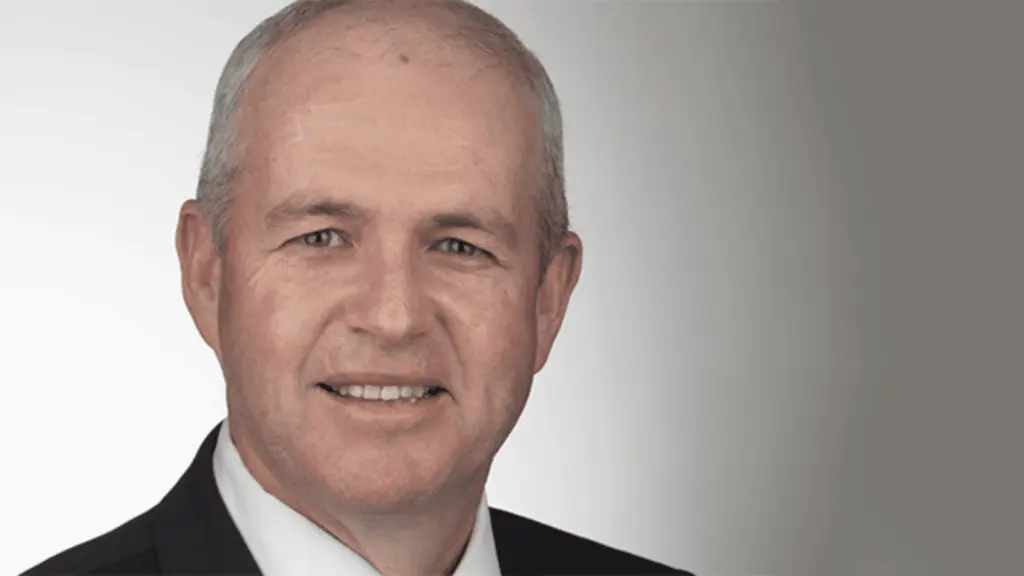
Pantheon Managing Director Jack Wasserman says the rise of GP-led secondaries has fundamentally changed what the secondaries market is for. What was once a mechanism for managers to exit problem assets has become the preferred route for holding onto the best ones.
Ten years ago, a GP-led secondary transaction often carried a stigma. If a private equity manager was engineering a deal to hold assets beyond a fund’s normal lifecycle, the assumption was straightforward: they were trying to defer a reckoning with something they could not sell at an acceptable price.
That perception has been comprehensively overturned.
According to Jack Wasserman, managing director at Pantheon, the logic driving GP-led transactions today is almost the opposite. The assets at the centre of these deals are not the ones managers want to move on from. They are the ones they want to keep.
“These GP leads, or continuation vehicles as they’re called, is really the carve-out of a trophy asset that they’ve already delivered the first leg of growth,” Wasserman says. “These management teams and private equity managers want to keep hold of that asset and deliver the next leg of growth.”
A market that has changed its character
The secondaries market grew by more than 50% in 2025. Within that expansion, the mix of deal types has shifted significantly. GP-led transactions now represent roughly half of all secondary volume, up from a market once dominated by LP-led deals involving pension funds and sovereign wealth vehicles selling down private markets portfolios.
The mechanism is distinct from a traditional secondary sale. A GP-led transaction works differently. Rather than a fund investor selling their stake in a portfolio of assets, a single manager identifies one company, or a small handful, that they believe has further to run. That asset is carved out of the existing fund into a new continuation vehicle.
Existing investors can then take liquidity at a negotiated price, or roll into the new structure and participate in the next phase of the company’s development.
For Pantheon, this shift plays directly to what Wasserman describes as the firm’s structural advantage: the depth and duration of its relationships with underlying fund managers.
The ability to evaluate a continuation vehicle with genuine conviction depends on having tracked that manager. Often, that specific company, across multiple investment cycles. “Our fund managers know their assets better than anyone else,” he says.
The anatomy of an alpha deal
Wasserman uses a specific term for the best GP-led opportunities: alpha deals. What makes them genuinely differentiated, in Pantheon’s view, is the continuity of knowledge the firm brings to each one.
In practice, Pantheon can enter a single company at three distinct points: it backs the manager’s fund at the primary stage, co-invests when a specific deal closes, and evaluates a continuation vehicle when that same manager wants to hold the asset through a second growth phase.
“Ten years ago, GP leads was a bit of a dirty word. It was private equity managers trying to get rid of some of their assets. That’s completely changed.”
That layered relationship matters because continuation vehicles are not standardised products. Each requires a fresh assessment of the asset’s valuation, the credibility of the growth thesis, and whether the price adequately reflects the risk Pantheon assumes.
For investors without deep GP relationships, that assessment is significantly harder to make with confidence.
What this means for advisers and their clients
For advisers allocating to private equity through evergreen structures, the growth of GP-led transactions changes the composition of what their clients are buying. A secondaries-oriented evergreen fund today will likely carry meaningful exposure to continuation vehicles alongside traditional LP-led deals.
Evaluating GP-led opportunities with genuine rigour demands relationships and analytical capability. Increasingly, that assessment is part of the due diligence process.
There is also a portfolio construction dimension to consider. GP-led deals are concentrated by nature. A continuation vehicle typically holds a single company or a small cluster of assets. The return profile differs from the broad diversification of an LP-led portfolio purchase.
Wasserman positions these high-conviction deals as complementary to, rather than a replacement for, the diversified exposure that a well-constructed secondaries allocation provides.
Discipline in an expanding market
The rapid expansion of secondaries volume has not gone unnoticed, and Wasserman is candid that growth brings its own risks. Some managers have raised very large funds, and the weight of that capital has introduced pricing pressure across parts of the market.
The response at Pantheon is to return to first principles: focus on mid-market, work only with managers regarded as best in class within their specialism, and resist the temptation to chase volume. “The price you pay is going to help drive the performance you get,” he says.
That discipline is especially relevant in the GP-led space. The same logic that makes continuation vehicles attractive also concentrates demand. Managers only bring their best assets to market, which means buyers are competing for the same high-quality names.
For advisers, the practical implication is that not all secondaries exposure is equivalent.
A manager with genuine GP relationships and the depth to evaluate continuation vehicles independently is in a meaningfully different position from one that allocates primarily on deal flow.
As the GP-led market matures, that distinction will matter more, not less.

Laurence Parker-Brown is head of content at The Inside Network and managing editor of The Inside Adviser and Investor Strategy News.