Monday 29th June 2026
Senjin Capital: unlocking value in Japan's reform era
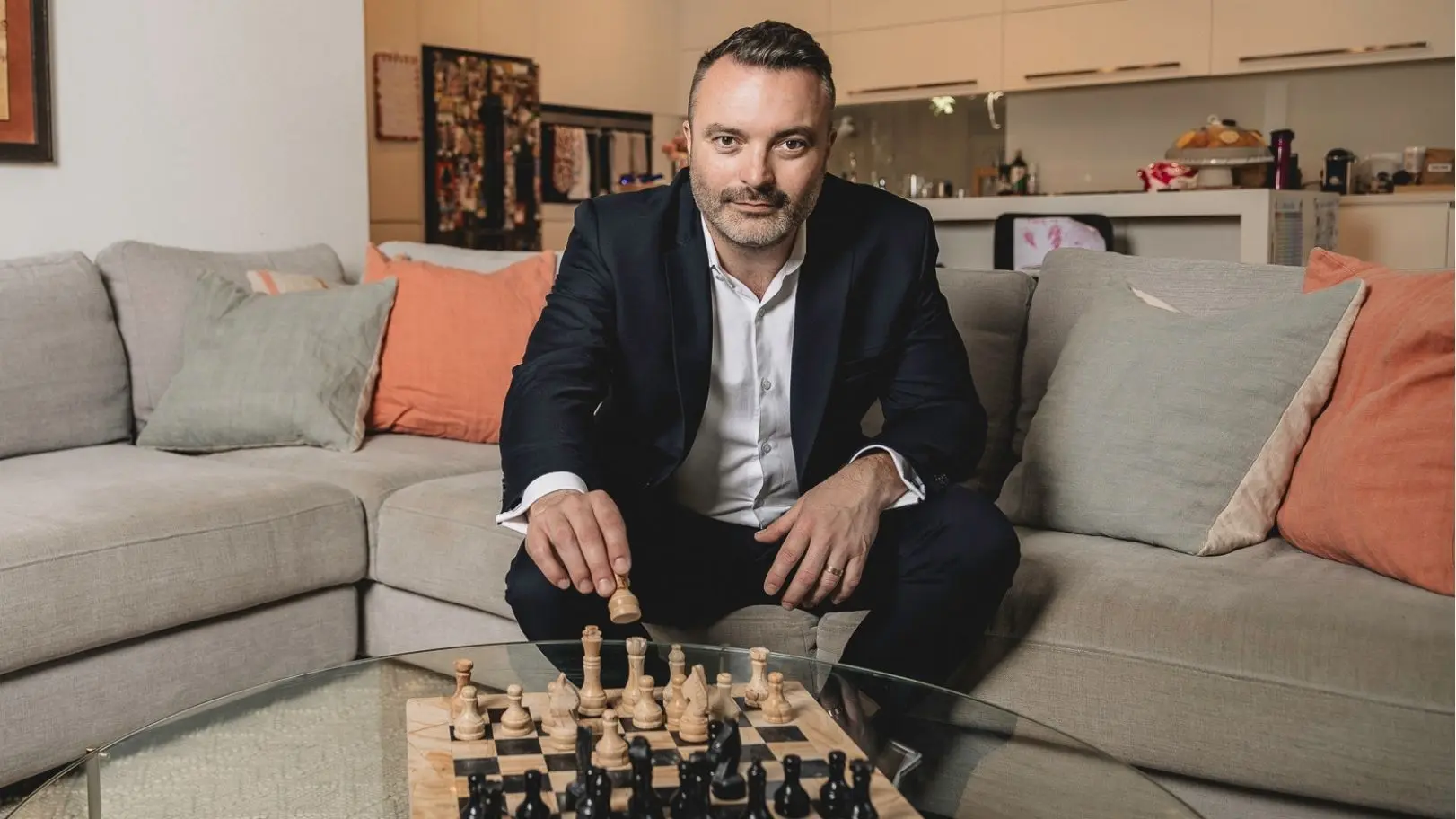
Senjin Capital co-founder Jamie Halse details how corporate governance reforms and unwinding cross-shareholdings have unlocked massive value in Tokyo, making Japan small-cap activism a compelling satellite play for advisers.
When Jamie Halse first pitched the idea of a Japan small-cap activism fund to his then-employer Platinum Asset Management in 2016, the concept may have been ahead of its time or simply waiting for the structural conditions to catch up.
A decade on, those conditions have arrived. The combination of government-driven corporate governance reform, the long unwinding of Japan’s notorious cross-shareholding structures and a generational shift in corporate culture has created what Halse describes as a genuinely target-rich environment for shareholder activism.
Halse is the co-founder and portfolio manager of Senjin Capital, an activist fund focused on small-cap Japanese equities. Speaking with The Inside Adviser, he explained the philosophy underpinning the strategy, the mechanics of how it works in practice and why Japan may be the world’s most compelling market for this approach.
Prior to founding Senjin, Halse was a senior portfolio manager for Platinum Asset Management, managing about $1 billion across the firm’s Japan strategies and a global consumer sector-focused fund, and leading the related research teams.
In his 18 years of professional investing, he says, Japan small-cap activism represents the best opportunity he has seen, as a vast swathe of the Japanese equity market opens up to activist influence for the first time
Unlocking Japan’s deep value via shareholder activism
Investors are becoming aware of the opportunities arising from Japan’s corporate reform revolution, but lack deep understanding of the market and the best ways to benefit from the deep value on offer. Halse says Senjin has built a strategy to avoid the value traps and unlock value to generate returns for its investors.
As US, global and even Japanese large-cap stocks have marched ever higher, valuations have stretched and volatility increased, many investors have been forced to accept greater business execution and market risk in their equities portfolios.
Halse and his Tokyo-based co-founder Tsubasa Umezaki launched Senjin Capital Fund I in 2025 to invest in and actively engage with deeply undervalued Japanese small-cap companies that provide an attractive combination of high return potential, and lower-than-market volatility.
The high return potential derives from deep undervaluation that can be resolved through Senjin’s active engagement with portfolio companies on issues of capital allocation, operational efficiency and growth strategy.
“We have a unique approach to Japan that differentiates us from other engagement and activist investors,” says Halse. “The deep undervaluation we capture results in lower volatility, due to the stocks’ market values being supported by hard assets like cash and real estate, in addition to relatively stable business earnings and dividends.”
The reform backdrop
The starting point for understanding Senjin is Japan’s corporate governance reform story. From 2014, the government introduced a stewardship code, to which asset managers signed-up, followed by a corporate governance code and a ‘comply-or-explain’ regime pushing companies to improve their returns on equity and unwind cross-shareholdings.
Those cross-shareholdings, the web of reciprocal corporate stakes that had insulated Japanese management teams from outside pressure for decades, had been declining since the late 1990s, but the reform era accelerated the process further.
“The reason why a lot of stocks are still so cheap, especially in the small-cap area, is that historically, management teams have not really cared about the share price,” says Halse. “They haven’t cared about shareholder returns, because they were entrenched, protected by webs of cross-shareholdings which meant outside shareholders had very little influence.”
As those cross-shareholdings have fallen, a vast swathe of the Japanese market has become, for the first time, genuinely open to activist influence. The Tokyo Stock Exchange, home to about 3,700 listed companies, is now the world’s second-largest market for activist capital, with an estimated US$80 billion ($112.7 billion) allocated to the sector.
Why Japan small-cap activism works
Halse is clear that activism is fundamentally different from conventional long-only management. “With activism you almost invert the investment process,” he says. “A typical buy-and-hold investor is backing the management team, backing the business. With activism you’re really looking for management teams that aren’t doing a good job, and trying to get them to do a better job, or, ultimately replace them.”
The structural reasons why Japanese small-caps trade so cheaply run deep. Many companies sit at a discount to the value of the cash and real estate on their balance sheets, before ascribing any value to the operating business.
This is partly the legacy of the bubble era: companies that levered-up in the late 1980s emerged from the subsequent crash deeply risk-averse, accumulating assets rather than investing in their core businesses. That conservatism, Halse notes, has been slow to wash through.
Adding to the complexity is a striking lack of financial literacy at the top of many Japanese companies. “Around 90 per cent of Japanese companies don’t have a chief financial officer (CFO),” he says.
“They have a director in charge of the corporate planning and administration department, within which sits the finance function. These management teams never really knew what return-on-equity was until the Tokyo Stock Exchange told them they had to care about it.”
Cultural factors compound this. Japanese CEOs are paid modestly by global standards but derive significant prestige from running a listed company, a status that extends to employees. Enriching shareholders at the expense of the company’s standing runs against deeply held values.
“The company is a living being to them,” Halse says. “To enrich yourself and potentially damage the company’s prestige is just not the way they think.”
The investment process
Senjin’s universe is the roughly 2,500 Japanese listed companies with a market cap below $500 million. Within that, the team, just two people: Halse in Sydney and Umezaki in Tokyo, looks for companies trading below the value of their hard assets, meaning cash, real estate and investment securities on the balance sheet, with a stable, cash-generative operating business attached. The target is more than 150 per cent upside from the point of first entry.
The easiest pathway to that upside, Halse explains, is often simply getting a company to increase its dividend.
“If a company is trading on a 3 per cent dividend yield and paying out 30 per cent of net profit, and you can get them to pay out 90 per cent or 100 per cent, then at a constant yield the share price doubles.”
In many cases, that outcome, dividend increase, buyback and an exit by selling the stake back to the company, is sufficient to capture most of the target return without requiring a complex restructuring. The decision to increase dividends is much simpler for management thau undertaking difficult operational efforts.
For situations where greater return is possible, Senjin runs LBO-style valuation models: estimating what a private equity firm would pay after liquidating real estate, deploying the cash pile and optimising margins that Japanese management teams have rarely attempted to maximise.
That analysis underpins pressure on management to consider going private, to a private equity (PE) buyer or, occasionally, a strategic acquirer. He says KKR and Bain have both found Tokyo their most profitable offices globally, largely through corporate ‘carve-out’ and friendly ‘take-private’ deals on cheap multiples where companies are facing pressure from shareholders to restructure or de-list.
Small portfolio, big returns
Senjin’s first vehicle, a highly concentrated, hybrid open/closed-end wholesale fund, has been running for eleven months. Over that period, Halse says it has returned 38.5 per cent net of fees in Australian dollar terms, or 52.6 per cent in yen terms, against a hurdle rate of 8 per cent.
Current assets under management (AUM) sits at about $10 million in the fund, with a further $15 million committed via a separately managed account for a Melbourne-based funds group.
In the September quarter, Senjin plans to launch a flagship vehicle targeting the advised wealth channel, a fund holding around 20 positions, ten in its core strategy (concentrated in the top three to five), and ten in a “shadow activist” portfolio invested in larger-capitalisation companies.
This fund will offer more regular liquidity than its first vehicle. At full deployment, Halse believes the strategy has capacity for several billion dollars. The largest Japan-focused activist funds globally each manage more than US$15 billion ($21.1 billion).
“We’re a potentially high-return and lower-than-market-risk satellite addition to a global equities allocation,” says Halse. For advisers looking at where Japan small-cap activism fits, the structural reform story, and the opportunity it continues to create, still has a long way to run.
James is an experienced senior journalist and editor of The Inside Network's publications.