Monday 11th May 2026
Private equity’s next edge will be operational, not financial
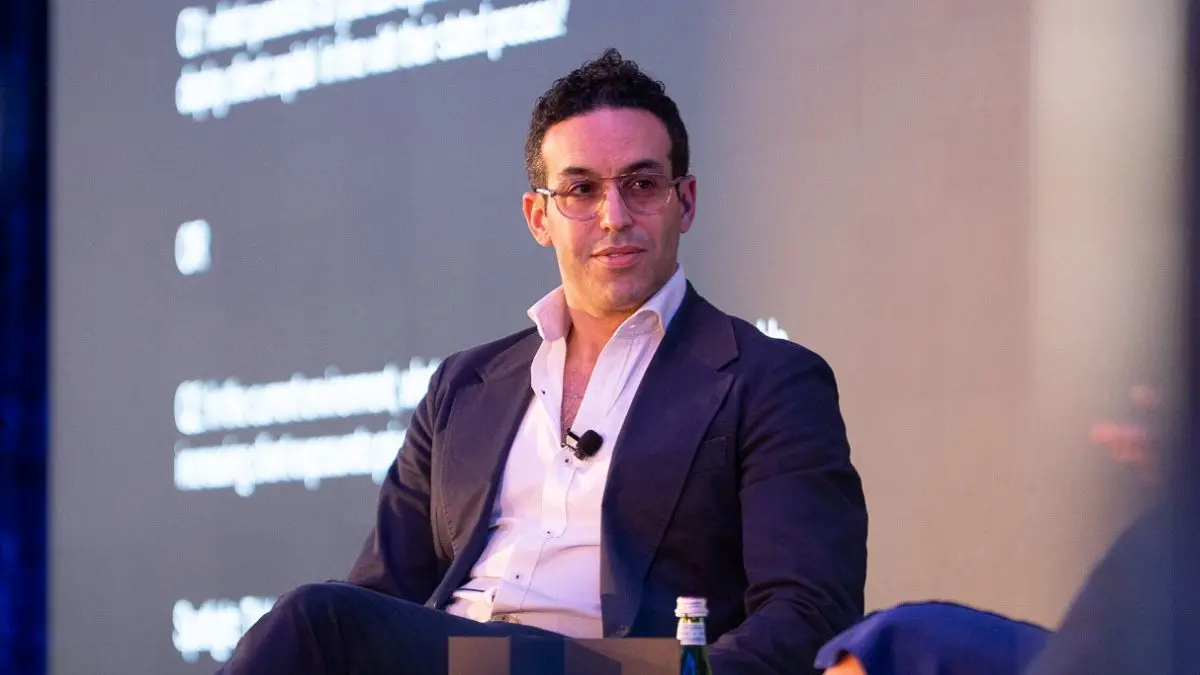
Alceon’s Zac Midalia says the next winners in private equity will combine traditional dealmaking with AI-led operational change.
Private equity has spent decades relying on a familiar formula. Buy a business, add leverage, tighten costs and hope to sell at a higher multiple.
Zac Midalia’s view is that this playbook is now breaking down, and that advisers need to rethink what a winning private equity manager will look like over the next decade. In his telling, the old drivers of return are fading, exit markets are clogged and the firms best placed to outperform will be those that can create genuine operational improvement, increasingly with AI at the centre of that effort.
The old playbook is running out of road
Midalia’s core argument begins with a blunt assessment of what has changed in private equity. The industry can no longer rely on leverage and multiple expansion to generate returns in the way it once did. Entry multiples have risen sharply, debt has become more expensive and the path to exit is much harder than it used to be. In that environment, the simple financial engineering model that served the industry well for years is losing its potency.
“The old return drivers, which is leverage and multiple expansion, are gone,” Midalia said. That line does a lot of work. It recasts private equity as a much more operational exercise, where value must be created inside the business rather than around it.
According to him, the managers capable of generating strong returns in future will be those able to improve productivity, pricing, systems and execution in tangible ways. That shift also helps explain why dispersion in returns is widening. If easy money and multiple expansion are no longer doing the heavy lifting, the gap between strong operators and weak ones inevitably grows.
For advisers, that means manager selection becomes more consequential. Private equity still offers upside, but the source of that upside is changing.
AI is becoming a real operating tool
Where Midalia pushes the argument further is on the role of AI. He is not talking about marketing decks, chatbots or surface-level efficiency claims. His view is that “agentic AI”, autonomous tools that can perform defined tasks inside a business, is becoming a genuine operating lever for private equity managers.
For founder-led businesses in the lower mid-market, that could be transformative. Many are still running on spreadsheets, manual processes and owner instinct. AI can automate reconciliations, improve reporting, handle basic customer service tasks and sharpen internal workflows. In lower mid-market businesses, where resources are tighter and systems are often less mature, the productivity impact can be much more immediate.
Midalia argues that this is where the next layer of private equity alpha will come from. The appeal is not that AI replaces management. It is that it gives management a much more powerful set of tools. A business that was previously under-optimised can become more scalable, more data-aware and more efficient without needing a huge corporate overhaul.
His case study was telling. At Alceon, one agentic AI solution built for a home builder reduced the cost of rendering significantly and cut turnaround time from two weeks to two minutes. The business, he said, saved $2 million in a year, with many users preferring the AI-generated output to the human version. The implication is clear. In the right business, AI is no longer theoretical. It is commercial.
“The private equity firm of tomorrow is going to look very different.”
The winners will be hybrid firms
Midalia is careful not to argue that private equity becomes a technology business. It remains, in his words, a people business, especially in the lower mid-market where founders are selling to trusted partners rather than abstract pools of capital. Relationships, judgement and credibility still matter. Boards still matter. Negotiation still matters. The point is that these traditional capabilities are no longer sufficient on their own.
That leads to his central idea of the “hybrid” private equity firm. The winners, he argues, will combine traditional dealmaking DNA with AI-native operating capability. They will still know how to source deals, work with founders and shape strategy, but they will also know how to deploy AI tools through portfolio companies in a systematic way. This is not about bolting on a separate tech team after the fact. It is about embedding that capability into the investment model itself.
In practice, that means flatter teams, more operating horsepower and a more codified value creation playbook. Each AI solution developed for one portfolio company can become part of a broader toolkit for the next. Over time, that creates a product-led competitive advantage that is hard for slower-moving managers to replicate.
The lower mid-market may be the sweet spot
Midalia’s strongest conviction lies in the lower mid-market. His reasoning is straightforward. This is where the gap between current practice and potential improvement is widest.
Many founder-led businesses are large enough to matter, but still early enough in their maturity to benefit materially from better systems and sharper operating processes. That matters for advisers because it sharpens the criteria for manager selection.
Midalia says allocators should be asking different questions now. Does the manager have real AI capability, or just rhetoric. Is the team set up to blend operational and investment expertise. Does AI improve the economics of the target business or threaten them. Does the capital base allow the manager enough flexibility to hold and compound value over time.
These are more specific questions than private equity investors may have asked in the past. But that is really his point. The criteria for backing private equity managers are changing. The track records that mattered yesterday may not be enough tomorrow.
For advisers assessing the asset class, Midalia’s message is both simple and demanding. Private equity remains attractive, but not on autopilot. The next generation of winners will not simply be those with the longest histories or the biggest brands. They will be the firms that understand how to combine trusted human judgement with new operating tools, and do so before the rest of the market catches up.

Laurence Parker-Brown is head of content at The Inside Network and managing editor of The Inside Adviser and Investor Strategy News.