Monday 5th October 2026
Infrastructure stopped being a defensive allocation and nobody told the price
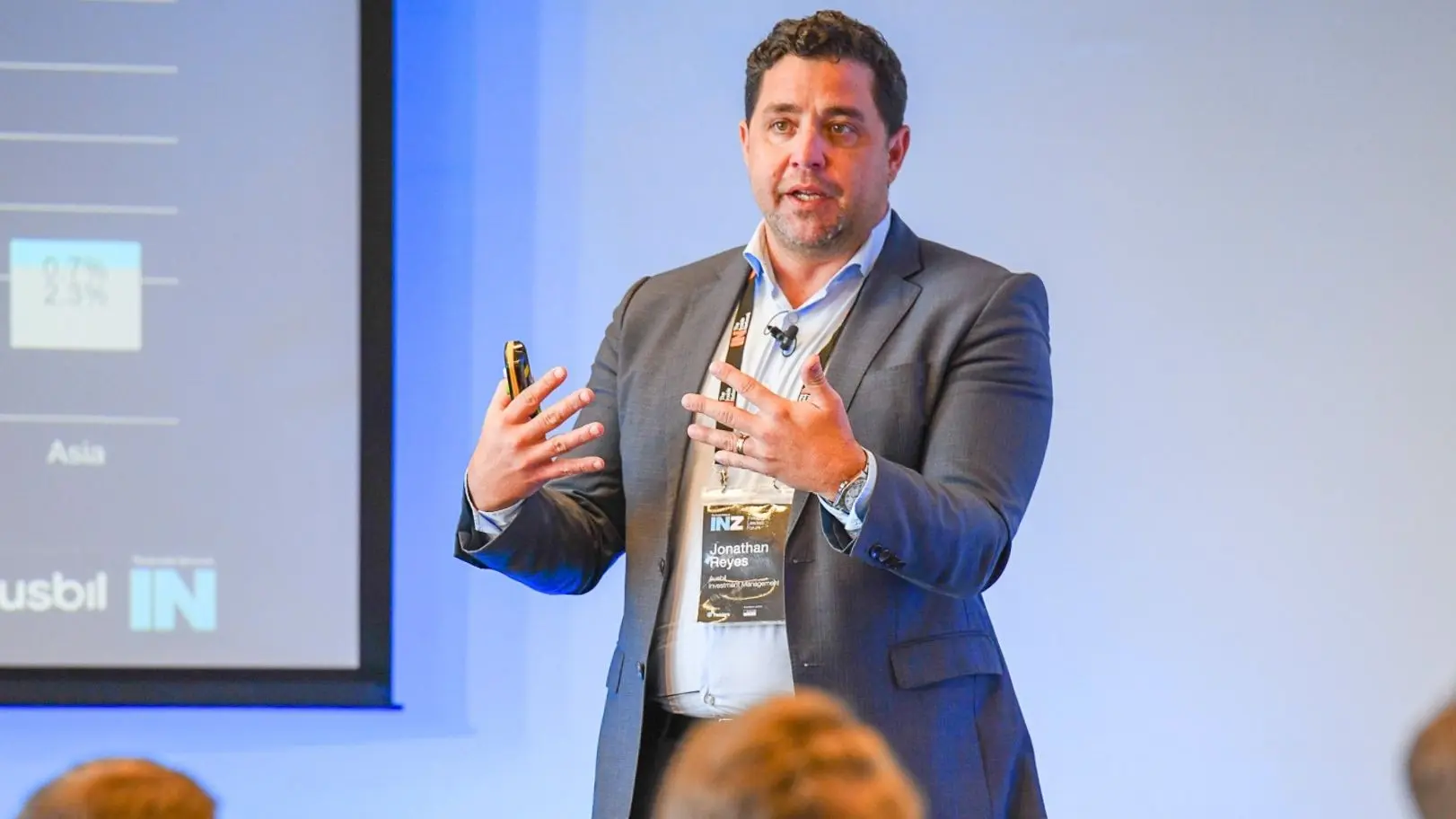
Ausbil’s Jonathan Reyes says infrastructure has become a growth asset class because power is the binding constraint on the AI build, and that private wealth portfolios are carrying a fraction of the allocation the largest investors already hold.
AI, electrification, energy security, manufacturing and reshoring have one thing in common. None of them happen without infrastructure. That has moved the asset class out of the defensive bucket it occupied for two decades and given it a growth layer on top of the cash flows.
The allocation numbers have not caught up, at least not in wealth portfolios. Jonathan Reyes, co-head of global listed infrastructure at Ausbil, puts infrastructure at about 5 per cent of assets across the top 100 global investors, and above 10 per cent in Canada and Australia, the early adopters.
The rate of change is the part he thinks matters most. The US has gone from 2 per cent to 5. Private wealth is a long way behind, and Reyes says he rarely meets a private wealth manager holding 10 per cent, with few holding even 5.
His illustration is Warren Buffett. Berkshire Hathaway had no infrastructure allocation in 2000, and by the end of Buffett’s career it was more than 30 per cent of the portfolio, Burlington Northern among the largest investments he made.
Poles and wires
Reyes is careful about what he means by infrastructure, because the industry has not been. When the first generation of private investors did well out of toll roads, poles and wires and airports in the 1990s, demand outstripped the supply of those assets, and managers widened the definition.
Ausbil’s response is to narrow it again, to what Reyes calls essential infrastructure, keeping clear segmentation between infrastructure and property, or infrastructure and an industrial company that happens to own hard assets.
Lower market risk, lower correlation to equities, less cyclical cash flows and a direct link to inflation only hold if the holdings are the ones that produced those characteristics.
The inflation link is the sharpest example: 97 per cent of the portfolio has a direct mechanism to capture inflation, written into regulation or toll concessions.
Transurban’s Melbourne CityLink escalates quarterly at the greater of 4.5 per cent or CPI, so the investor takes the upside if inflation runs and a real return if it does not. Those mechanisms also lag, which is why the spike of three or four years ago is still passing through.
Energy addition, not transition
Reyes spent his first decade at Ausbil talking about the energy transition, moving off high carbon generation into renewables. That language has gone.
“It is about energy addition. We need new electrons in any form you can get.”
Lead times explain the shape. Wind, solar and batteries take about 18 months to add, gas three to five years, nuclear around 15, so most new supply is renewable by default rather than by preference. It is also why coal plants scheduled to retire are being extended instead. Nothing can come off the grid.
The demand behind it is the AI build, and Reyes follows the capital. Hyperscaler capital expenditure is approaching US$750 billion, spent on chips, land and power. Meta’s Hyperion project in Louisiana runs to about five gigawatts, roughly the power draw of Sydney and Melbourne combined, on a site the size of Manhattan. “The power side specifically is what is controlling the clock in the AI race.”
For the first quarter of this century, US power demand was flat, as efficiency gains offset economic growth, so utilities never had to expand capacity. They are now looking at double-digit capacity growth, and Reyes is blunt that not every management team is built for it.
The rates myth
The objection he hears most is that rising rates are bad for infrastructure. The record is less tidy. Through the 2003 to 2007 cycle, with 17 consecutive US rate hikes, listed infrastructure outperformed by more than 50 per cent against an S&P 500 up around 20.
From 2015 to 2018, US utilities as a proxy returned 45 per cent against 39 for the index. The most recent cycle was flat. What matters, on his argument, is why rates are rising. Inflation that the portfolio captures contractually, or economic strength the assets carry volumes from.
That leaves the final question mark of valuations. Before the pandemic, infrastructure traded at a premium to global equities on quality grounds.
Today, the market trades on multiples last seen in the dot-com era while infrastructure sits in line with its own long-run averages, despite an underlying growth rate roughly double what it was.
“They are valuing utilities that were historically growing at three to 5 per cent and are now growing at 13 per cent. They think there is a cliff they are going to fall off.”
The cliff is worth taking seriously, because it is the same argument in reverse. A growth layer built on hyperscaler capital expenditure concentrates the asset class in power, the exposure that would reprice if that spending slowed, leaving a portfolio bought for defensive characteristics holding a growth bet. The inflation lag cuts both ways too: in 2022 discount rates moved long before the pass-through arrived.
Which makes the definitional question crucial in understanding the direction of travel for the assets. Investors allocating here are buying either a defensive building block or the power side of the AI trade, and the manager’s definition of infrastructure decides which.

Laurence Parker-Brown is head of content at The Inside Network and managing editor of The Inside Adviser and Investor Strategy News.