Monday 23rd November 2026
Ten years in, India Avenue says the index is the wrong way to buy India
Almost any fund manager will tell you, if it gets there, that is, that the first ten years are the hardest. For a manager running a single-country emerging-markets fund out of Australia, the first ten years may be the whole test.
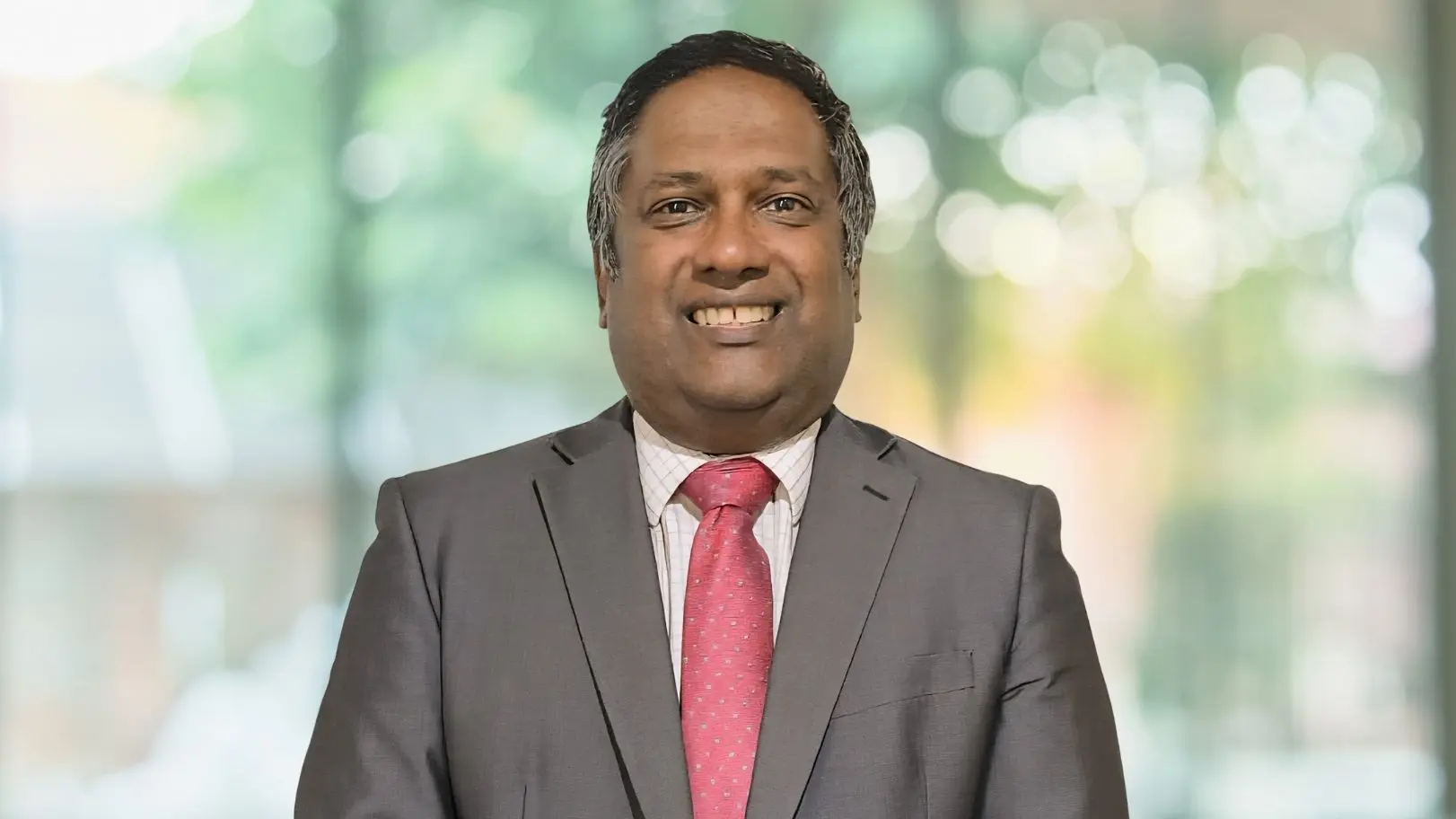
Sydney-based fund manager India Avenue Investment Management has just passed its tenth anniversary. Its managing director, Mugunthan Siva, says that for a single-country manager, simply notching-up a decade is worth noting.
“When you’re telling people to invest thinking five to ten years out, the first thing you want to highlight is survivability, ensuring that you’re going to be there in ten years,” he says. “That’s been the issue for some single-country funds.”
India Avenue chose the slow route. It avoided the listed investment company (LIC) structure, which keeps capital locked in but often trades at a persistent discount that invites activists. India Avenue banked on active management to deliver better returns than passive, kept costs low and, until recently, had no dedicated salesperson.
Most of its growth came from education. “When I look at our top 20 investors, they’re all people who have travelled to India with us on our investor immersion tours, which we run every year,” Siva says.
Ten years of returns
India Avenue Investment Management came out of the dedicated India division that ING Investment Management established in 2005. Siva and his co-founders, Rajeev Thakkar and Saijan Raut Desai, built multi-manager strategies for Indian capital markets at ING, but often tossed around the idea of a stand-alone India-focused firm, run from Sydney. In 2015, conviction turned to action, when the trio quit their jobs and established India Avenue. They launched the India Avenue Equity Fund in September 2016.
That means the fund now has ten-year numbers. At 30 September 2026, the India Avenue Equity Fund has generated a net return of 8.78 per cent (after fees, but before Indian capital gains tax) a year, compared to 8.23 per cent for the MSCI India index (net in A$).
India Avenue added the Cboe-listed India Avenue Active ETF (Cboe ticker: IAEF) in March 2025. Since inception, the India Avenue Active ETF is down 5.25 per cent a year, holding up better than the MSCI India index (net in A$), which has retreated 8.17 per cent a year.
Siva says most active India funds and ETFs have struggled to beat their benchmark due to comparisons against an untaxed benchmark like the MSCI India, and also being exposed to expensive trading costs of operating in the Indian markets due to global custody costs.
The buy-high problem
Siva says the firm’s strong education focus has always been needed because India suffers from a familiar investor flaw. Most investors accept the story: the world’s most populous country, the obvious counterweight to China, and a legal and accounting system built on English-language foundations. Their timing is the problem.
“Everyone wants to pile in when returns look great, as they did in 2024 after India had a bit of a golden run, and no one wants to pile in when they should, when markets come off a bit,” Siva says. “It’s a boring demographic story which has done well for the last 25 years and will probably do well for the next 25, but people keep buying it at peaks. Their invested experience is not quite the same as what you might show on your since-inception numbers.”
Part of the reluctance is unfamiliarity. India is one of the world’s five or six largest equity markets, with about 6,000 listed companies, but “the average Australian wouldn’t be able to name three to four Indian stocks,” Siva says.
The past two years have tested that patience. Global capital chased the AI trade into semiconductors, so foreign investors sold India and bought Korea and Taiwan. Those two markets now make up close to half of the MSCI Emerging Markets index, and a handful of stocks account for about a third of it.
Siva says one buyer has kept buying. Indian households now put US$3 billion–US$4 billion a month into mutual funds and the stock market, and that steady flow is bringing a wave of companies to list. “At some point foreign investors are going to come back to India, and this structural investment from local investors is going to continue,” he says. “Hopefully there will be two buyers of the market.”
Yesterday’s success stories
India Avenue makes three arguments to investors, in order. First, why India? Second, why Indian equities? Third, why pay for active management when five India ETFs are now listed in Australia? (Those are the ASX-listed ETFs of VanEck, Betashares, Global X and Fidelity, while India Avenue’s India Avenue Active ETF (ticker: IAEF) is listed on Cboe). Other than India Avenue’s, Siva says most of them follow or stay close to a benchmark.
“Australians are being inconsistent here. They think governance is an issue – they’ve heard things about corporate governance and corruption and geopolitics they don’t understand. So why would they then go and invest passively? That’s the big anomaly in emerging markets,” he says.
Siva points out that India is one of the largest markets by number of listings, with more than 6,000 listed companies. “Not many people know that. Really, our universe is the top 1,000, which takes you down to about A$150 million in market capitalisation. And you can find in that universe companies that are absolutely unknown in terms of foreign investors. It’s our job to communicate to the Australian investor why we’ve invested in those companies.”
His main argument is that the index looks backwards. “The story in India is you want to find a CBA before it becomes CBA,” he says. HDFC Bank has been the market darling for 20 years because it benefited as nearly every Indian opened a bank account linked to a mobile phone. “The index today is full of yesterday’s success stories. That stock is now not the way to play the India story, but having said that, we’ve recently increased our exposure to HDFC, because it got so cheap.”
Swapping places with China
Siva expects tomorrow’s winners to come from a reversal of roles with China. China grew rich on exports and is now trying to shift towards domestic consumption. India went straight to services and consumption, and now wants a larger share of global supply chains. “Even if we go from 3 per cent to 4 per cent of global supply chains to 5 per cent to 6 per cent, that’s huge,” he says.
Pharmaceuticals are his clearest example. India supplies about 40 per cent of US generic drugs and has US Food & Drug Administration (FDA)-approved plants both at home and abroad. The Wall Street Journal estimates that US$500 billion ($714 million) of patented drugs lose protection over the next decade; Indian manufacturers already hold the approvals they need.
Prices typically fall about 90 per cent when a patent expires, but Siva says the remaining 10 per cent would still be worth almost twice the current size of India’s entire pharma sector: “this still feeds into significant growth from generic exports from India’s pharma companies,” he says. India Avenue backs this thesis with a hefty overweight: Pharma is 3 per cent–4 per cent of the index, but accounts for about 12 per cent of India Avenue’s portfolio.
Phones and auto components are the other manufacturing themes the portfolio reflects. “Things we’re not used to thinking about India for,” Siva says.
Local eyes, Australian custody
India Avenue employs four people in Sydney and four in Mumbai, and it is open about not doing all the research itself. It is a multi-manager but not a fund of funds. It appoints local managers on high-conviction mandates covering their top 20 to 25 ideas; India Avenue places every trade, and every stock is held by its own custodian.
That local knowledge matters most in mid and small caps, which reach down to companies worth about $150 million. It also matters because founding families own about 45 per cent of the Indian market. “If you’re not invested with the right families who are aligned to your interests, you’re going to look at a good company and say, ‘it wasn’t a great investment,’” Siva says.
He says governance has improved markedly over the past 10 to 15 years, as companies seeking foreign capital have changed their behaviour, helped by the Modi government’s anti-corruption push.
The fund is long-only, holds stocks for three to five years and turns over about 30 per cent–40 per cent of the portfolio a year. It may hedge with index futures or options when markets look dangerous, but it has never hedged the currency. The cost of hedging the rupee has fallen from about 350 basis points to about 150, but after the Australian dollar’s rise over the past year, Siva thinks “the horse has already bolted.”
The pitch
Asked for his elevator pitch, Siva goes back to demographics. India has 1.5 billion people with an average age of 29, and only about 35 per cent of them live in cities. That has produced real GDP growth above 6.5 per cent, earnings growth above 10 per cent and equity returns of about 11 per cent–12 per cent.
Sceptics argue that India has a huge workforce just as AI automates work. Siva disagrees. “Over multiple decades, the ability to adapt is high in India,” he says. “When COVID came, everyone said too many people, it’s going to be a disaster for growth. They actually came out of it strongly.”
He says the hardest part of the case is not the economics but persuading investors to “buy before Prime Minister Modi is back on the cover of Time.”
The serious, institutional investor doesn’t see it that way, he says. “When we started the fund, India was a niche, tactical Emerging Markets trade, bundled into a single EM sleeve, with governance, volatility and access seen as the barriers. Ten years later, India is a strategic allocation. As the world de-globalises, regional allocations carry more distinctive attributes for asset allocators; India is now chosen deliberately, not inherited from an index,” concludes Siva.

James is an experienced senior journalist at The Inside Network.