Monday 26th October 2026
Takeover bids are telling advisers where the value has moved

Takeover bids for two NorthStar holdings, Energy One and Cleanaway, point to where valuations have moved, with small caps trading at a discount to their own history as large caps trade at a premium.
Australia’s appetite for electricity is growing, and the pace keeps quickening. Data centres, hotter seasons and the push to electrify homes, transport and industry all add to the load on the grid. When building growth exposures for clients, this raises a practical question about which businesses stand to benefit most, and how those long-term prospects flow through to valuations.
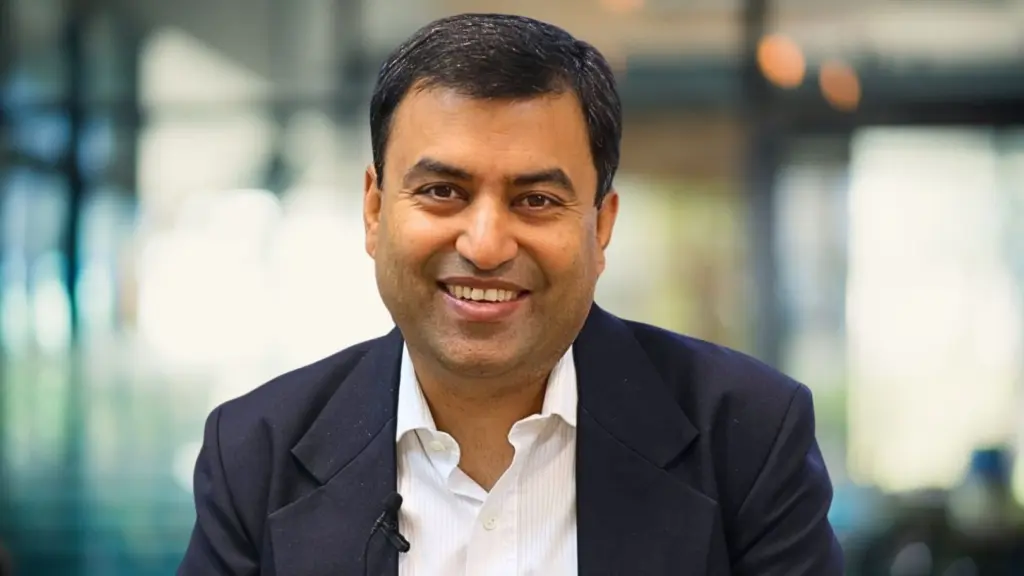
Claudia Kwan, portfolio manager at NorthStar, sees one of the clearest opportunities among the specialist contractors that build, connect and maintain the network. She believes the energy transition has entered a new phase, and that many investors are still early in recognising where its benefits are likely to flow.
The scale of the task
Australian Energy Statistics show that in 2023–24, electricity accounted for around 20 per cent of Australia’s final energy consumption. To reach the federal government’s 2035 emissions reduction target of 62 to 70 per cent below 2005 levels, and its pathway to net zero by 2050, the country needs to electrify almost everything. Deloitte estimates this requires more than $420 billion in additional investment, on top of business as usual spending.
Data centres form a growing part of that story. “Data centres are emerging as one of the most important new sources of Australian electricity demand, and the effect is likely to be considerably larger than their current contribution suggests,” Kwan says. “In addition to the initial capex, they consume electricity almost continuously, have very high load factors and are increasingly power dense.”
The Australian Energy Market Operator’s (AEMO) 2026 Electricity Statement of Opportunities, published in August, supports that view. It forecasts data centre electricity consumption on the National Electricity Market (NEM) rising from approximately 5 TWh in FY2025–26 to 34 TWh in FY2035–36. That is a sevenfold increase in 10 years, taking data centres from about 3 per cent to 13 per cent of NEM grid-supplied electricity.
The weather adds another layer. Kwan estimates approximately 3 TWh of incremental annual NEM electricity demand from the 2026–27 El Niño event alone, and she expects the effect to persist.
“Following heatwaves across Europe and a warm winter in Australia, the increased demand for electricity from hotter weather will continue beyond this year’s El Niño.”
Owning the connections in between
NorthStar positions for the theme through the contractors that connect everything between the utilities and generators at the centre of the build-out. This approach gives the fund exposure to the work itself, whichever projects proceed.
Southern Cross Electrical Engineering is one example. “It is the electrician, working as a contractor to the utilities and generators rather than competing with them,” Kwan says.
Tasmea offers a different kind of exposure. Kwan describes it as “a portfolio of businesses focused on maintenance and repairs, much of it in remote locations, which makes it less a single bet and more a diversified way to own the servicing side of the build-out”.
Heat, copper and water
The thesis extends well beyond companies directly connected to the grid. NorthStar also holds positions around thermal management, critical minerals, copper substitutes and water. Kwan traces each one back to the same root cause.
“Thermal management exists to solve one problem, reducing the heat that data centres generate, because heat drives both the energy and water needs of a facility, and both are now first order cost and growth constraints,” she says. “Every data centre operator and semiconductor company is actively working on this.”
NorthStar holds Advanced Energy Materials, a chemicals business producing high-purity aluminium derivatives used in thermal management. Its products serve as a direct input into solving the heat problem.
Copper forms part of the thesis too. “The market has been structurally short of supply for years, and existing mines are approaching the end of their productive life,” Kwan says. “Substitute technologies already exist, but most are only economical at higher copper prices and as copper rallies, expect substitution technology to move from theoretical to commercial.”
The water constraint
Water, in Kwan’s view, is the theme with the most room for the market to catch up. “Water, in our view, is the constraint the market is still under pricing entirely. It has always been treated as a free, abundant commodity, and the way it has been used, reused and treated reflects that assumption,” she says.
“That is changing. Water is being repriced, use is being restricted, and decades of underinvestment in water infrastructure are becoming visible at the same time as extreme weather events force a rethink of flood risk and water security for both industry and communities.”
NorthStar’s holding in Vysarn reflects this view. Vysarn is an integrated water company offering end-to-end solutions across use, reuse, treatment and advisory work. That breadth makes it a wider way to own the water-repricing thesis than a single infrastructure asset would be.
A long runway
Kwan links part of the opportunity to the way the market has traditionally approached contractor valuations.
“Many investors are still not positioned for the structural theme,” she says. “That may be because contractors have historically been viewed as cyclical plays rather than beneficiaries of a multi year, possibly multi decade, structural theme.”
With demand from data centres, the weather and electrification set to build over the next decade, NorthStar’s focus on the businesses that wire, cool and service the system offers a fresh perspective on energy transition exposure. When reviewing growth allocations in client portfolios, that longer horizon provides a helpful lens for weighing contractor valuations against the scale of investment still ahead.

Cristina is a contributor and content manager at The Inside Network.