Monday 21st September 2026
Cathie Wood’s conviction is undimmed and that should worry the skeptics
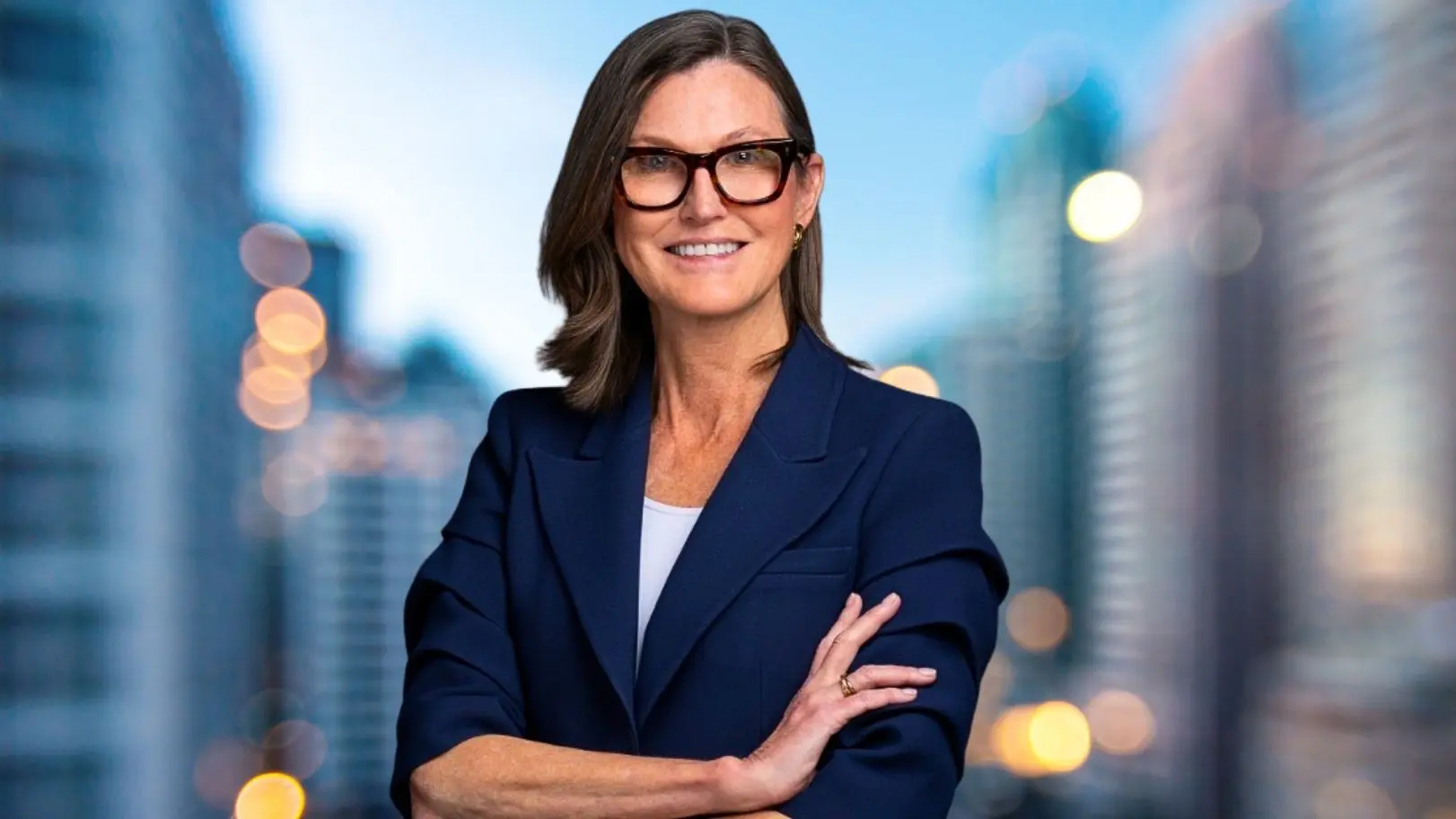
Private markets are where the next generation of trillion-dollar companies is incubating, and that's where renowned tech investor Cathie Wood has an opportunity for Australian wholesale investors.
For someone who believes passionately in the power of disruption, Cathie Wood certainly lives what she preaches.
Famously, Wood was chief investment officer at AllianceBernstein when she had the idea of actively managed exchange-traded funds based on disruptive innovation. The firm wouldn’t do it, so she left in January 2014 and formed ARK Investment Management LLC to do it herself.
In October that year, ARK launched its flagship product, the ARK Innovation ETF (ARKK).
Twelve years of disruptive conviction
Since inception, ARKK has earned investors an annualised total return of just over 13.1 per cent. That performance has swung sharply, reaching 152.8 per cent in 2020 before falling to –67 per cent in 2022.
Since that nasty year the fund has posted three yearly gains in a row: 67.6 per cent in 2023, 8.4 per cent in 2024 and 35.5 per cent in 2025. At time of writing, ARKK is up 5 per cent for 2026.
Over the journey, Wood has gained a reputation as one of the savviest tech investors operating in the public markets, with famous early punts on Tesla, NVIDIA and other AI plays. Still a big proponent of AI, more recently she has championed areas such as DNA sequencing, robotics, energy storage and space technology.
Critics point to some failed investments and the massive swings, soaring during tech booms and plunging during market corrections. Wood herself is at pains to point out that her funds look out five to ten years, and much of that volatility is tied to market sentiment.
As of mid-2026, ARK Investment Management manages a reported US$30 billion ($42.2 billion) across its family of 12 ETFs. At its peak in February 2021, the firm managed more than US$50 billion ($70.4 billion).
ARK’s actively managed portfolios tend to hold approximately 40 to 60 domestic equity securities and US-listed ADRs (American depositary receipts). These are instruments through which foreign companies list on US stock markets. The family of ETFs currently holds positions across a combined 116 stocks.
A new door opens for Australian investors
For the first time, Associate Global Partners has launched a direct Australian feeder vehicle into ARK’s US disruptive innovation strategy.
The vehicle gives Australian wholesale investors access to the ARK Venture Fund, a closed-end fund ARK launched in September 2022. The fund targets long-term capital growth by investing in both private and public companies focused on disruptive innovations, including artificial intelligence, robotics and genomics.
The local manager, Associate Global Partners Limited, is an independent, multi-boutique asset management firm that trades on the ASX under the ticker ‘APL.’ Associate Global Partners’ ARK Venture Fund is open for investment.
Deflation by disruption: the macro thesis
Speaking recently to potential Australian investors in a webinar, Wood didn’t so much answer questions as deliver a thesis, one she has been refining since 2014, when contrarian bets on “technologically enabled disruptive innovation” were about as fashionable on Wall Street as a fax machine.
Wood’s central claim is that we are living through a technology revolution large enough to bend the two macro variables that keep every fund manager awake at night: growth and inflation.
Her five platforms, robotics, energy storage, artificial intelligence, blockchain and ‘multiomic’ sequencing (which combines two or more molecular layers), are no longer speculative side bets, in her telling. They are forces big enough to lift real GDP growth while pushing inflation down, possibly into outright deflation in patches.
It’s a bold call at a moment when markets are nervously parsing tariff threats, interest-rate paths and cracks in private credit. Wood’s response, essentially, is: we’ve seen this movie before.
She likens today’s environment to the 1980s and 90s “wall of worry,” and reminds listeners that Black Monday’s 25 per cent one-day crash in 1987 didn’t stop the market grinding to new highs.
Technology, not sectors
Whether you buy the macro framing or not, the more interesting part of Wood’s pitch is methodological. Ark doesn’t organise its 15 analysts by sector or industry.
Instead, it organises them by technology, because as costs on the learning curve fall, these platforms cut across every industry rather than sitting neatly inside one.
The Tesla example she gives is instructive. A traditional auto analyst, however sharp on internal combustion, simply cannot value a company that is really a bet on robotics, energy storage and AI convergence simultaneously. Ark puts three specialists on the same model and lets them argue it out.
It’s a structural explanation for why Ark’s Tesla numbers have historically diverged so sharply from consensus.
The same convergence lens shapes Wood’s boldest call of the day: autonomous mobility, spanning cars, trucks, drones and air taxis, scales globally from billions in revenue to more than US$10 trillion ($14 trillion) within five to ten years.
Reading Elon Musk
Inevitably, the conversation returned to Elon Musk, whom Wood has followed for two decades and backed across multiple vehicles. Her explanation for his productivity is less mystical than it sounds. He doesn’t run his companies day to day.
Instead, he sets milestones and becomes obsessive when they slip, applying first-principles thinking rather than deferring to industry convention. For Tesla, that meant repurposing the consumer-electronics battery supply chain rather than reinventing one from scratch, as legacy automakers tried and largely failed to do.
Wood notes, with evident satisfaction, that Musk only started using the word “convergence” himself last year, and that Ark suspects he reads its research.
The SpaceX case
The most compelling case study Wood offered was SpaceX, and it’s worth dwelling on because the numbers are extraordinary even by Ark’s standards.
Wood points out that SpaceX holds a genuine ten-year lead over any rival launch provider. Jeff Bezos’ Blue Origin remains the closest competitor, and even it has yet to successfully re-land and reuse a rocket into a desired orbit. A launch pad mishap in May has grounded Blue Origin until at least year’s end.
But the rocket business, Wood insists, isn’t really the prize. It’s the enabler for Starlink. SpaceX now pegs Starlink as a US$1.6 trillion ($2.3 trillion) communications opportunity, ten times Ark’s own prior US$160 billion estimate.
The company aims not just to fill rural connectivity gaps but to “overtake all of global telecommunications,” as Wood puts it. “That’s its total available market, not just areas where it’s impossible to get cell service,” she says.
Layer on top of that the orbital data centre opportunity, which Wood says Musk raised with Ark only nine months ago and which the firm has been modelling ever since. Whoever controls the largest, cheapest computing capacity wins the AI race.
SpaceX, through its terrestrial data centre business alone, has already turned xAI from a heavy loss-maker into what Wood describes as a “genuinely profitable neo-cloud operator.” The company reportedly rents capacity to Anthropic and Google at US$34 million ($47.9 million) and US$50 million ($70.4 million) per megawatt respectively.
Whether Starship’s upper-stage booster becomes reliably reusable, a live, unresolved engineering question Wood flags candidly, is the single biggest swing factor on the company’s ultimate valuation, in her view.
The case for the ARK Venture Fund
The most commercially relevant part of the discussion for advisers was the case for the ARK Venture Fund itself.
Wood argues that companies are staying private for longer because post-crisis regulation has made public listings costly and distracting, which means the biggest value creation increasingly happens before a company rings the bell.
SpaceX illustrates the point, eventually going public at a reported US$1.75 trillion ($2.5 trillion) market valuation.
Ark’s answer is a direct-to-cap-table structure, avoiding the layered special-purpose vehicle (SPV) fee-stacking that leaves some private-market investors owning little more than a promise.
With roughly 50 private names and four years of track record behind the fund, Wood cited returns of around 33 per cent per annum.
The pitch to Australian investors is straightforward: access to the same OpenAI and Anthropic exposure Ark built through years of research relationships and information rights that most retail, and plenty of institutional, investors simply cannot access.
On competition and the China question
On competitive threats, Wood was notably unbothered by China’s open-weight large language models (open-weight models are artificial intelligence systems where the trained numerical parameters are published for anyone to download, run and fine-tune) such as Kimi K2. She argued they are clever but computationally inefficient next to the closed US frontier models.
Wood voices genuine enthusiasm for open-weight transparency more broadly, and Ark signed a recent industry letter urging Washington not to restrict it.
Tellingly, when asked what could derail the AI boom, her answer wasn’t a rival superpower, it was her own government. Heavy-handed regulation, arriving too early in what she insists is still the first innings of an AI cycle, is the risk over which she actually loses sleep.
What advisers should take from it
For advisers weighing whether to put client capital behind Ark’s thesis, the discussion offered plenty of the confident, sweeping numbers for which Wood is known: the US$10 trillion ($14 trillion) mobility market, the trillion-dollar OpenAI and Anthropic valuations, the 33 per cent annualised returns.
None of that should be taken as gospel; disruptive-innovation investing carries genuine volatility, and Ark’s public funds have lived through some brutal drawdowns alongside the highs.
But as a window into how one of the most-watched and most-argued-about investors in the world is thinking about the next decade, it was a useful, if unapologetically bullish, briefing.
James is an experienced senior journalist and editor of The Inside Network's publications.