Thursday 26th November 2026
Do you take milk? Why dairy is one of the most compelling alternatives no-one is talking about
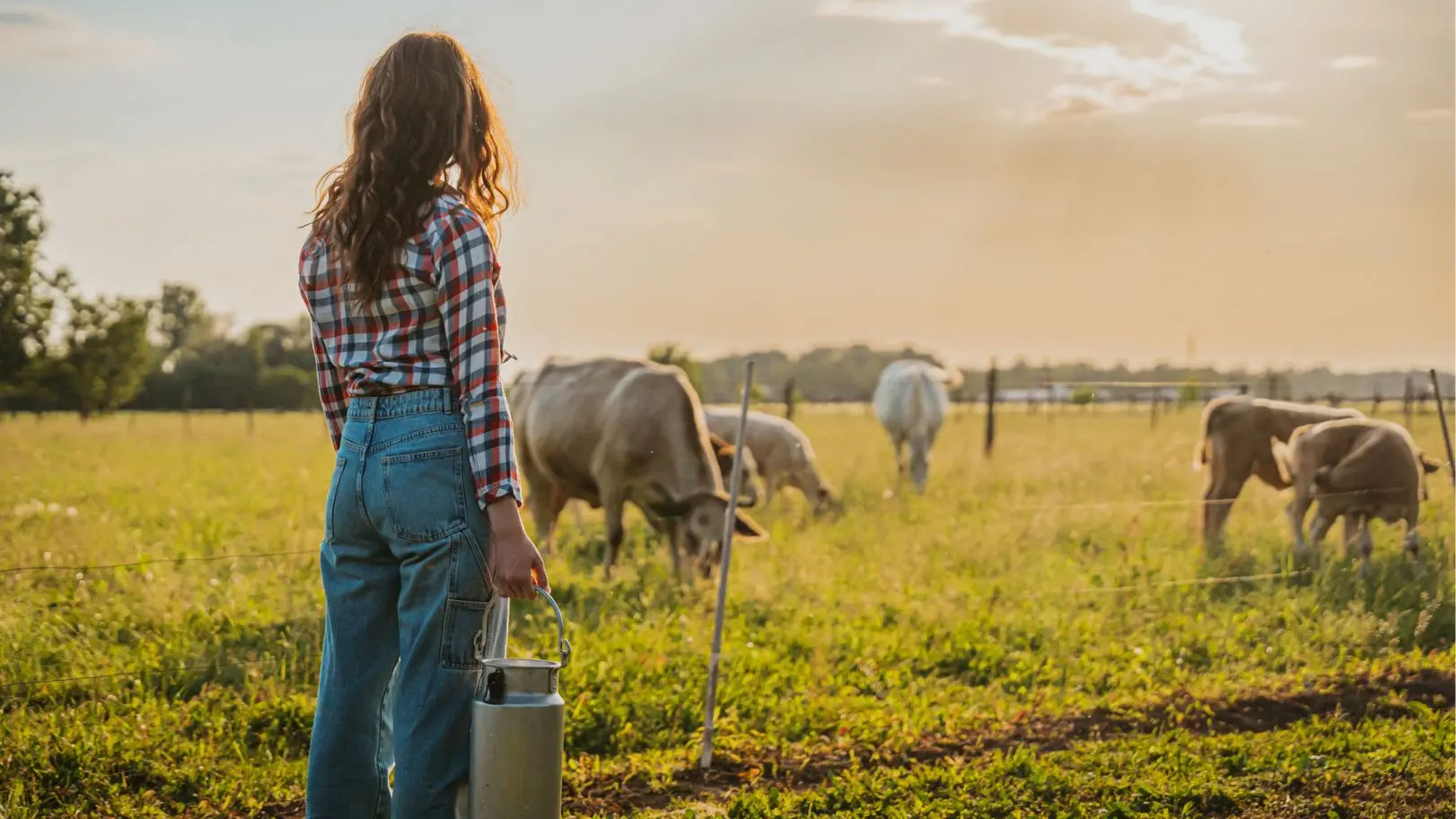
The pathways for investors to participate in Australian agriculture, and bring outside capital to partner with the know-how of Australian farmers, have been largely non-existent or deeply impractical, but Harrison Stewart of Prime Value Asset Management, thinks that is changing; and that his firm’s dairy fund is a live demonstration of what a properly structured vehicle can do.
The Prime Value Dairy Trust, launched in 2019, gives outside investors an opportunity to invest in the dairy industry. Outside investors have never really had that opportunity. It owns the farms, cows, plant and equipment, and employs the management team directly. This gives investors exposure without setting foot on a farm.
Most of the Prime Value Dairy Trust’s farmland portfolio is in northwest Tasmania, one of the country’s highest-rainfall areas. Two farms in southwest Victoria are also part of the portfolio, and that region is classed as a ‘moderate, reliable-rainfall’ area.
Why dairy
The choice of dairy over cropping or horticulture was deliberate. Harrison Stewart, who oversees agriculture at Prime Value Asset Management, says dairy offers revenue predictability most primary production can’t match. It has a fixed annual milk price paid monthly, cows milked twice daily year-round and no harvest window. No single weather event can wipe out revenue the way hail destroys a wheat crop.
“We know roughly what our revenue line is going to be,” Stewart says, “and we can work underneath that to manage our margins.” Dairy farms also concentrate in high-rainfall, irrigated regions that hold land value better than drought-exposed broadacre country.
Demand tailwinds
There are powerful demand-side tailwinds gathering behind Australian dairy, he says. Australia’s domestic milk pool is shrinking. Australia now exports around 30 per cent of production, versus 50 per cent two decades ago. Processors compete hard for available supply, pushing up farm gate prices.
Globally, Lactalis, the world’s largest dairy group and a business roughly comparable in scale to Coca-Cola, recently paid about $3.8 billion (a reported 15 per cent premium) for Fonterra’s Australian assets. It needed scale it couldn’t grow organically. Coca-Cola itself has seen the retail value of its Fairlife brand swell from just US$10 million in 2014 to nearly US$4 billion in 2025. Such growth does not happen in isolation from farm gate demand.
“Fairlife is Coca-Cola’s fastest growing product line, and a lot of it’s coming from consumers increasingly understanding the nutritional benefits of protein and dairy being such a cheap and accessible form of protein, in a cost-of-living crisis,” Stewart says. “The dairy business is selling into some of the fastest-growing categories in food globally, and it’s a strong structural investment case.
“That’s where we see great opportunity. We think this situation is tailor-made for a managed fund with patient wholesale capital and a seven-to-ten-year mandate. It’s a wholesale fund, the minimum investment is $100,000, but most of our investors are mum and dads, or family trusts, and we also have quite a few charities in the fund, as well.”
Two return drivers
An agricultural investment has two distinct return drivers: income generated by farm operations and capital growth from increases in land values over time. The Prime Value Dairy Trust targets a return above 8 per cent a year, uncorrelated to other asset classes. It aims to achieve this through a combination of income from milk sales and land value appreciation.
The operating performance of the farms drives the income component. Prime Value measures it by operating return on assets (OROA), which is the farms’ earnings before interest, tax, depreciation and amortisation (EBITDA) divided by asset value.
- FY25: 2 per cent (drought-affected)
- FY26: 7 per cent
- FY27 budget: 7 per cent
- Three-year average: 5.3 per cent
Stewart says operating performance has improved significantly since FY25, with EBITDA margins increasing from 12 per cent to 29 per cent in FY26, and 28 per cent budgeted for FY27.
Land values and capital growth
The capital growth side is driven by long-term land value appreciation. Farmland has historically demonstrated strong long-term capital growth; Bendigo Bank’s Australian Farmland Values report shows the following compound annual growth in farmland values over the past 20 years:
- National: 7.2 per cent
- Victoria: 7.3 per cent
- Tasmania: 6.6 per cent
These figures illustrate the long-term capital growth potential of farmland. The fund’s overall return is driven by the combination of income yield plus capital growth, with interest, capital expenditure and fund management costs also factored into the returns delivered to investors.
“We’re targeting capital appreciation, we’re not necessarily targeting income yield,” says Stewart. “There could be a 15 per cent–20 per cent drop in milk prices, but farm values don’t change because of that. It’s a different investment, and investors’ expectations around it need to be different. But we’re seeing that people are attracted to the stability. We think this is different, and a true ‘alternative,’ at a time when that term is used a lot.”
Built for the exit
Prime Value’s exit strategy is as deliberate as its entry. With 12 farms, associated support blocks and approximately 10,150 cows in milk, the fund is already among Australia’s top five dairy producers by volume.
The intention is to hand a future buyer (most likely an institutional investor, a superannuation fund, or an offshore endowment) a fully operational, professionally managed, walk-in walk-out agricultural platform. “We’re trying to build something that other people don’t have the time, patience, or know-how to build,” Stewart says.
That is a different kind of alternative investment pitch. Not “come in while we figure it out,” but “we’ll do the hard decade of work, and sell you the result.” For advisers looking to move their alternatives conversation beyond the private-credit echo chamber, it might be exactly the kind of story worth telling.

James is an experienced senior journalist at The Inside Network.