Monday 19th October 2026
Agricultural infrastructure: the income source that looks like a glasshouse
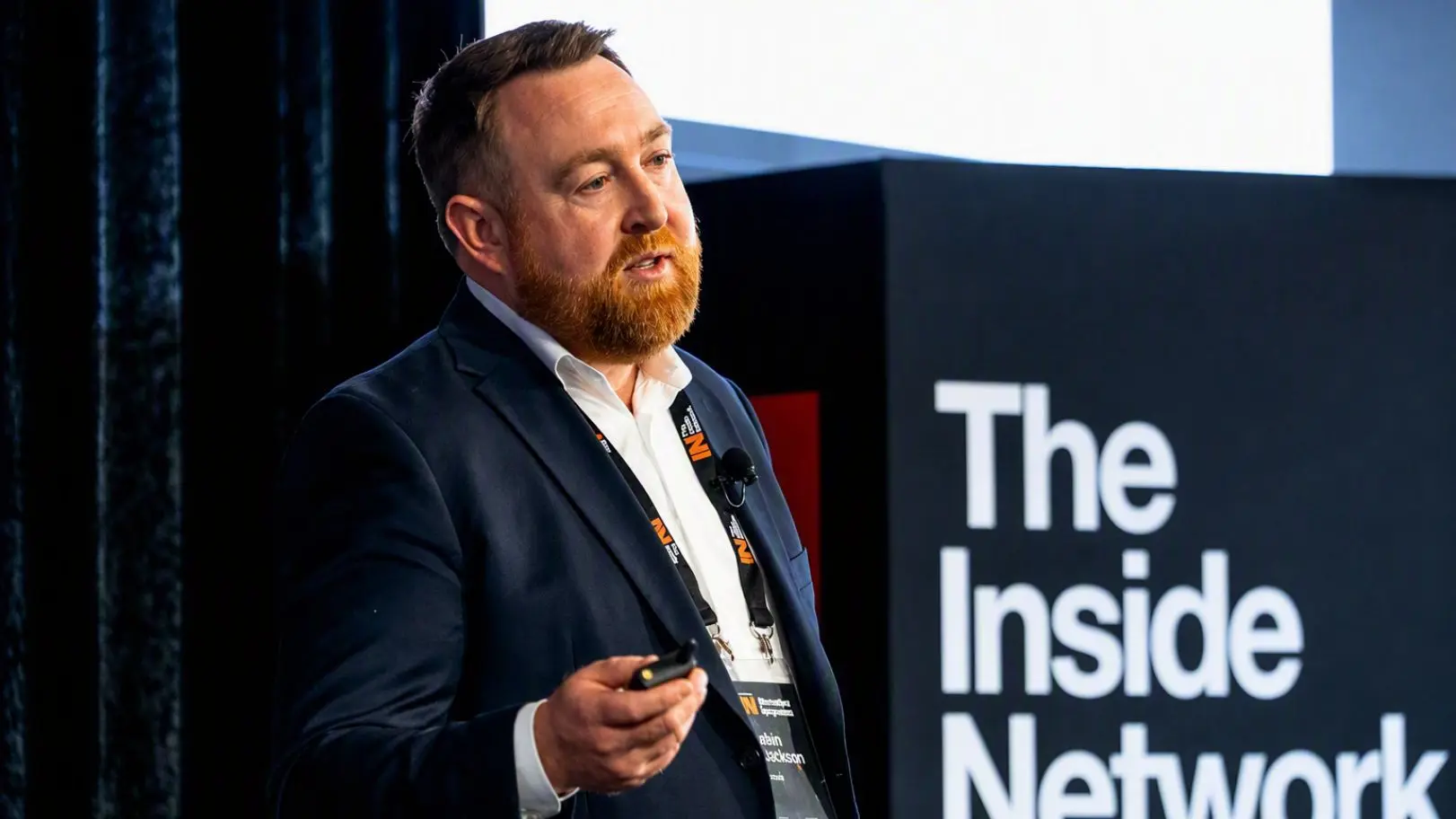
Centuria's Kelvin McKeown says controlled-environment agriculture offers CPI-linked, infrastructure-like income, provided advisers scrutinise the single tenant whose lease underwrites the cheque.
Advisers hunting for reliable income have a correlation problem. In a higher-for-longer world, shares and bonds increasingly fall together when inflation runs hot, leaving the traditional portfolio short of ballast. The search for income that behaves differently brings agricultural infrastructure into the conversation.
Kelvin McKeown, from property fund manager Centuria, runs about $1.3 billion in the firm’s agriculture portfolio. He describes himself as coming from “a long line of recovering sheep farmers,” and he spends as much time on how these assets are owned as on the assets themselves.
His argument is that the asset, and the way it is now owned, is a different proposition from what many advisers picture.
Infrastructure, not paddocks
The first myth McKeown wants gone is that agriculture means fields and tractors. What Centuria invests in is closer to industrial infrastructure.
He points to the Sundrop glasshouse at Port Augusta, 20 hectares of glass in near-desert country, built by KKR in 2016. It has no fresh water. A five-kilometre pipe brings seawater from Spencer Gulf instead. Then, 12.5 hectares of computer-controlled mirrors concentrate sunlight onto a 130-metre tower to run a desalination plant.
It is not, in his words, “the guy on a horse in a big hat, more like something out of a James Bond film.”
The point beneath the neat image painted is economics. Controlled-environment agriculture takes the weather out of the equation. Growing tomatoes in a field uses about 120 litres of water per kilogram, McKeown says, against roughly 20 in a system like this. Yields multiply too. It also builds a moat.
A facility of this kind costs around $6 million a hectare to build, some $140 million all up. That is a serious barrier to entry.
That barrier matters because strong agricultural returns naturally attract new supply. McKeown’s example is avocados: high prices encouraged widespread planting, and once the trees matured, increased production brought prices back down.
“Nothing cures high prices like high prices.”
A $140 million glasshouse requires significant capital and conviction, which is why expansion remains measured.
Generating income
The structure is where the risk gets reshaped. Centuria does not farm. It buys an asset it likes and a tenant it likes, then signs a long lease, typically a 20-year triple-net arrangement where the tenant carries rates, maintenance, insurance and capital costs, and the rent usually rises with CPI.
“The tenant matters just as much as the asset,” McKeown says, and the diligence follows the money. “We probably do more due diligence on the tenant than the asset itself, because you are entering a 20-year lease and most of the income paying your rent comes from that facility.”
Centuria underwrites like a lender: an interest cover ratio of around two times, and a tenant balance sheet strong enough to withstand two or three difficult seasons.
At Sundrop, the income is underpinned by a long-term supply agreement with one of Australia’s major supermarket groups that McKeown says is unique in the sector.
“It provides remarkable certainty around demand and cash flow,” he says. “Within 48 hours of harvest, tomatoes can be on supermarket shelves around the country, backed by firm supply and payment arrangements.”
The result behaves more like infrastructure than farming. It is mostly contracted, CPI-linked with a cap and a floor. It is also insulated from the export and currency swings of commodity agriculture, since the glasshouses sell into domestic demand.
Caution amidst optimism
The diversification case is real, and McKeown makes it plainly: low correlation to other asset types and, he says, a proven inflation hedge across the past 25 years. For an adviser short of non-correlated income, that is the attraction.
The caution belongs on the concentration the structure creates. A 20-year triple-net lease moves risk rather than removing it. Investors own the agricultural real estate and receive contracted rent from experienced operators. They are not taking direct exposure to crop yields, commodity prices or seasonal operating costs.
The CPI-linked cheque is only as reliable as the tenant writing it, and that risk does not vanish. It is managed through tenant selection, long lease terms, ongoing covenant monitoring and diversification across operators, assets, locations and crops. It is also why McKeown lands on modest sizing.
“I would never recommend putting everything into an ag investment like ours. It is about building a portfolio, so 5 or 10 per cent, somewhere in that range.”
This is also illiquid, long-horizon capital in a young asset class. McKeown’s own test for a manager is the one advisers should borrow. Ask them about a time a weather event, disease or supply shock hit the portfolio, and how they responded. Farming, he says, “can go extremely well or very poorly depending on the asset.”
For the right slice of a portfolio, agricultural infrastructure offers contracted, inflation-linked income that does not move with equities. The work for an adviser is to make sure the tenant behind the lease is strong enough to keep writing the cheque, season after season.

Laurence Parker-Brown is head of content at The Inside Network and managing editor of The Inside Adviser and Investor Strategy News.