Monday 17th August 2026
Private credit: the returns are real, the due diligence is everything
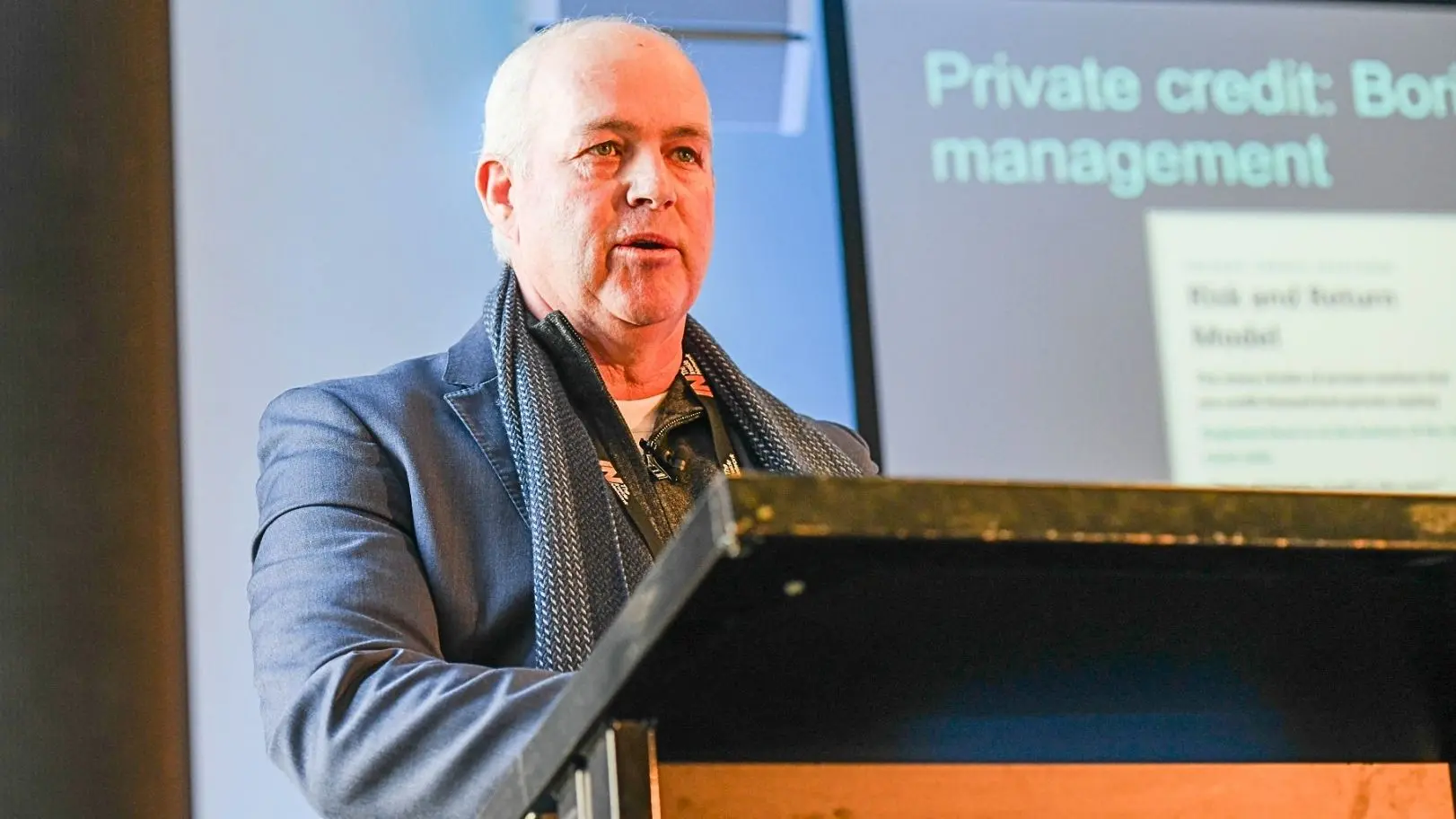
Craig Brooke of KeyInvest Managed Investments says private credit can be one of the most interesting places to invest, but only after you have pulled apart the manager, the structure, the covenants and the borrower, because even rigorous screening lets bad deals through.
Private credit has carried a stigma, and not always undeservedly. The asset class now filling more client portfolios spent years attracting operators who prefer nobody looks too closely. The opportunity is real, and so is the reason for caution.
Craig Brooke has spent four years learning where the line sits. As Chief Executive Officer and Managing Director of KeyInvest Managed Investments, a wholly owned subsidiary of KeyInvest, the 148-year-old friendly society and one of the last issuers of funeral bonds, he runs an active private credit strategy inside a capital-guaranteed product: around 20 per cent of the funeral bond sleeve, $51.25 million, with the balance sheet guaranteeing every dollar.
“For every pump-and-dump scam you find in equities, you will find bait-and-switch scams in private credit,” Brooke asserts. “There are things that go on in this asset class that have given it the stigma it has had until now. But if you get your due diligence right, this can be a winning part of your portfolio allocation.”
Screening the market
Arriving at KeyInvest in August 2022, after three decades across the investment and credit sides of banks, Brooke’s first job was to size the field. Working with ASIC’s private credit taskforce, he counted 308 managers in Australia, running about $130 billion at the time.
Two blunt filters came first: out went any manager operating less than ten years, or with less than $100 million under management. That cut 308 to 82. Then came sixteen manager-level criteria, on a single unforgiving rule.
“If a manager missed one criterion, they were out, which felt unfair at times,” Brooke says. That took 82 down to 30. A fund-level pass over more than 120 funds, on the same miss-one-and-you-are-out basis, cut 30 to 12. Seven managers survive in the strategy today.
More sobering is what happened inside the survivors. Even after the manager screen, Brooke notes, “some of the worst stories you have seen in the press since then still got through.” Rigorous process narrows the odds; it does not eliminate them, which is why the work cannot stop at the manager.
Sponsor, security, exit
At the deal level, Brooke offers a three-word test to replace the banker’s four or five Cs of credit: sponsor, security, exit. In a fund of 60, 80 or 100-plus loans, it must be applied to every loan before the money goes in.
Sponsor is the borrower’s track record: first development, first time using a private lender, reputation. “Any first-timers, we do not invest,” Brooke says. “You will find that most of the really experienced lenders do not lend to first-time developers or first-time borrowers.”
Security is where he is bluntest, and where advisers are most often reassured by a phrase that means nothing.
“Senior secured is the biggest load of rubbish I have ever heard. It means many different things; there is no industry definition for it.”
What matters instead is specific and checkable: a first registered mortgage, the investor or adviser holding rights over it, personal and corporate guarantees, and, on a construction loan, a tripartite deed that lets the financier replace a non-performing builder.
Exit is the one most memoranda wave away. “Eight out of ten that we see just say ‘refinance,'” Brooke says. Refinance where, with whom, and has anyone tested that the borrower could service a major bank’s loan to exit? He wants a first, second and third way out mapped before a dollar is lent.
When it goes wrong
A case study of a deal that soured perhaps best captures Brooke’s process, because it shows what the covenants are for. In a Melbourne loan of around $3 million, performance issues surfaced about six months ago. KeyInvest told the manager to replace the builder, but the manager refused.
“Last time I checked, I think we own most of this loan,” Brooke recalls telling them. The builder was replaced.
Then it got harder. The replacement builder ran into trouble too, and a receiver was appointed. That is normally welcome, Brooke says, because taking possession is how investors get their money back. But receivers understand structure better than anyone.
This one put a receiver’s note ahead of the first registered mortgage, the position meant to rank at the top. It started at $3 million to finish the build, which KeyInvest accepted to protect its existing money, then grew to $8 million as other investors pulled out, sitting in front of the $3 million mortgage on a project that might return $14 million.
KeyInvest used its rights again, pushing to remove the receiver and warning the manager it would be replaced next if it did not act in investors’ interests. The property is back on the market, in Brooke’s phrase patient capital, waiting for the right price.
That patience is the balancing point investors should not miss. A funeral bond running a 22-year average duration can wait out a stuck workout; a retiree drawing income cannot, and Brooke is now packaging the strategy into a fund for advisers, so his enthusiasm is not disinterested. The rights he leans on only work for an investor who secured them before the deal turned.
How much, not whether
After four years, Brooke has reframed the question advisers ask him. “A big part of what we have found with private credit is not whether it is viable, it is what proportion of an investor’s sleeve it should occupy.”
His own answer leans hard on diversification: beyond the dozen or so sizeable managers he rates, one manager will not deliver the spread investors think they are getting.
KeyInvest’s book spans manager, geographic, LVR, loan-size and transaction-type diversification, moving from 300 loans toward 800, against the roughly 160 he attributes to similar portfolios available in the market.
The return target is deliberately unglamorous: cash plus five, repeatedly, on a portfolio whose remaining term averages about five months.
The conclusion is not that private credit is too dangerous to touch, nor the easy income solution the glossier memoranda imply.
The returns belong to whoever does the work, at the manager, the fund and every loan, and keeps the rights to act when a deal turns. The rest are hoping, and in this asset class, Brooke’s four years suggest hope is expensive.

Laurence Parker-Brown is head of content at The Inside Network and managing editor of The Inside Adviser and Investor Strategy News.