Friday 3rd July 2026
Why advisers should tilt global and lean into AI exposure
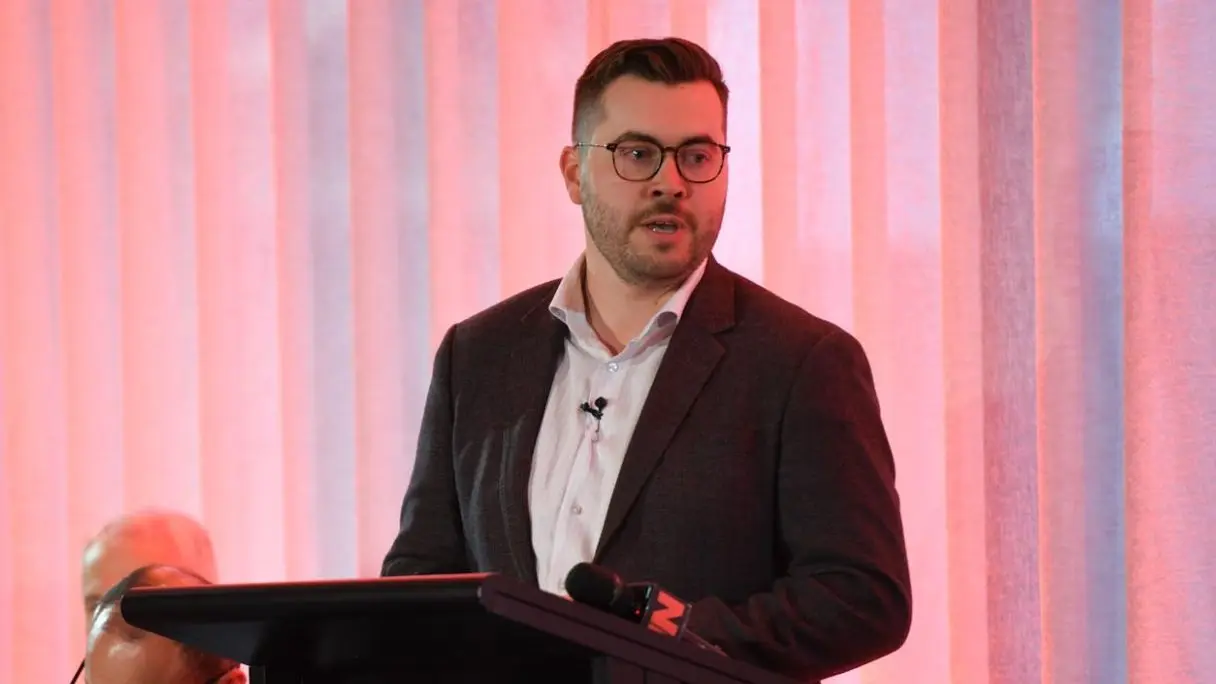
Arrow Private Wealth's Ryan Synnot argues advisers cannot afford to underweight global equities or sidestep AI, with the real concentration risk often hiding in the home market.
For advisers building multi-asset portfolios, two questions keep surfacing in client meetings. Should portfolios still favour Australian equities, given how familiar they feel? And what does responsible exposure to artificial intelligence actually look like?
Ryan Synnot, head of investment management at Arrow Private Wealth, thinks both questions deserve more conviction.
The Australian market is increasingly narrow. Global equities offer a deeper, more dynamic opportunity set. And AI exposure, often discussed with caution, is in his view the trade advisers can least afford to underweight.
Synnot oversees Arrow’s multi-manager solutions and the strategic asset allocation behind them. His framing is structural rather than tactical. The point is not to chase the next quarter. It is to position client capital for where genuine earnings runway actually exists.
The opportunity set, not the index level, drives positioning
Synnot’s starting point is that valuation in isolation is a weak signal. Both the Australian and global benchmarks are trading on the expensive side of average. Both sit roughly one standard deviation above their longer-term multiples. The more useful question is what each market actually owns.
“The Australian market is heavily comprised of banks and a handful of mining stocks, which are ultimately exposed to domestic population growth and the cyclicality of the resources sector,” he says. That structure caps the earnings growth available to a domestically-skewed portfolio. It also means most of the index is exposed to the same handful of drivers.
Global markets look very different from the inside.
“Contrast that with global equities, particularly the US, where the top names in the S&P 500 have a sensational growth opportunity available to them through AI, its adoption, and the eventual monetisation of that market,” Synnot says.
The conclusion for Arrow’s portfolios has been to sit underweight Australian equities and neutral to slightly overweight global. The same logic extends to earnings growth across regions.
“International markets offer a broader and more dynamic earnings growth runway, which is reflected in our positioning,” Synnot says. Domestic GDP growth sets a relatively hard ceiling for much of the ASX. For advisers built around the dividend characteristics of local financials and resources, that is a useful prompt to revisit the mix.
AI exposure is not optional
Among advisers, AI is often discussed as something to manage cautiously. Synnot pushes back firmly. The greater risk lies in trying to dodge the opportunity through benchmark-aware funds that underweight the megacap names.
“Anyone allocating to global equities will naturally carry meaningful exposure to US markets and the S&P 500, which will result in exposure to Magnificent Seven names,” he says.
Those companies are not just speculative growth bets. They are the hyperscalers building out the infrastructure that underpins the entire AI transition. Their position in the market is structural rather than incidental. For Synnot, that changes the framing entirely.
“We think it is actually a substantial risk to try and avoid this opportunity. Get that call wrong, and you would substantially underperform the market given its current composition.”
That is a direct challenge to advisers who have responded to AI enthusiasm by tilting away from it. The reasonable position, in Arrow’s view, is to accept the exposure that comes with a genuine global allocation. Then size it appropriately within a diversified multi-asset structure. Sidestepping the theme is not a neutral choice. It is an active call against the most important earnings driver in the global benchmark.
The real concentration risk may sit closer to home
The concentration debate around the S&P 500 has become a default talking point in client meetings. Synnot considers it overstated.
“My view is that the concentration risk narrative is somewhat overblown. Yes, the S&P 500 has meaningful weight in the Magnificent Seven, that is the most commonly cited example, but if you look at other markets around the world, you will find far more extreme concentration. Korea is a good example.” Measured against international peers, the US benchmark is one of the more diversified indices in the world.
That does not mean the issue can be ignored entirely. Arrow addresses it through deliberate regional allocation. The firm blends in emerging market and European exposure to broaden the underlying earnings drivers.
“On a relative basis, the S&P 500 is actually quite diversified,” Synnot says. “We do address this through regional allocation, introducing emerging market exposure, some European equity, which meaningfully differentiates what a global equity allocation looks like in practice.”
The deeper point is that advisers worrying about global concentration should first ask the same question about the rest of the portfolio. A heavy home bias to a small group of banks and miners may carry more concentration risk than a globally diversified allocation.
For Synnot, leaning into global exposure, embracing AI rather than skirting it, and managing concentration through regional breadth is a more honest answer to the questions clients are actually asking.

Laurence Parker-Brown is head of content at The Inside Network and managing editor of The Inside Adviser and Investor Strategy News.