Monday 28th September 2026
What private markets teach you about picking the right room
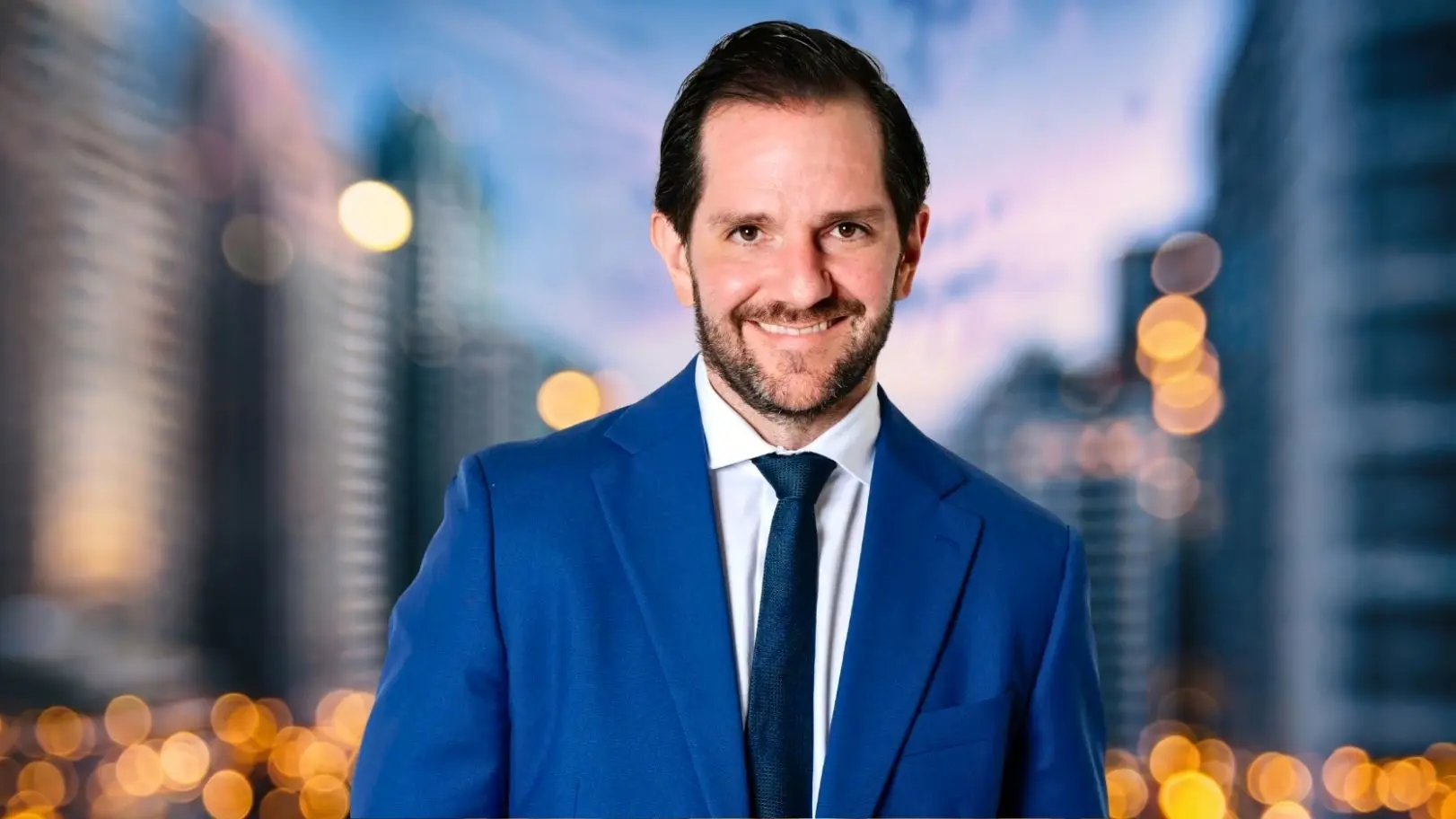
Tim Whybourne, Managing Partner at Emanuel Whybourne & Loehr, has built a wealth management footprint on a modest premise, that his edge is not original research but the company he keeps.
Tim Whybourne has a line he uses often enough that the people around him can see it coming. “I’m not the smartest person in the room,” he says, “I make sure I’m standing next to the smartest person in the room.”
It reads as modesty, though it works as a method. Whybourne is Managing Partner at Emanuel Whybourne & Loehr, a private wealth practice that started seven years ago with four people in a small office and now runs to 18.
His passion, and increasingly the firm’s, is private markets, where the best ideas arrive through relationships rather than screens.
“We are probably looking at 200 opportunities a year and I’m just at a high level saying no to 190 of them pretty quickly,” he says. He puts his strength not in originating deal flow but in “being next to the person that originates the best idea in the room and getting onto that deal”.
The business they have created, he claims, is the perfect size to access deals as small as $1m and as large as they come. He cites the smaller deals as the important ones. They are too small for their larger competitors. They are often the ones that generate the most alpha for his clients.
Finding his way in
He did not arrive there quickly. His father worked in finance, which made the industry the path of least resistance, and Whybourne graduated into the opening months of the financial crisis.
“There were no jobs available. I took the only thing I could get,” he says, which was a call centre seat at CommSec on a basic salary.
A coffee with an adviser at UBS changed his career direction. He applied for three jobs there and missed the first two.
“I happened to get the third job that I applied for at UBS as a desk assistant working for my now business partner, Craig Emanuel,” he says.
That was nearly 20 years ago. He went in wanting to be a stockbroker. Within a couple of years, he decided that it was not where he added the most value. He believes an assets under management model adds incredible value to client relationships. He moved over to this model earlier on in his career.
Proximity
Whybourne is unromantic about how the best ideas reach him. Part of it is tenure, since the partners carry decades of relationships between them. The rest comes down to his school network, or reading about something in the paper and finding a connection within minutes.
Some of it, he says, is attrition, “a bit of just last man standing”. A referral from someone he respects carries the most weight.
One fund sat unresolved in the diligence process. A friend who runs a private equity fund told him it deserved attention. He sees so much deal flow. Sometimes it is appreciated when a non-partial third party weighs in to point out something may deserve his attention.
What can go wrong first
Tim sees much of his framework is about being adaptable, and not relying on a cookie cutter approach. “I think if anyone tells you that they have a methodology and it’s absolutely bulletproof, be skeptical,” he says.
Past returns help without proving much. Better is a deal where the value creation catalysts are visible and execution is the only variable left, so the result sits with management, not the economy.
Experience has changed the order of his questions. “The first question I ask is what can go wrong, not what can go right,” he says.
The upside case is always well made, since the people making it are sales people. The downside has to be hunted.
“If you can limit what can go wrong in these transactions, it becomes asymmetric upside.” “I have some battle scars from bad investments in the past, which I think is an important part of the journey for any seasoned investor”.
Size is part of the argument. Whybourne calls the firm a Goldilocks size, large enough to see everything the market sees and small enough to be shown assets that would be meaningless to a global manager.
He points to an $11 million portfolio of private assets offered to one or two buyers. In the mega deals, he says, you get beta. In the smaller ones there is alpha.
That conviction is what clients notice. A new client recently told him there was “just something about the energy that our team brings”. Part of that is a team that invests alongside its clients and is genuinely excited about the investment solution we are putting forward.
“You can’t talk passionately about a 60/40 portfolio. You just can’t.”
“You’ll never hear us say the word 60/40 unless we’re telling people what not to do,” he says.
Scale
Growth has limits, and Whybourne has thought about where his sit. He watches practice owners enjoy the job until the point where management crowds out investing.
“We left big businesses because we didn’t like the bureaucracy. So we built something that’s not only different, but one our team enjoys working at and clients hang around,” he says.
There is no target client number, but there will be a point where the firm moves to one in, one out in the not too distant future.
On the staff side, although EWL does have some seriously intelligent people, he would equally rather hire the candidate with the lower ATAR and the better cultural fit, on the reasoning that “what we do at the end of the day, it’s not rocket science”, and the firm declines to work with clients who are a poor fit, on the view that a happy team make happy clients.
What a busy year costs
He is candid about what a busy year costs. “I wouldn’t say I’m nailing work-life balance at the moment to be honest,” he says.
The client book has grown quickly and time management is the skill he admits he has not mastered. “In an ideal world, I would love to be able to be at home a bit more, but I’m certainly not ticking that box at the moment.”
He has two boys, eight and nine, and a year that takes in conferences in Beverly Hills and Singapore.
Still, the job appeals for reasons that have little to do with his own balance sheet. “I enjoy making money for other people, probably more so than making it for myself,” he says, adding that even if he won a crazy amount of money in the lotto someone would have to manage it, and so that may as well be him, he considers himself one of the lucky ones as he genuinely enjoys coming to work in the morning.
Which is, in the end, the whole method. “it comes back to the room, find the smartest people in it, and make sure you’re not only standing next to them but you’re invited to the party.”

Laurence Parker-Brown is head of content at The Inside Network and managing editor of The Inside Adviser and Investor Strategy News.