Monday 14th September 2026
Quality, beta and the SaaS reckoning: the screens advisers should retire
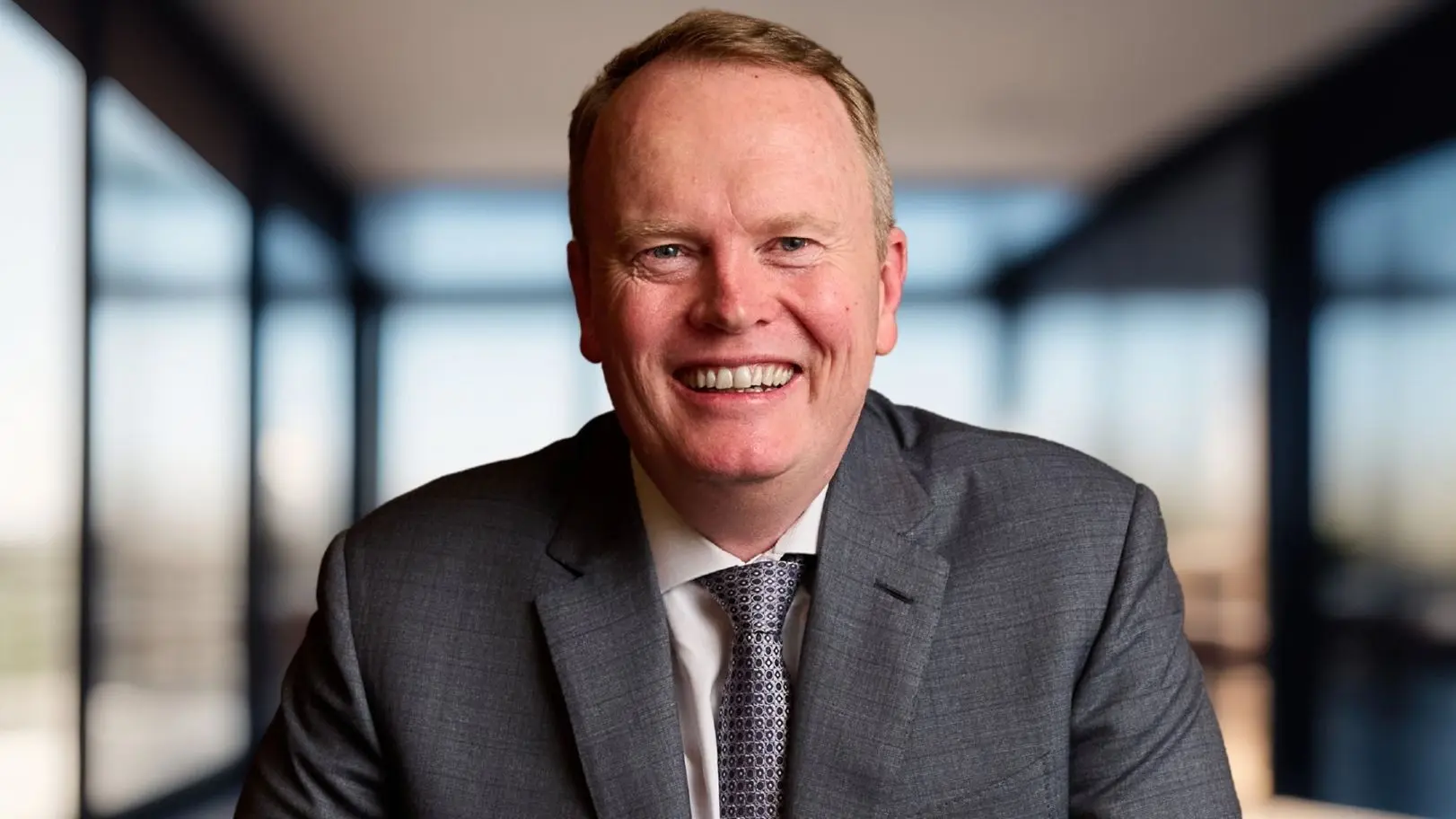
ClearBridge's Reece Birtles says passive flows have broken the screens advisers rely on in Australian equities. His case for HALO stocks, a declining beta signal, and the patience active investing demands in the current market.
Reporting season is supposed to settle arguments. Companies open the books, analysts revise their models, and share prices reconnect with earnings.
Reece Birtles, head of Australian equities at ClearBridge Investments, thinks those reconnections now arrive in short bursts, and that the long stretches in between reward a very different kind of investor.
His read on the index is cautious, expecting the next 12 to 18 months to test the broad Australian market harder than the year just gone, even with global markets holding their ground.
Elevated valuations, the artificial intelligence investment theme and weak domestic productivity all cloud the outlook for the market as a whole.
The ASX 200 trades on roughly 17.5 times forward earnings, and consensus points to about 12 per cent earnings growth for FY26. Strip out resources and financials, though, and the growth rate falls to something closer to 2.5 per cent.
The money that never reads a result
Birtles points to passive and systematic flows as the force pushing share prices further from underlying value, and pushing them there more often.
The scale is easy to underrate. Australian ETF assets closed 2025 at $330.6 billion after a 34.2 per cent year, and passive products captured $38.9 billion of inflows against $6.3 billion for active ETFs. Betashares expects the industry to pass $400 billion during 2026.
That money buys by index weight, and it never forms a view.
Commonwealth Bank shows what follows. The stock traded on a trailing multiple near 26 times in June, a premium of roughly 40 to 50 per cent to the other three majors and still absorbs a steady bid every time a saver tips money into an index fund.
ClearBridge held it as a key underweight over the past year, alongside an overweight in BHP and a well-timed purchase of Woolworths.
“We need to be quite patient and understand that passive flow is going to cause, for example, Commonwealth Bank’s price relative to valuation to be dislocated for a long period of time,” Birtles says.
“It’s really only getting corrected around big news event dates like the federal budget or around earnings announcements, where there is more trading activity.”
Heavy assets, low obsolescence
The portfolio answer runs through a category Birtles labels HALO.
“We are focusing on companies that have good solid earnings, reasonable valuations,” he says. “We like the ‘HALO’ stocks: heavy assets, low obsolescence. For example, for a stock like Ampol, involved in the fuel supply chain, inflation is good, energy resilience is good, and AI cannot disrupt them.”
These businesses own physical infrastructure that costs more to replace with every year of inflation, and they earn from volumes that no model can reroute.
The insulation has limits. Ampol’s earnings still swing with refining margins and fuel volumes. But the core idea travels well into a client conversation.
Beta stopped describing quality
The more useful part of Birtles’ argument concerns the tools themselves. Two screens advisers lean on hardest have decayed, and passive trading did the damage.
“Another one is how beta has been polluted by momentum and passive trading and is no longer a good measure of the quality of a company,” he says.
“The ‘SaaS-pocalypse’ has really highlighted that the definition of quality over the last 10 years, based on low capital intensity, a large total addressable market, and an ability to raise prices every year without anything new in the product, was not a good definition of quality,” Birtles says. “The market needs to go back to traditional moat-type analysis.”
Australia’s listed technology sector has fallen about 24.6 per cent so far this calendar year. Consensus earnings growth for the sector in CY26 has collapsed to 0.3 per cent, from 15.3 per cent as recently as April.
Any model portfolio that treated a low-capital, high-margin software business as a defensive quality holding has just paid tuition.
“As active fundamental investors, our ability to bet against the crowd is important, and that is something we’ve always done.”
What patience costs in Australian equities
Birtles describes a market that has changed character once already in his career.
“Early in the last decade it was very much a momentum driven market and everything was about speed. Now it’s very much about overreaction. There are so many ways to execute quickly and so many systematic strategies.”
Advisers pay for that patience in client conversations rather than in basis points, and the bill can run for years. The Commonwealth Bank underweight that helped ClearBridge over the past 12 months punished active managers through the several years the stock re-rated ahead of its earnings. On a client statement, early and wrong look the same.
That risk sharpens rather than settles the question in front of advisers. Index exposure is no longer the neutral default it looks like on a fee comparison. The money behind it now sets prices for stretches at a time without reference to earnings.
Money with no view on earnings will keep setting the price of Australian equities. How much of a client’s portfolio follows that price is an active choice now, whichever way an adviser makes it.

Cristina is a contributor and content manager at The Inside Network.