Saturday 8th August 2026
Global markets can endure more shocks than feared, but not without limits

Amundi's global investment outlook for mid-2026 warns of fragile de-escalation, volatile inflation and growing concentration risks, calling for selective risk-taking, real asset diversification and a decisive move from dollar-denominated portfolios.
Global investors are navigating one of the most complex environments in recent years, as geopolitical disruption, above-target inflation and concentration risks mount simultaneously.
Amundi’s global investment outlook for mid-2026 distils that challenge into a single question: how much can economies and markets endure?
The answer, according to one of the world’s largest asset managers, is considerably more than many had feared going into the year, but not without limits.
The global economy has proved resilient through the first half, supported by investment flows tied to artificial intelligence (AI) and the broader push for strategic autonomy. The second half will test exactly how far that resilience stretches.
Amundi’s central scenario anticipates a fragile de-escalation in the Strait of Hormuz and oil prices settling in the US$80 to US$90 per barrel range by year end.
A gradual repricing, rather than a sudden shock, is expected to help the global economy avoid recession. Even so, the firm has trimmed most of its growth forecasts and is positioning for an environment where growth will be uneven, inflation volatile and policy risks elevated.
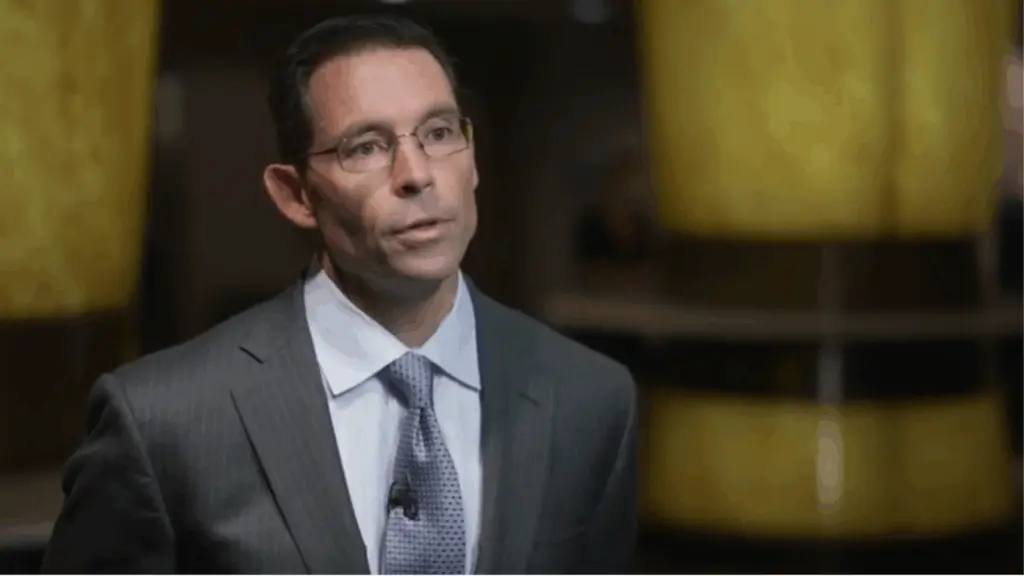
Monica Defend, head of Amundi Investment Institute, frames the challenge for investors squarely.
“Investors face a world in which the independence of central banks is being tested, inflation is more volatile, and concentration risks are growing.”
She explains that the best portfolios for this new regime must withstand multiple scenarios, diversify across currencies, build exposure to real assets and gold and apply discipline across equity sectors and structural themes.
Between scenarios
Central bank behaviour sits at the heart of Amundi’s outlook. Faced with geopolitical risks and above-target inflation, central banks are expected to prioritise anchoring inflation expectations over supporting growth.
Amundi expects the Federal Reserve and major emerging-market (EM) central banks to hold rates steady for the remainder of the year. The European Central Bank (ECB), Bank of England (BoE) and Bank of Japan (BoJ) look set to hike once each before year end.
Amundi’s global investment outlook assigns real weight to the scenarios on either side of this central case. A breakdown in the Middle East deal, or a sharp correction in the AI sector, could trigger renewed inflation pressure and recession risk.
On the other side, a credible reopening of the Strait of Hormuz could drive disinflation and lift both consumer and investor confidence, accelerating what Amundi describes as a virtuous broadening of the AI cycle.
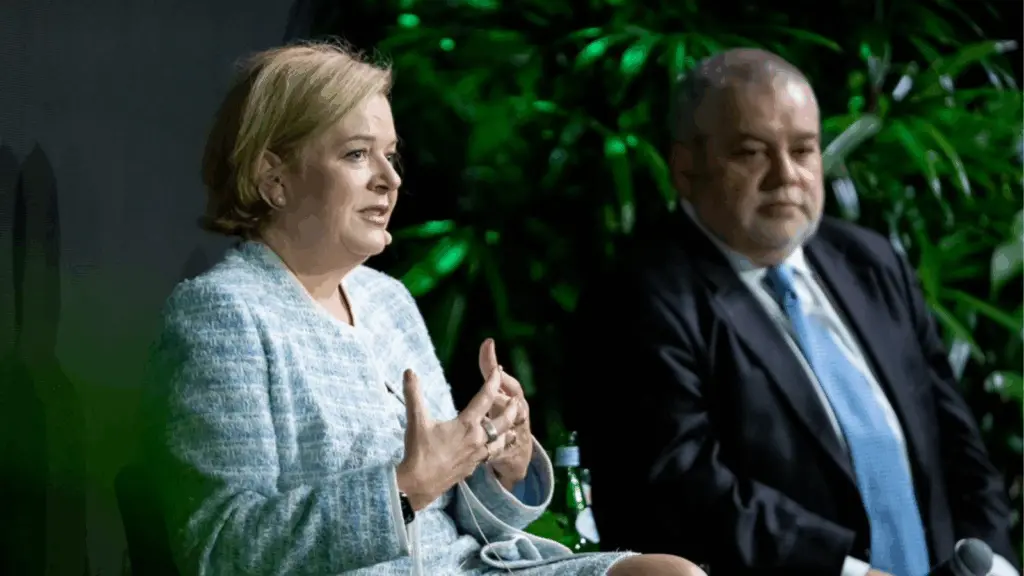
Vincent Mortier, group chief investment officer (CIO) of Amundi, sees the AI story itself reaching an inflection point.
“As the AI story shifts from who can build the frontier to who can scale it, investing will be about seeking breadth across the full value chain and diversifying against technological, geopolitical and physical risks.”
Fixed income: rethinking the hedge
Bonds still offer attractive income, but Amundi cautions that inflation and fiscal risks are challenging their traditional role as a portfolio hedge.
The firm favours flexibility across regions, with a tilt toward Europe, inflation-linked bonds and investment-grade credit from companies with solid balance sheets.
The broader point is that while the yield reset of recent years has made fixed income more interesting, selectivity matters more than ever.
Equities: breadth over concentration
Equity markets require greater selectivity across both sectors and countries. The AI theme, which has driven significant concentration in US technology stocks, is broadening.
Amundi sees the real opportunities moving along the value chain into the physical world, encompassing energy, infrastructure, equipment, software, robotics and the companies adopting these technologies at scale.
Europe is emerging as a longer-term opportunity. A revival in capital expenditure (capex), driven by strategic autonomy across defence, energy, infrastructure and AI, supports the case for European equities as investors look for returns beyond dollar-denominated assets. Japanese equities also carry long-term structural support.
Emerging markets and the rotation opportunity
Emerging markets offer selective opportunities and stand to benefit from capital rotation away from the US dollar.
Amundi broadly favours EM debt and commodity exporters, and sees tech-driven opportunities across Asia. China earns a neutral rating, while India, despite its vulnerability to the oil shock, retains a positive outlook on the strength of its structural growth story.
On hedging, Amundi warns that traditional correlations may not hold in this environment. That calls for a greater role for real assets, including infrastructure and private debt, alongside gold, commodities and selected currencies.
The US dollar is expected to underperform most currencies, particularly commodity-linked ones, and to extend its weakening trend over the longer term.
The portfolio for what comes next
Amundi’s global investment outlook is not a call for defensive retreat.
The firm wants investors to reallocate risk selectively, building portfolios around carry, resilient earnings, pricing power, liquidity and diversification, with exposure to structural themes spanning strategic autonomy, geopolitical realignment and AI deployment in the physical world.
“The best portfolios for this new regime can withstand different scenarios,” Defend said. “They need to be diversified across currencies, invested in real assets and gold, and explore equity sectors and structural themes with discipline.”
In a year where the shocks keep arriving and the policy toolkit keeps narrowing, the ability to endure may matter more than the ability to outperform in any single quarter.

Cristina is a contributor and content manager at The Inside Network.