Thursday 16th April 2026
Investing where the world is going: the case for thematic portfolios

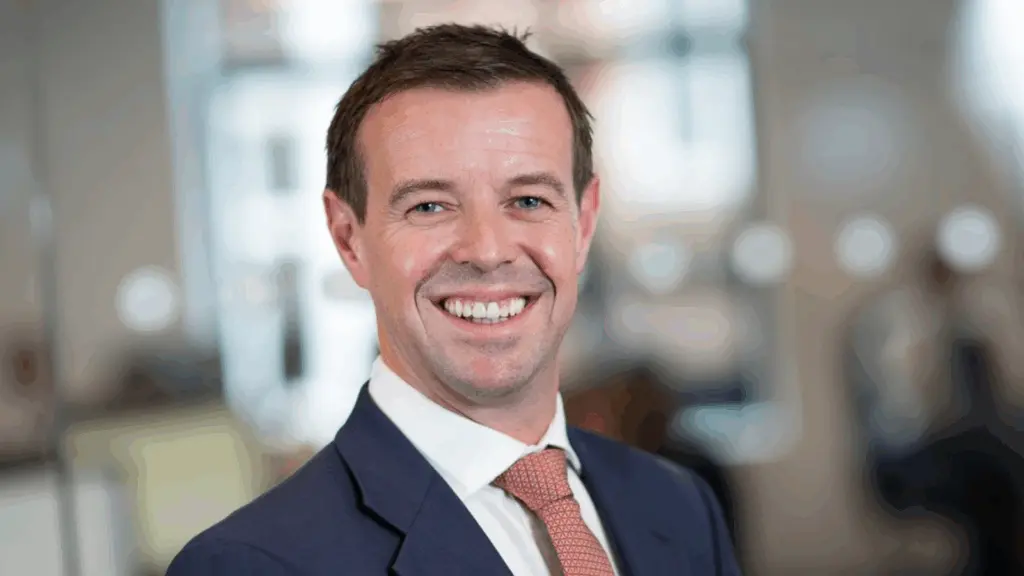
For Joseph Sitch, co-chief investment officer at Victor Smorgon Group, thematic investing as the key to navigating today’s shifting global economy, focusing on structural trends like electrification and AI rather than traditional asset classes.
Traditional portfolio construction has been shaped by decades of relatively stable market dynamics. The relationship between equities and bonds helped investors diversify risk, while abundant capital and globalisation supported steady economic expansion.
For Joseph Sitch, co-chief investment officer at Victor Smorgon Group, those conditions are changing. Structural shifts across geopolitics, supply chains and capital markets are reshaping the investment landscape. As a result, investors may need a different framework for building thematic portfolios.
“A lot is changing in the global economy, and structural change demands a different approach to investing,” Sitch says.
For the Victor Smorgon Group, that approach has centred on thematic investing, a strategy the family office has applied across its multi-asset portfolios for more than three decades.
Investing in structural trends
Thematic investing focuses on long-term structural trends rather than traditional sector or geographic allocations. These themes can include developments such as artificial intelligence, electrification, demographic shifts or the rise of emerging market consumers.
According to Sitch, the goal is to invest where the world is heading rather than where markets have historically been.
“Thematic investing for us is investing where we think the world is going. We want themes that grow faster than global GDP and persist for many years.”
Identifying those themes requires patience. At the Victor Smorgon Group, establishing a new thematic investment often involves several years of research. Analysts study supply chains, industry structures and competitive dynamics before allocating capital.
Once a theme is identified, the investment process looks beyond simple sector exposure. Instead, the focus shifts to identifying the businesses or assets most likely to benefit from the structural trend.
That often means analysing the entire supply chain of an industry. Companies providing essential components or infrastructure may ultimately capture more value than the businesses at the centre of the theme itself.
Growth does not guarantee profits
One of the key lessons from thematic investing is that industry growth does not always translate into profitable investment opportunities.
Sitch points to the solar industry as an example. Over the past decade, solar installations have grown at extraordinary rates globally. However, intense competition and oversupply have eroded profitability for many manufacturers.
“There isn’t always a relationship between strong thematic growth and strong earnings growth,” Sitch says.
In contrast, some industries tied to slower revenue growth may produce more consistent profits. Electrical infrastructure is one example the Victor Smorgon Group has been examining closely.
Demand for grid upgrades and electrification has grown steadily as economies modernise their energy systems. At the same time, many companies operating in the sector benefit from strong competitive positions and predictable cash flows.
In these cases, moderate industry growth can still translate into strong earnings outcomes.
Diversification through uncorrelated themes
Another advantage of thematic investing lies in diversification. Instead of allocating capital across asset classes alone, investors can construct portfolios across multiple structural drivers.
Sitch argues that this approach can improve risk-adjusted returns if the themes are genuinely independent of one another.
“If you invest across themes with different drivers, something in the portfolio should be working at any point in time,” he says.
For example, some themes may benefit from technological innovation, while others are driven by demographic change or resource scarcity. These different catalysts can help stabilise portfolios during periods of market volatility.
This diversification can also help investors maintain long-term conviction. When portfolios contain multiple uncorrelated themes, short-term drawdowns in one area are less likely to force investors to abandon their strategy.
Testing the investment thesis
A disciplined thematic framework also requires constant validation. Structural trends can evolve over time, and investors must monitor whether the original investment thesis remains intact.
At the Victor Smorgon Group, this process involves identifying measurable indicators for each theme. These indicators may include industry investment levels, capacity expansion or demand forecasts from external research providers.
“Once we invest in a theme, we need clear ways to test whether the thesis is still valid,” Sitch says.
Electrical infrastructure provides a useful illustration. Several measurable factors support the investment case, including ageing energy grids in developed economies, rising electricity demand and the rapid expansion of data centres.
Many power networks across the United States and Europe were built decades ago. Modernising those systems requires substantial capital investment, particularly as electrification accelerates across transport and industry.
At the same time, artificial intelligence and data centres are increasing demand for electricity and grid capacity. These trends are creating a powerful tailwind for companies involved in grid construction and equipment manufacturing.
Investing in the enablers
Importantly, Sitch says thematic investing does not necessarily mean investing directly in the most visible part of a trend. Often the most attractive opportunities lie in the enabling infrastructure supporting that trend.
In the case of artificial intelligence, for example, many investors have focused on software platforms or semiconductor companies. The Victor Smorgon Group has instead explored businesses involved in the electrical infrastructure supporting data centre expansion.
“We prefer to invest in companies that benefit from a theme rather than those completely reliant on it,” Sitch says.
This distinction helps reduce risk if enthusiasm around a specific technology fades. Even if AI development slows, the broader electrification of economies and the need to modernise energy grids remain structural forces.
For investors navigating a rapidly changing economic landscape, Sitch believes thematic investing offers a useful framework for identifying these long-term opportunities.
Rather than relying solely on traditional asset allocation models, thematic portfolios can be built around the structural trends shaping the global economy.

Laurence Parker-Brown is head of content at The Inside Network and managing editor of The Inside Adviser and Investor Strategy News.