Thursday 16th April 2026
ClearBridge on why markets could push higher amid persistent fears
As investors fret over stagflation, AI and credit risks, ClearBridge believes today’s wall of worry may be setting up the next leg higher for markets.
Periods of genuine market opportunity are rarely accompanied by comfort. Instead, they tend to emerge when investors are most uneasy, grappling with a series of unresolved risks that cloud sentiment and suppress expectations.
According to ClearBridge Investments, that dynamic is firmly in place today, with equities once again facing a familiar but navigable “wall of worry”.
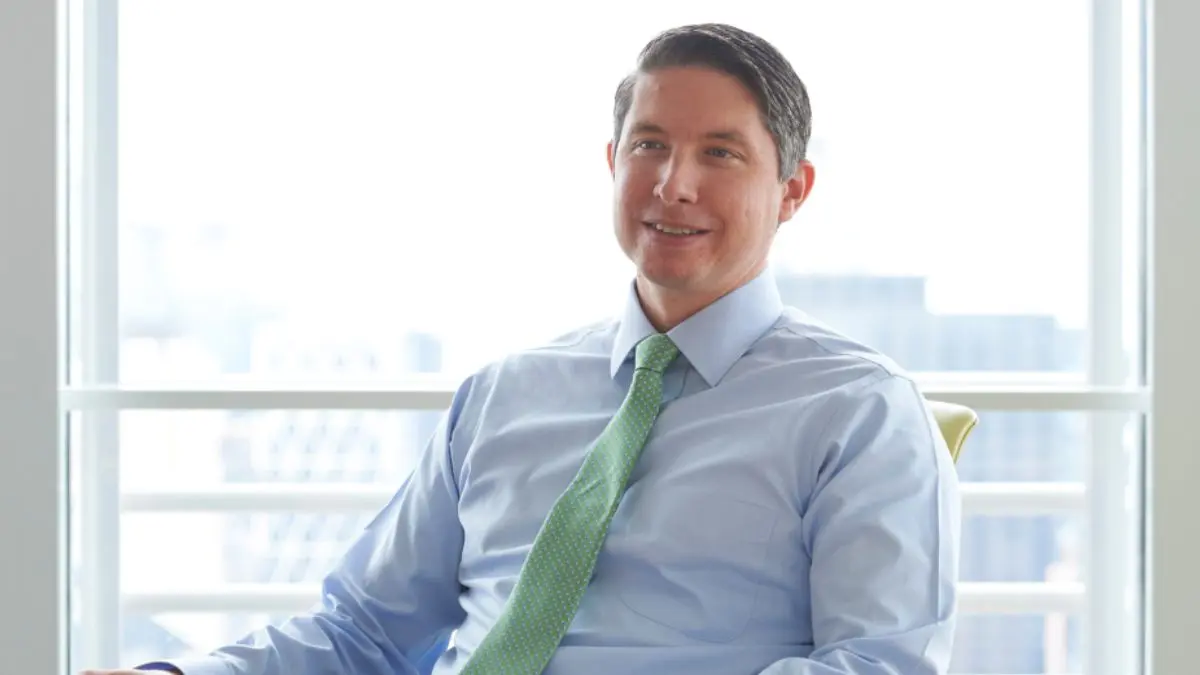
Jeff Schulze, head of market and economic strategy at ClearBridge Investments, argues that the wide range of concerns dominating market discussions, from stagflation fears to AI-driven job losses, are already well recognised and, to a significant extent, priced in.
“What matters most for financial markets is whether reality turns out better or worse than what has already been priced in. When expectations are low, stocks can push higher if subsequent events turn out better than feared.”
For advisers, the implication is clear: scepticism is not a threat to a bull market, but often part of its foundation. As fears subside incrementally, cash on the sidelines can be redeployed and hedges unwound, driving markets higher even in the absence of perfect economic conditions.
Stagflation fears and the oil price question
At the top of today’s wall of worry is concern about stagflation, largely linked to higher oil prices. Comparisons to the 1970s are becoming increasingly common, but ClearBridge believes they overlook important structural differences in the modern US economy.
Energy independence has materially altered the transmission mechanism between oil prices, inflation and growth, while overall energy intensity is far lower than in previous decades. As a result, sustained increases in oil prices are likely to have a more muted economic impact than many investors fear.
Recent history supports this view. The oil shock triggered by Russia’s invasion of Ukraine in 2022 failed to tip the US economy into recession, suggesting that the relationship between energy prices and broader economic outcomes has diminished.
Private credit under scrutiny
Another widely cited risk is private credit, an asset class that has expanded rapidly and attracted scrutiny due to its opaque structure. Some commentators have warned it could represent the next shadow-banking crisis, echoing concerns seen ahead of the Global Financial Crisis.
ClearBridge notes that while risks in private credit should not be dismissed, they are unlikely to generate the scale of macroeconomic spillover required to cause a recession. The asset class is primarily funded with long-term, gated capital, reducing the risk of a sudden “run” scenario.
Leverage across the sector also remains moderate. According to IMF research, aggregate bank exposure to private credit is around US$300 billion, less than 2 per cent of overall loan books. While defaults have increased, the relative scale remains small, particularly when compared with mortgage-backed securities, which represented around 30 per cent of US GDP heading into the GFC. Private credit today accounts for closer to 6 per cent.
AI and the fear of a job apocalypse
Few themes have captured investor imagination, and anxiety, like artificial intelligence. Fears of an AI-driven layoff cycle have intensified following softer US jobs data earlier this year, raising concerns about household incomes, demand and corporate earnings.
Schulze points out that while these risks deserve attention, the data suggests several other factors are playing a larger role in slowing job growth, including immigration trends, trade policy, demographic ageing and efforts to reduce the federal workforce.
Importantly, history suggests that major technological shifts tend to create jobs as well as destroy them. While AI may displace certain roles, it is also generating new forms of employment, including in data centre construction and digital infrastructure.
Only around 40 per cent of today’s jobs existed 85 years ago, highlighting the long-term benefits of creative destruction. Similar fears emerged during the internet boom of the late 1990s, yet new industries, from e-commerce to content creation, ultimately emerged to drive growth.
Market concentration and active opportunity
The final brick in the wall of worry is the elevated concentration of the US equity market. The 10 largest companies now account for 38 per cent of the S&P 500, trading at a significant valuation premium. This raises legitimate diversification concerns, particularly for investors relying heavily on passive large-cap exposures.
ClearBridge cautions that while today’s market leaders are undeniably dominant, history shows leadership can change materially over time. At the peak of the tech bubble in 2000, only three of the 10 largest S&P 500 constituents went on to outperform the index over the following 26 years, and none beat the equal-weight benchmark.
For advisers, this reinforces the case for active management and careful valuation assessment amid rapid technological and competitive shifts.
A familiar pattern for long-term investors
While today’s investment landscape may feel uniquely complex, ClearBridge argues the pattern is a familiar one. Multiple overlapping risks can create the impression that markets are on the edge of crisis, yet it is often precisely these environments that lay the groundwork for future rallies.
“We believe these worries are forming the foundation for a renewed upswing as fears gradually subside,” Schulze says. “For long-term investors, the current pullback represents an opportunity to deploy capital rather than retreat.”
For advisers navigating client uncertainty, that perspective may be a timely reminder that markets often advance by climbing a wall of worry, not waiting for clarity.

Laurence Parker-Brown is head of content at The Inside Network and managing editor of The Inside Adviser and Investor Strategy News.