Tuesday 19th May 2026
Contracted, essential, resilient: the case for infrastructure in uncertain markets
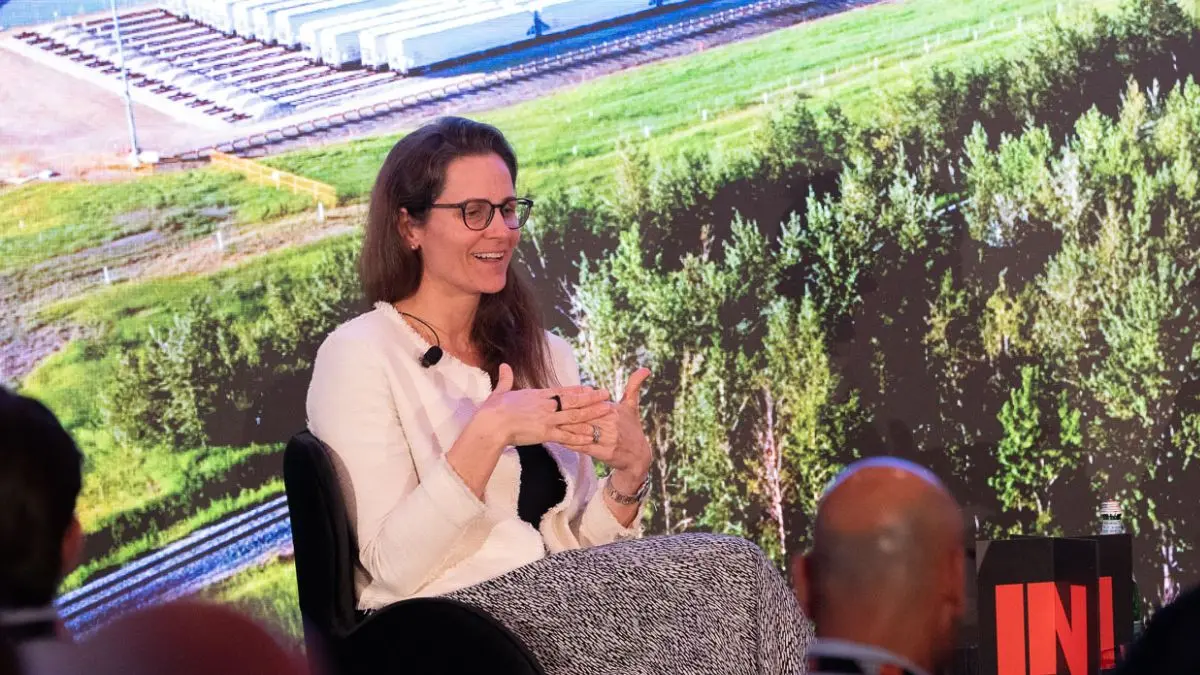
Brookfield’s Chloe Berry says the best assets are essential, contracted and built to outlast market noise.
In a market obsessed with disruption, Chloe Berry is making the case for infrastructure. In her view, good infrastructure should be stable and predictable. It should be essential, contracted, inflation-linked and hard to replace. The absence of the unpredictable is not a weakness, it is the attraction.
Infrastructure is much broader now
Berry wants investors to move beyond toll roads and airports. “Infrastructure is really networks and systems that transport stuff from A to B,” she said. That could be people, commodities, water or data.
The owner does not need to own the goods moving across the network. It owns the pipes, towers, cables or utilities underneath. Customers pay for access to capacity, often whether they use it or not.
This is not a volume story. It is a capacity story. Berry stresses that many customers pay whether usage is high or low. For advisers and their clients, that is the point. The cashflow is designed to be resilient.
That is the first pillar of her case. Infrastructure is essential to daily life and it also tends to sit behind high barriers to entry; large capital projects and location specific assets.
Berry’s portfolio has great examples from central Europe, where it locked in a 30-year, inflation-linked contract. That base contract, she argues, underwrote the downside, paying a return of their capital, as well as a modest, base return. Any operational value-add, Brookfields bread and butter, is additional profit.
“The beauty of infrastructure is it’s super boring.”
Private markets strip out the noise
Berry’s second argument is about structure, not only the assets within them. Investors may like infrastructure assets in general, but they sometimes dislike public market volatility. That is where private markets can offer a potentially smoother ride.
Her point is simple. These are long-duration assets with stable cash flows. Daily market pricing can distort that reality. Private vehicles let investors focus on income, inflation protection and long-term ownership.
That argument will resonate with advisers building resilient portfolios. It also speaks to the democratisation of private assets. Berry sees how private wealth investors are now getting access to strategies once dominated by pensions and insurers.
She also stresses alignment. Brookfield invests its own balance sheet alongside clients. “We are investing our own capital, and you are along for the ride,” she said. That is a powerful reminder of one of the core themes of great investing, the ability to tie in more than just access, but true alignment of interest.
Another key point is how Brookfield looks for value creation from procurement, build-outs and better contracts. It does not want returns built on leverage, FX calls or rate views. In her telling, that is where she believes many infrastructure stories go wrong.
AI still has to pass the same test
The most interesting part of Berry’s thesis relates to the disruptive power of AI. Brookfield sees the opportunity and it is raising an AI infrastructure fund, but it will not abandon discipline to chase the theme.
In Berry’s view, AI infrastructure only works if it looks like infrastructure. A data centre still needs long contracts. It still needs strong counterparties and an appropriate capital structure.
Berry was clear on what Brookfield will not do. It will not take loose technology risk nor rely on speculative residual values. Ultimately, it will not back assets unless capital can be repaid within the contract life.
Her final point follows naturally. Good infrastructure should ride through politics, rates and tariff noise. These assets serve local communities. They are not exporting widgets across borders. Strong contracts help, so do conservative balance sheets and inflation-linked revenues, all helping to keep macro drama from breaking the thesis.
For advisers, Berry’s message is useful because it is so unfashionable. She is not promising fireworks. She is promising resilience. In today’s market, that may be the more compelling story.

Laurence Parker-Brown is head of content at The Inside Network and managing editor of The Inside Adviser and Investor Strategy News.