Thursday 5th November 2026
The RBA is tightening into a slowdown. Roy Keenan is locking in the yield
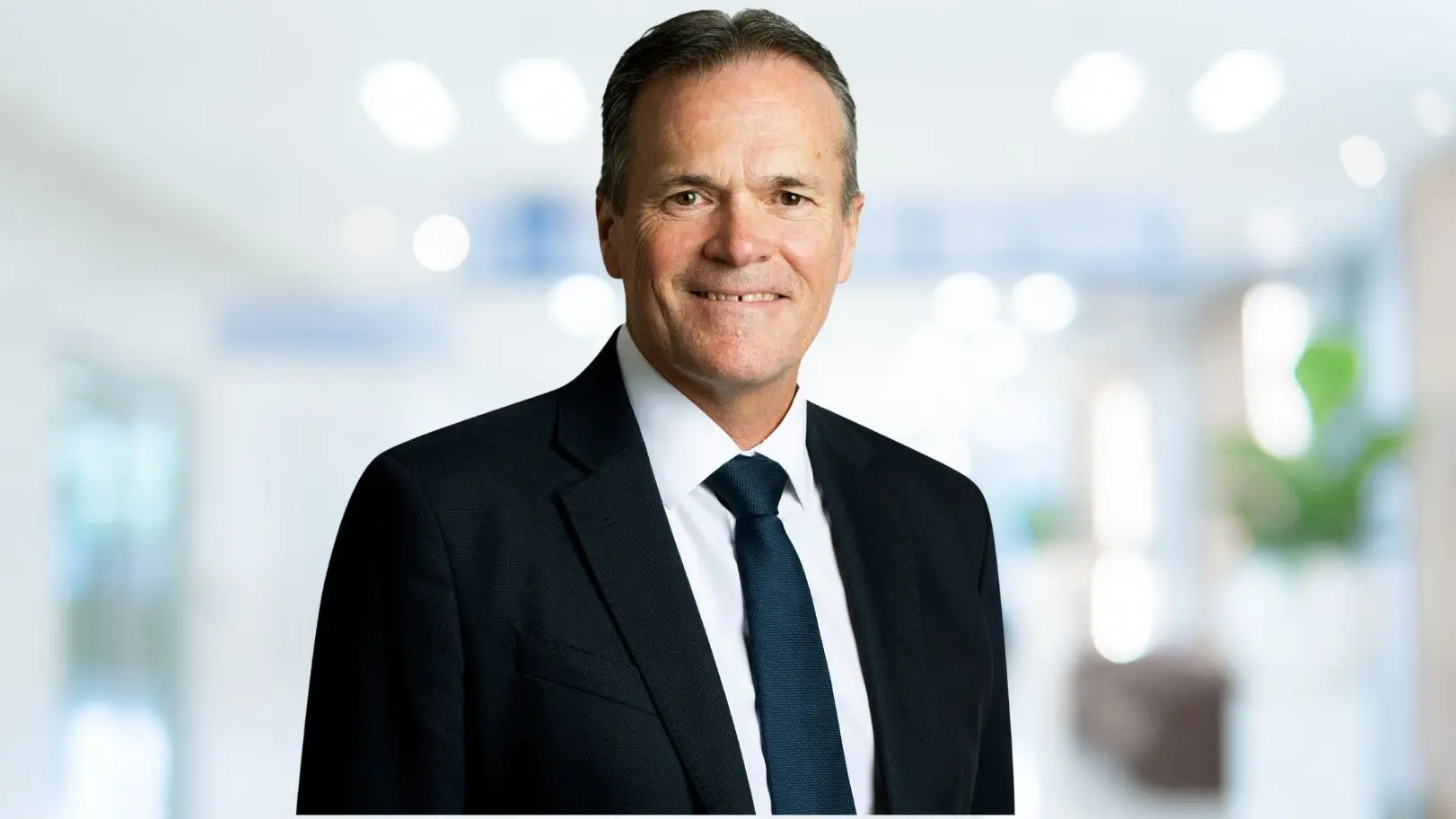
Yarra Capital Management’s veteran fixed income manager thinks the market has overshot on rate hikes, and is positioning for the moment the RBA has to reverse course.
It took just three weeks. On 25 August, the consensus was that the Reserve Bank of Australia (RBA) had finished tightening, and its next move would probably be a cut in 2027. By late September, the RBA was lifting the cash rate again, and the market was pricing more to come.
For Roy Keenan, who runs the Yarra Enhanced Income Fund, the speed of that turn is the story. “We had a 0.1 (percentage-point) miss in CPI, growth was a bit higher, and we went from the whole Australian market saying the next move is down, to three weeks later we’re tightening. That’s a very short time for consensus to shift so completely.”
Last year, Keenan argued the RBA cut too fast, too soon. Now he thinks the error is running the other way.
Watching the wrong gauge
“They’re very focused on inflation, inflation, inflation,” he says of the central bank. “If you’re too focused on one thing, you can miss what’s actually going on in the real economy.”
What Keenan sees is a slowdown already underway. Household spending and property prices are falling. Unemployment, at roughly 4.7 per cent, has already reached the RBA’s forecast peak. He thinks it is heading to 5 per cent, possibly 5.5 per cent.
By his reading, the economy peaked last November. The effect of three rate rises in early 2026 and a rising Australian dollar has yet to bite. “We’re tightening into a slowing economy.”
The inflation problem is also narrower than the headline suggests. Of the 87 items in the Consumer Price Index (CPI) basket, Keenan found only 14 inside the RBA’s 2-3 per cent target band, but 49 already below 3 per cent.
“It’s not like 2022, when everything was displaying inflation,” he says. “We still have categories that are interest-rate sensitive and showing no inflation, and you’re whacking them.” Many of the volatile items driving the rise are not especially rate-sensitive, so higher rates hurt the economy without necessarily curbing inflation.
Monetary policy is a blunt tool, and Keenan wants fiscal policy, particularly spending, to pull in the same direction. “It’s not just federal governments. State governments have to do their bit as well.”
He doesn’t expect the RBA to deliver the 1–1.2 further hikes the market has priced in, nor the Fed the three-and-a-half priced in the US. If the RBA keeps going, the risk is a recession of its own making. The saving grace is the corporate sector. Unlike in past downturns of his career, “coming out of reporting season, balance sheets look in really good shape.”
Front end yes, long end no
So the fund holds its interest rate risk in the three-to-five-year segment of the yield curve. It holds none at the long end.
The forces pushing long-term yields up are structural, he says. Stretched government finances across the developed world are one. AI hyperscalers borrowing on a scale that rivals sovereigns are another. “They need to be one of the winners of the AI race. It feels like an arms race.”
The US term premium, the extra return investors demand to lend for ten years, has also started to rise from very low levels, and it can move fast. With the US 10-year Treasury yield around 5.35 per cent, Keenan wouldn’t be surprised to see 6 per cent.
Tellingly, the oil spike from US$80 a barrel to US$110 triggered the bond sell-off, but oil has since retreated about 10 per cent and US yields have kept climbing. “It tells you there are other catalysts at play.”
Locking in 6.75 per cent
A fund that historically favoured floating-rate, low-duration assets now has more than half its portfolio in fixed rate. Keenan concedes the timing hurt: Yarra started adding duration in May, was in the money for three or four months, then gave it back in five weeks. “Timing is everything, and we’ll put up our hand. There’s a bit of short-term pain for longer-term gain.”
The logic is about protecting income. The fund is yielding 6.75 per cent, about 215 basis points over the cash rate, against a target of 230 to 280 points above cash. If the RBA cuts next year, as Keenan expects, floating-rate income falls with it; fixed rate locks it in.
The asymmetry also favours bonds. On a 12-month view, a 1 per cent rise in rates might cost around 80 basis points, while a 1 per cent fall would deliver an eight to nine per cent gain. “Picking the peak in interest rates is really hard,” he says. “But if you ease into the position, I think it’ll reward you.”
A five-year fixed major-bank Tier 2 note pays close to 6.5 per cent, and a ten-year close to 7 per cent. A new “kangaroo” (an Australian-dollar security issued locally by a foreign entity) Additional Tier 1 (AT1) issue from Japan’s Mitsubishi UFJ Financial Group (MUFG) recently priced at 7.4 per cent. It has a 5.25-year term.
“We can buy AT1 BB+ to BBB– bank paper at 8 per cent. It might not be the peak in the rate or the credit spread, but it’s a great starting point,” he says. Keenan has cut Tier 2 from about 55 per cent of the portfolio to just under 40 per cent over the past year, rotating into corporate hybrids and regional and offshore banks.
For advisers, he draws a clear line on term deposits: below the $250,000 government guarantee, they make sense. “For the dollar over $250,000, you’re not getting rewarded via term deposits versus going into a Tier 2 or an AT1.”
Private credit: price the illiquidity
Keenan is careful not to bash private credit, which “has a place in the market”. But the past year has exposed a mismatch between illiquid assets and redemptions that can be called at any time. “You need to get paid for illiquidity risk. With how much money was thrown at private credit, the gap between liquid and illiquid assets wasn’t enough.”
Gating, in his view, is part of the product design, not a failure of it, and he holds up US manager Blue Owl as a model of disclosure: “We found them to be exceptional.” But investors drawn by the absence of daily pricing need to understand the trade-off. “If you’re investing in things that aren’t marked-to-market, you can get valuation shocks, and people are just starting to experience that in Australia.”
Public credit, by contrast, is marked daily, and offers the same total return as two or three years ago. Only the mix has changed: back then, the return was all credit spread. “Today, we’ve got the exact opposite: high base rates, and credit spreads at basically long-term averages.”
Better than equities
Keenan has called this the most compelling phase for fixed income in his 40-year career. A volatile five weeks hasn’t changed his mind. The S&P/ASX 200 offers less income than bonds, and investors question whether equities have peaked. “The bond market’s now looking like a very good risk-reward play,” he says.
Every rate rise, he notes, brings celebration among retirees earning more income and pain for borrowers. Keenan’s bet is that the borrowers’ pain arrives first, and that when it does, the investors who locked in today’s yields will be glad they did.

James is an experienced senior journalist at The Inside Network.