Monday 16th November 2026
The credit market’s calm is hiding a record run of defaults
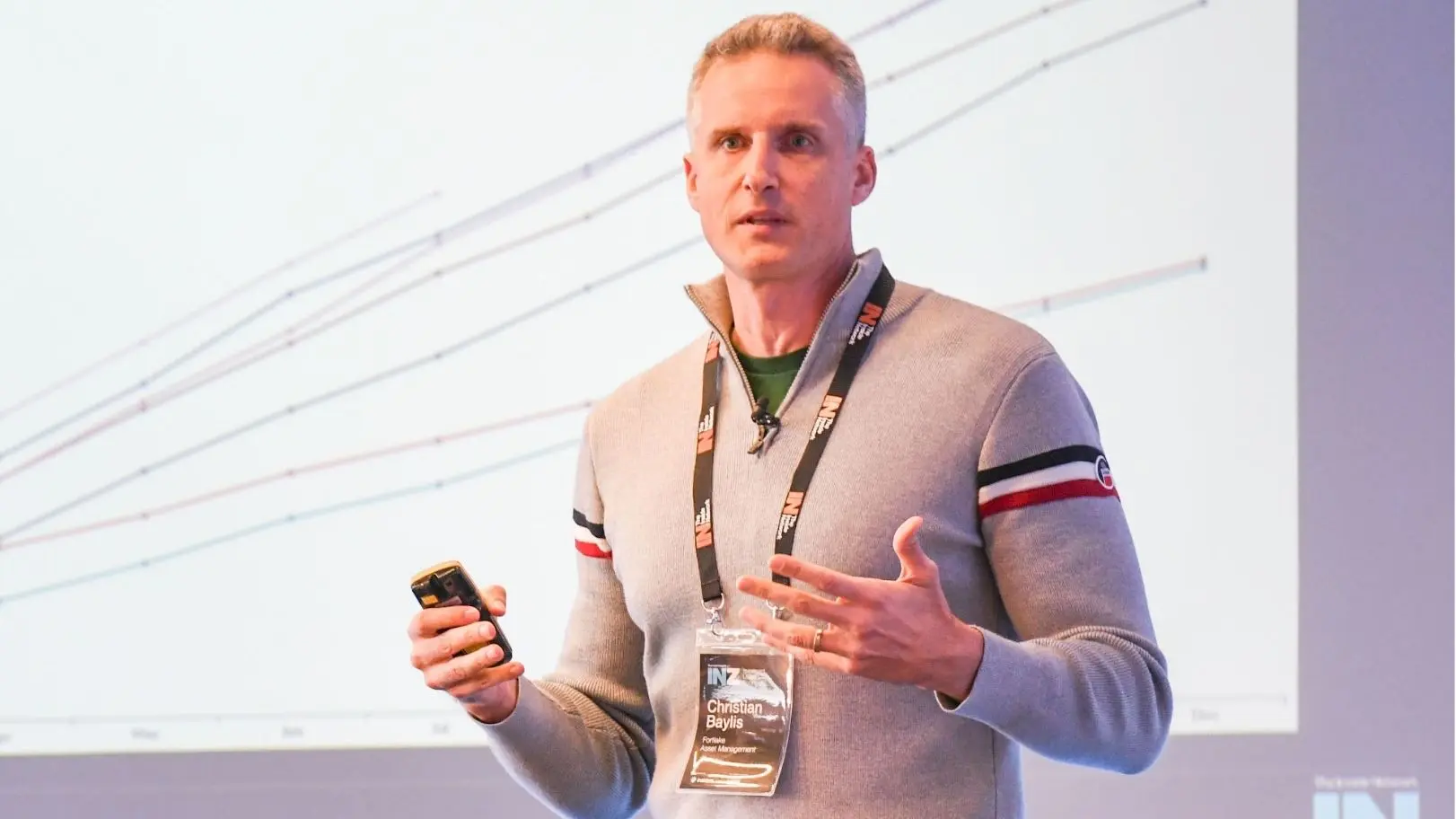
Fortlake Asset Management’s Christian Baylis says US bankruptcies are running at the highest level on record while credit spreads sit near all-time tights. Advisers should be judging credit risk by covenants and recovery rates rather than by the spread on offer.
Equity markets are close to all-time highs and credit spreads sit near all-time tights. Underneath that, the Chapter 11 courts in the United States are processing the highest number of bankruptcies on record. Both are true at once, and the second is not visible in the price of corporate credit risk.
Christian Baylis, chief investment officer at Fortlake Asset Management, traces the gap back to 2020. “The worse your business model was in 2020, the better off you became, because of the transfer from the public to the private sector.”
Highly levered businesses with failing prospects were handed the means to replenish their balance sheets. That did not restore them to competitiveness. It moved their default dates, and the dates are now arriving.
The deferred defaults
The scale of the deferral shows up in Fortlake’s own participation. About 23 or 24 defaults were processed through the CreditEx default system in 2020. In 2021 the capital markets produced one, Europcar. Fortlake has taken part in five default auctions this year alone.
“In 2021 you had to be talented to default, because you had negative real rates of circa negative 7 per cent and transfer payments going from public to private,” Baylis says.
The failures arriving now are idiosyncratic rather than systemic, and they cluster where technology has reordered demand. Printing companies have started to fail because people print less than they did. Here Baylis points to Xerox and Domtar.
High yield pharmaceuticals are dealing with patent expiry and American litigation. Dish, disrupted by satellite services such as Starlink, defaulted recently.
The pattern he sees inside those names is a second mistake layered on the first: companies adding debt to buy their way into the AI economy, getting the entry wrong, and doubling down from a weaker balance sheet.
Nine cents, not forty: repricing corporate credit risk
The more consequential change is what is left for lenders when a company does fail. In 1985, tangible assets backed about 20 per cent of the S&P 500. Today roughly 90 per cent of the index is intangible. High yield markets still price implied recovery rates at 40 cents in the dollar.
Fortlake’s data on capital market defaults since the lockdowns puts actual recoveries closer to nine cents.
“When a corporate defaults these days there is a bunch of Microsoft packages left, and creditors are not too interested in that.”
Recovery assumptions are set for a bygone era, and the gap between 40 cents and nine is not a rounding error in expected loss.
Covenants
Baylis argues covenants should be watched as their own market, and that the erosion is being driven by the evergreen structures behind business development companies, which take capital up front and must deploy it quickly into illiquid assets. The quickest route to deploying it is looser underwriting. “Once covenants go down they do not come back,” he says.
The numbers he uses to make the point are stark. Covenant-lite lending accounted for 10 per cent of leveraged finance loans in 2007. It accounts for about 90 per cent today. He also notes the market’s distress signals have moved. Less attention on high yield maturity walls, more on redemption queues in BDC vehicles and on the documents themselves, which are rolled into direct lending and private credit too.
This is where the argument needs a qualification. Covenant-lite has been the norm in leveraged loans for the better part of a decade, and by Baylis’s own count 2021 produced a single default.
Weak documents tell an investor about the severity of a loss, not its timing, and they can defer the event by letting a borrower amend and extend rather than trip a test. A record number of filings also says more about the count of small failures than about the dollars at risk.
A catalyst for change
What could change the timing is the funding of the AI build. The hyperscalers are spending roughly US$1 trillion on capital expenditure this year, and Baylis puts about 35 per cent of that as debt funded.
Technology already makes up about 20 per cent of both the investment grade and high yield indices. The issuance is going out long, at 15 years and beyond, and the market is repricing it.
Back-end hyperscaler spreads that began around 74 basis points a year ago have roughly doubled. Amazon is borrowing for 30 years at about 150 basis points duration adjusted.
His conclusion is not that the cycle ends tomorrow. It is that the top-line calm has left little in pro-risk assets while the dispersion underneath it has created something to work with, as corporate credit risk resurfaces in a market where public and private credit increasingly meet.

Laurence Parker-Brown is head of content at The Inside Network and managing editor of The Inside Adviser and Investor Strategy News.