Thursday 24th September 2026
Five questions to ask before you buy a private credit fund

Before you put client money into a private credit fund, ask these five questions. KeyInvest's Craig Brooke worked through more than 300 managers before backing twelve, and the gap between them rarely showed up in the headline return.
Ten years ago, if you wanted to lend money to a mid-sized Australian business, you more or less had to be a bank or a very large institution. That has changed.
Private credit in Australia has grown past $200 billion, and a good deal of that money now comes from self-managed super funds and the everyday clients advisers deal with. The asset class has well and truly arrived.
The trouble is that “private credit” has become one of those phrases that sounds precise and tells you almost nothing.
Two funds can sit under the same label and be doing completely different things. One might be lending against a first-ranking mortgage over a finished, income-producing building.
Another might be funding a half-built development, ranked behind other lenders, on the expectation that it all comes good at settlement. Both will happily call themselves private credit paying an attractive yield.
The income might even look similar on the page. The risk is not remotely the same.
I spend a fair bit of my time reading these offers. When we built our own private credit portfolio we worked through more than 300 managers and ended up backing twelve.
The gap between the best of them and the rest was wider than I expected, and it rarely showed up in the headline return. It showed up in the detail most people skip.
So when someone asks how to judge a private credit fund, I point them at the same questions we ask.
Where do you stand if a borrower cannot pay?
When a borrower cannot pay, the order of repayment decides everything. Senior lenders collect first. Anyone ranked below them collects only once the senior debt is satisfied, and sometimes nothing remains by the time it reaches them.
A first-ranking mortgage over real property is a very different starting point to an unsecured loan or a second charge, and you are entitled to know which one the manager is offering you before you give the yield a second thought.
What does the manager actually earn, and how?
The management fee is only part of the story. Ask what the manager earns from the borrower as well, because money taken at that end can quietly change whose interests are being served.
A manager who is straight with you about this is telling you something useful. One who talks around it is telling you something too.
How does the fund value the book?
Valuation sounds dull and matters enormously. These loans do not trade on a screen, so no live price keeps everyone honest. Value comes down to process and judgement.
Ask how often the book is valued and how conservative the manager is when a loan starts to look shaky. In a market that has grown this quickly, the quality of that process is one of the few things separating a well-run fund from one that is simply riding the cycle.
When can you get your money back?
Some funds offer regular redemptions while lending for years underneath. That mismatch can be managed well, but you want to understand how before you need the exit rather than after.
Most people come to private credit for the income, usually paid monthly, and steady income is a perfectly reasonable thing to want. Just make sure the fund paying it is built to keep paying it when conditions turn.
The label on the front tells you very little
None of this needs a finance degree. It needs plain questions and a bit of attention to how readily they are answered.
Private credit can do a real job in a portfolio built for income, and most funds now in the market have managers who will gladly explain how they work.
In my experience the ones worth your money are usually the ones who welcome the questions. The label on the front tells you very little. Everything that matters sits behind it.
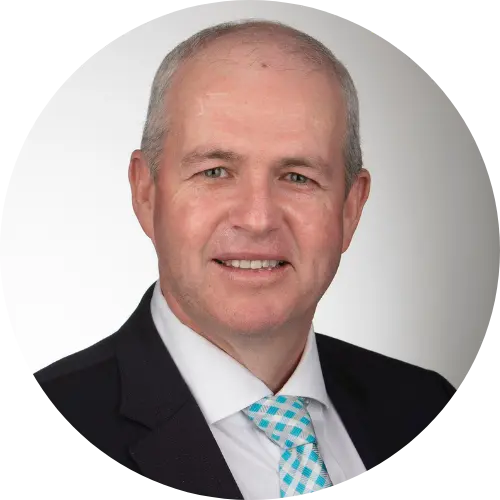
Craig Brooke is the CEO and managing director of KeyInvest Group Holdings, with more than 25 years' experience in senior executive roles across the financial services industry in Australia and the Asia-Pacific region.