Thursday 22nd October 2026
The next generation of wealth will choose its own adviser
SIAA's 2026 report says the advice profession's silence about its own standards is costing it relevance, just as the $5 trillion wealth transfer to women accelerates and most high-net-worth Australians remain unadvised, the report finds.
Most practices treat a client book as a durable asset, something that compounds quietly and passes to the next principal with the relationships intact.
The Stockbrokers and Investment Advisers Association thinks that assumption deserves a closer look. Its 2026 insight report, Invested in what comes next, argues that inherited relationships rarely survive the moment money changes hands, and that the profession’s public story has not kept pace with the standards now behind it.
The report puts one number at the centre of that argument. Only 24 per cent of high-net-worth Australians have a nominated financial adviser, on 2026 industry research by Praemium, SIAA and CoreData, even though the country’s investable wealth pool exceeds $4.4 trillion.
Demand for guidance keeps rising as platforms, self-directed investing and hybrid models reshape how people engage with their money. Three quarters of the wealthiest cohort still choose to do it without a named professional.
The rebuild
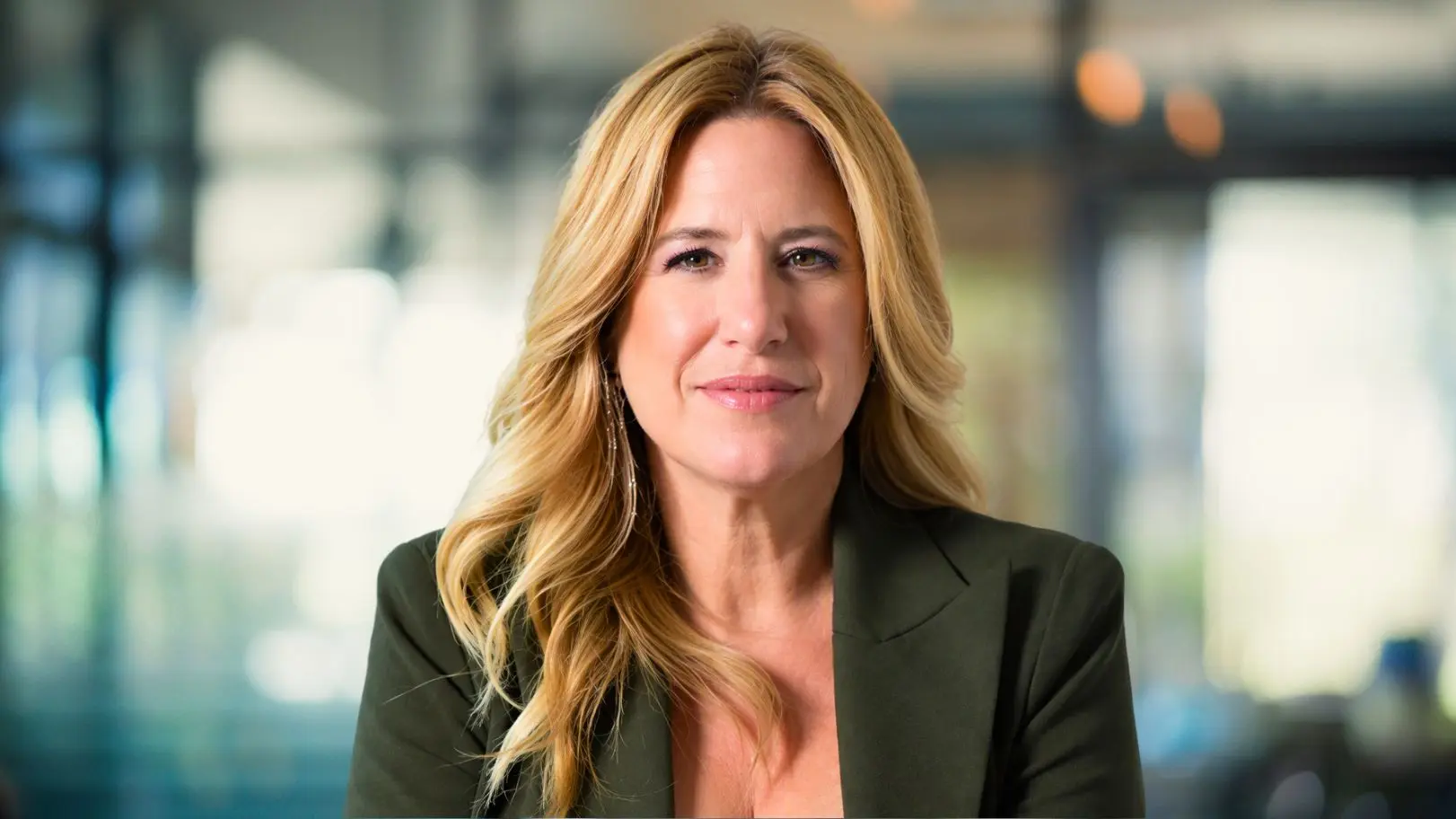
Maria Lykouras, chief executive at the Stockbrokers and Investment Advisers Association, describes a profession that raises its standards and then stays quiet about it.
Entry now requires a university qualification, a national exam, a supervised professional year and continuing development weighted heavily towards ethics.
Adviser numbers have fallen 48 per cent on SIAA’s April 2026 submission to Treasury, and the association reads that decline as evidence the bar has moved rather than evidence demand has collapsed.
The register has since turned, with Padua WealthData putting the number at 15,169 in late September 2026 and calling the financial year to date gain of 286 the strongest start to a financial year since 2019-20. The profession is rebuilding from a higher base than the one it left.
Public understanding has not moved with it. Past misconduct still shapes how the work is described, and the word stockbroker carries associations practitioners no longer recognise in their own work.
Lykouras came to the association from JBWere, where she was the first woman to run the firm, so she makes the case from inside a practice rather than from an association office.
“This is a profession that changes lives. We need to start telling that story.”
The silence carries a commercial cost, because perception shapes who applies for a graduate role and who agrees to a first meeting. Firms then work harder to establish credibility they have already earned.
The wealth transfer
The sharper commercial point in the report concerns who holds the wealth next. JBWere research from 2024 suggests around 65 per cent of Australia’s projected $5 trillion transfer will move into the hands of women by 2034.
Roughly one in four investment advisers is female, and that proportion falls away at senior levels where long client relationships form and endure.
SIAA treats this as a client service question rather than a representation exercise. A client who has inherited wealth, sold a business or taken control of a family’s finances for the first time wants technical competence and someone who understands her circumstances. Where a practice can offer both, it keeps her.
The report puts the commercial logic plainly. Where a profession does not resemble the population it serves, that population finds other ways to get the service, and those arrangements tend to hold.
The report points to structural causes rather than individual choices. Entry pathways still run through personal networks, progression assumes working patterns that are hard to sustain, and client allocation often follows informal channels.
The report treats those constraints as changeable, noting that many firms have already redesigned pathways, invested in sponsorship and built more flexible, team-based structures, with results showing up as stronger pipelines and deeper client relationships. McKinsey’s work on inclusion puts a number on the prize, with companies in the top quartile for gender diversity 25 per cent more likely to outperform financially.
The access question
Expanding access is one of the report’s stated aims, and the scale of that task is worth setting out. Deloitte counts more than 4 million Australians aged 67 or older, with a further 5.3 million over 50 planning to retire within two decades, against a register of a little over 15,000 advisers.
Those numbers also offer a second reading of the 24 per cent figure. Some unadvised households may simply be unable to buy what the profession sells at the price it costs to deliver.
SIAA members already work across the full spectrum, from self-directed and online participation through to full-service advice, and the report treats that breadth as a structural advantage.
Practices that build on it, through scaled advice, digital delivery or lower-cost entry points, stand to capture more of the wealth transfer than practices that work only on the narrative.
The daily decisions
Reputation forms through ordinary choices rather than campaigns. The report lists the ones that recur, including the graduate passed over for not fitting the usual profile, the entry-level hire placed into administration because that is where the opening exists, and the retiring adviser who hands an entire client book to a successor who resembles him.
Meanwhile the work itself has rarely looked more attractive to the people the profession needs. The World Economic Forum’s 2023 Future of Jobs research estimates roughly 40 per cent of core job skills are being reshaped by artificial intelligence, with the fastest-rising capabilities being judgement, contextual insight and decision-making under uncertainty.
Investment professionals apply all three before lunch, across capital raises, listings and restructures, working alongside the chief executives, founders and boards running them.
SIAA wants the profession recognised by 2030 as trusted with generational wealth and as a preferred career for future leaders, and the report argues that version of the job simply needs saying out loud.

Cristina is a contributor and content manager at The Inside Network.