Thursday 29th October 2026
The confident wrong answer: AI's new risk, and why advice survives
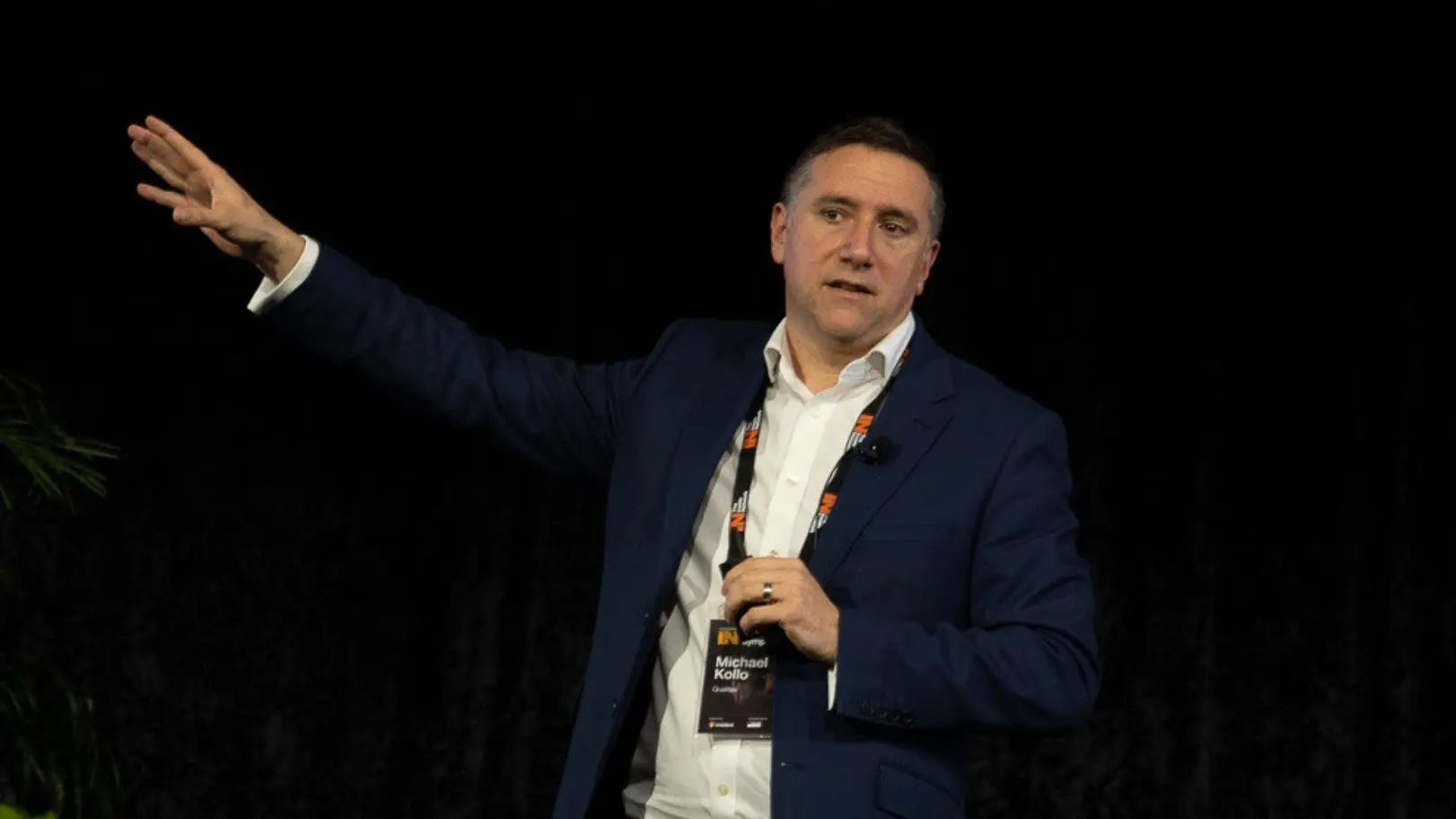
Qualitas's Michael Kollo says AI can now do in four hours the due diligence that once took analysts three months, but the value comes from structure and precision, and the reason good advice survives is that knowledge is getting cheap while execution stays scarce.
The number that lands is the time saved. A development-loan due diligence that used to take well-paid analysts about three months, reading 400 to 600 documents to find the risks and write the investment committee paper, now takes a Qualitas AI system about four hours. Michael Kollo, who built it, is quick to say the number is the least interesting part.
What matters, Kollo argues, is that this is not automation. The system reasons within a policy set by Qualitas and informed by roughly 300 past deals. It organises each assessment into nine pillars of risk and pulls 30 to 40 metrics out of unstructured documents. It then connects them the way an analyst would, flagging a liquidity problem, say, when a builder misses a contracted milestone.
Crucially, it shows its working: which document and which data point a conclusion came from, and why it was surfaced for a human to judge. That traceability, he says, is better than what two junior analysts a couple of years out of university typically provide.
Structure and precision
The lesson Kollo wants advisers and asset managers to take is not about the technology but about the discipline around it. Qualitas spent two months planning before writing a line of code. It worked out what counted as a relevant risk and how to define it. Kollo says that is a hard conversation, because most experts have never had to write down what “good” looks like.
He reduces the craft to two words: structure and precision. Structure means being exact about the inputs, the outputs and the reasoning steps in between. Precision means building in checks so the model does not drift, and the simplest is to make it mark its own work.
“Asking it to check its own answer twice took about 45 seconds longer and caught two small mistakes I would not have found otherwise,” he says of a task he ran that morning.
Most people, he says, use AI the way you “throw paint at the ground and see what sticks,” then give up when it will not converge. The failure is usually the user’s structure, not the model.
The risk has also changed shape, and this is the part advisers should hold onto. The obvious hallucinations of a couple of years ago are giving way to something subtler.
“The model draws on the wrong context and states something with full confidence that sounds entirely reasonable but is wrong,” Kollo says, and that is harder to catch precisely because it is plausible. Junior staff without a sceptical instinct are most exposed.
His practical fix is unglamorous. Simply tell the model to check its own answer two or three times before it finishes. Remember, too, that bad data flows through an AI the way it flows through a human analyst. In his framing, the system is “re-engineering the human cognitive process, not replacing it.”
Why advice survives
For advisers wondering whether the same tools eventually come for them, Kollo’s answer is measured. Knowledge, he argues, is heading towards zero marginal cost, the way health and fitness information became abundant over recent decades. What stays scarce is the execution layer, actually getting someone to act on the knowledge, which is where good advice, like a personal trainer, keeps its value.
He points to why robo-advice fell short. A group of technologists tried to optimise the problem as though it were a 60/40 portfolio decision. Clients rejected it, because money is an emotional subject.
“People want to feel someone has them covered,” he says, “and that requires something like a social contract that a model on its own cannot offer.”
The counsel is not that advisers are safe forever, but that the part of the job a model cannot do, the relationship and the follow-through, is the part that was always the point.
The training question
That leaves a real question about training. If AI hollows out the entry-level grind that finance has long used to teach graduates, the industry has to work out how the next generation moves up the curve.
Kollo’s own view is that the freed-up time is better spent on the harder, less obvious risks than on simply doing more deals. He also believes the tool can teach as well as do.
The takeaway for everyone working with private wealth clients is two-fold. Firstly, the value of these systems comes from the person defining the task, not the model running it, so the skill worth building is the structure and precision Kollo describes.
Second, the confident-sounding wrong answer is the new error to guard against, which means human scepticism matters more, not less. AI has changed what a few analysts can do in an afternoon. It has not changed who has to decide whether the answer is right.

Laurence Parker-Brown is head of content at The Inside Network and managing editor of The Inside Adviser and Investor Strategy News.