Thursday 9th July 2026
Signal or noise? How to tell if your manager is underperforming or just out of fashion

When portfolio construction decisions are driven by short-term performance anxiety rather than process, the real cost is conviction. Shane Brereton explains how to tell the difference and hold through it.
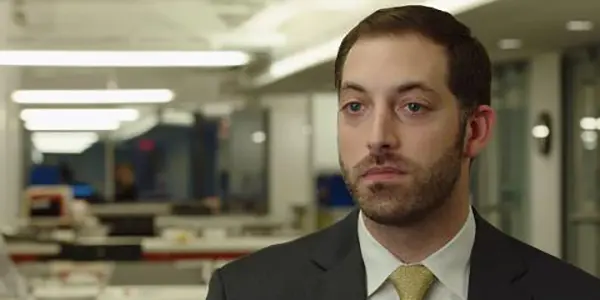
The moment a manager starts underperforming, the long-term view has a remarkable way of evaporating. Shane Brereton has built a career helping advisers and investment committees resist exactly that impulse, and his approach to portfolio construction starts long before a manager is ever selected.
He has seen too many managers replaced simply because short-term returns disappointed, with little consideration given to whether the process itself had actually broken down.
“But if their process and style do not match to what the market is rewarding, is that a fair change?” he asked.
The question investment committees rarely ask
Brereton ‘s starting point when evaluating manager underperformance focusses on process. Two questions drive the analysis.
First, what is the manager holding and why? Second, what are they not holding, and does that absence reflect their process or a deviation from it?
A manager who is structurally underweight high-PE momentum stocks because their process demands valuation discipline is not failing. They are doing exactly what they were appointed to do in an environment that is temporarily not rewarding it.
Brereton is unequivocal on this point. The investment committee’s job is to know the difference between a manager whose process is intact and one whose process has drifted, and to have the conviction to hold through the former while acting decisively on the latter.
“If they’re not holding a stock, and I know that’s from their process, and those funds are in a strong momentum rally, I’m not necessarily going to be too critical of a manager if they’re underperforming. I’d probably be more concerned if they were chasing that.”
His football analogy captures it well. You could have the best left winger in the competition on the field, but if the ball keeps going to the right wing, you do not drag the left winger at half time. You ask whether they are still doing their job correctly when the ball does come their way.
If they are, you back them. If they are not, that is a different conversation entirely.
Style dispersion is the defining challenge
Brereton’s broader read on the market environment heading into the second half of 2026 is that style dispersion has made the job of holding conviction harder than it has been in years.
Growth managers have performed strongly in certain periods, value managers have had their moments, and the rotation between the two has been volatile enough that month-to-month performance figures are almost meaningless as a signal of underlying manager quality.
“It’s been very volatile. It’s hard at the moment to make sure you’re getting the signal, not the noise,” he said.
For advisers and investment committees trying to build equity sleeves that perform across different market regimes, his advice is to spend less time reacting to performance and more time understanding the factor exposures embedded in each manager’s portfolio.
Domestically, a large part of the performance differential between managers right now comes down to a single variable: their weight in CBA relative to the index.
The signal there has nothing to do with skill. It speaks to how benchmark-aware the manager is and whether that is what the portfolio actually needs from them.
Thematic investing
On thematic investing, Brereton’s view is that the narrative is almost always more compelling than the execution. Themes that are structurally sound over a decade, water, demographics, AI, energy transition, are genuinely difficult to translate into stocks that perform over the next 12 to 36 months.
The challenge is not identifying the right themes. It is implementing them in a way that delivers the return profile the theme implies, within a timeframe that clients can hold through.
“A lot of the really strong themes are generally over quite a long timeframe, and it can be very difficult to find the stocks that replicate that theme in performance in the middle of them,” he said.
Before adding a thematic allocation to any portfolio construction framework, advisers need to sit with one honest question: can you hold it through the periods when the theme is right, but the stocks are not performing?
If the answer is no, the thematic exposure is likely to be added at the wrong time and removed at the wrong time, which is worse than not having it at all.
Portfolio construction
Brereton’s closing message is about resilience, something that warrants careful consideration given how benign the recent drawdown environment has been.
Over the past 18 months, markets have absorbed shocks that in any prior period might have produced a meaningful correction. That resilience has been real, but it has also conditioned investment committees and advisers to expect it to continue.
Brereton’s view is that this is precisely the wrong lesson to take from recent experience.
“I’m trying to test what strategies in my portfolio I think can survive a bit of a downturn,” he said. “We’re trying to be aware of still having the growth exposure, but where can we build in a layer of resilience?”
For advisers reviewing portfolios now” with “For advisers reviewing portfolio construction decisions now. Not which managers have performed best over the past 12 months, but which ones are genuinely built to hold their value when the conditions that have supported recent performance shift.
Markets have a way of stress-testing portfolios at the moment of maximum inconvenience. The advisers who have done that work in advance, quietly and without urgency, are the ones whose clients will not be asking hard questions when it matters most.

Laurence Parker-Brown is head of content at The Inside Network and managing editor of The Inside Adviser and Investor Strategy News.