Monday 28th September 2026
From delivery hubs to defence dollars: how Trilogy Funds reads the new industrial map

Trilogy Funds is set to acquire a near-15,000 square metre logistics facility at Darwin's East Arm, its third Northern Territory purchase, as industrial property evolves into critical economic infrastructure.
There is a particular kind of double-take that comes from returning to a place after a long absence and finding it unrecognisable. I had it in June, on a trip to Darwin, my first visit since 1999.
What greeted me this year was a different city altogether: energetic, young and thrumming with the kind of thematic overlap fund managers usually only get to describe in pitch decks. Defence spending, energy, critical minerals, logistics and supply-chain resilience are all stacked on top of one another in the one small tropical capital.
It turns out I wasn’t alone in noticing. Laurence Parisi, Head of Direct Property at Trilogy Funds, has been watching Darwin for years, and the fund manager is about to make its third acquisition there.
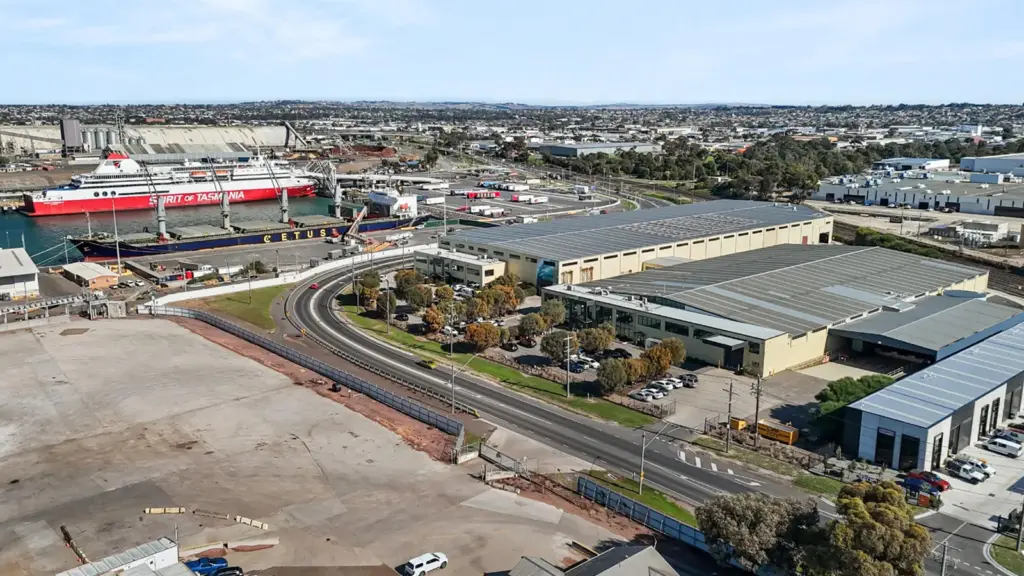
A near-15,000 square metre logistics facility at East Arm, on four hectares close to the Port of Darwin is set to underpin the Trilogy Northern Logistics Fund.
It is, in many respects, a case study on how Trilogy Funds thinks about industrial property more broadly. And that way of thinking has shifted considerably over the past decade and a half.
The shed has evolved
Parisi’s own description of the change is succinct: industrial property has moved from the manufacturing-era sheds of 15 or 20 years ago to what he calls “critical economic infrastructure.” E-commerce lit the fuse, creating demand for the kind of sophisticated distribution and last-mile logistics facilities that didn’t really exist in the pre-online-shopping economy.
But e-commerce is only part of the story. Automation and robotics have since become the more significant driver of demand for higher-specification buildings. This includes, at the sharper end, what the industry calls ‘dark sheds’: fully automated facilities with no lighting and no human involvement at all, where robots load, unload, rack and pick without anyone on site.
Layered underneath all of this is old-fashioned population growth, which keeps driving freight volumes and retail supply chain requirements regardless of what’s happening in technology. Then came the pandemic, which taught businesses that lowest-cost inventory models are not the same thing as resilient ones.
And more recently, a renewed focus on defence spending has opened up opportunities in strategic locations that, a decade ago, would barely have registered on even an institutional property manager’s radar.
The upshot, as Parisi puts it, is that the investment universe available to a manager like Trilogy Funds is far broader today than it was five or ten years ago, and it now shares a boundary with sectors that still sit formally within the ‘industrial’ classification despite bearing no resemblance to a shed.
Built by necessity, not by crystal ball
Parisi says Trilogy Funds often looks past the established markets of Melbourne, Sydney and Brisbane to target metro-adjacent and regional hub locations when it comes to finding assets that deliver for investors.
Government infrastructure spending, federal, state and territory, has since unlocked roads, rail and airport capacity in exactly those regional and metro-fringe locations, turning what were opportunistic picks into genuine logistics hubs.
This is a useful point for advisers to sit with, because it cuts against the tidy narrative active managers like to tell about their own foresight. Trilogy Funds’ edge has as much to do with patient positioning and a willingness to look beyond the obvious postcodes as with any special insight into where freight corridors would eventually run.
Geography, in Parisi’s telling, remains one of the most important variables in industrial property, but the definition of good geography has expanded, and Trilogy Funds’ job has been to stay in front of that expansion rather than chase it after the fact.
Darwin as the exemplar
Which brings us back to Darwin, where several structural themes converge in one place. The Top End city is a major beneficiary of the roughly $8.2 billion in defence spending earmarked for the Northern Territory over the next decade, while a Territory government infrastructure program is layering $4.3 billion in short-term investment on top, transforming the $34 billion Territory economy, according to the FY26 Territory Budget. Private-sector projects on the scale of the $6 billion Barossa LNG development add another dimension to the buildout.9
And through the Port of Darwin and the East Arm precinct, the city functions as Australia’s logistics gateway into Asia. If the phrase “location, location, location” is still the most famous real estate cliché, Darwin has it in spades.
Darwin sits closer to key Southeast Asian capitals than any other Australian city, a fact that carries tangible commercial implications across a range of thematic drivers that are only projected to grow in importance.
Parisi’s observation that Darwin is “increasingly behaving like the capital of the north” rather than merely the capital of the Northern Territory is worth dwelling on. It captures something advisers should factor into how they frame this asset class for clients: east-coast institutional capital is starting to view Darwin through a national lens, not a regional one, a re-rating that tends to matter more, over time, than any single lease event or rental cycle.
The East Arm asset itself is not a bet on Darwin’s romance as a “story,” it is a genuine high-quality, modern logistics facility, with hardstand, drive-around access and technology-ready infrastructure. That Trilogy Funds can source an asset of this calibre in what was, not so long ago, a peripheral market is itself evidence of how far the opportunity set, and Trilogy Funds’ own capability, has moved.
What it means for income-focused portfolios
None of this is change for its own sake. Parisi is clear that the underlying offer to Trilogy Funds’ investor base, reliable, sustainable income from quality real estate, with capital growth potential, hasn’t shifted. What has shifted is the calibre of asset required to deliver it, and the tenants prepared to sign long leases over that asset.
For advisers, two practical implications are worth carrying out of this conversation. First, recent changes to negative gearing and capital gains tax concessions are, in Parisi’s view, likely to tilt investor preference further toward income over capital growth, a dynamic that plays directly to unlisted, income-focused vehicles like the Trilogy Northern Logistics Fund.
Second, the self-funded retiree cohort long central to Trilogy Funds’ client base is precisely the group for whom this shift matters most: reliable distributions and transparency, without excessive reliance on interest rate and debt cost movements to make the sums work.
Fifteen years ago, the industrial property menu for income-seeking investors was thin and largely undifferentiated.
Today it runs from suburban logistics parks to fully automated mega-sheds to strategic gateway assets in places like Darwin that barely featured on the map. Trilogy Funds’ evolution from opportunistic regional buyer to a manager capable of assembling high-quality assets in strategic locations is a fair proxy for how far the sector itself has travelled.

James is an experienced senior journalist and editor of The Inside Network's publications.