Thursday 3rd September 2026
In terms of Ethics, you are the problem

Ethical breaches rarely start with bad intentions. Think Caddie's David Land examines the psychology behind ethical drift, from self-deception to organisational culture, and why no adviser should assume they are immune to any of it
It isn’t every day that you have an epiphany and forgive me if you have heard this one: the failure of ethics training stems from the belief that, individually, no one considers themselves unethical.
Through your eyes, you could sit in a corporate ethics training session and look around the room at all the potential monsters that you call colleagues. From this perspective, you missed someone: you.
The other issue that doesn’t get covered correctly is that, individually, you are almost certainly not the root cause of organisational ethical problems where you work. The big problems take a team to build.
When you look at people like Bernie Madoff, you have a fairly unusual instance in which one person can be identified as the crystallisation point of the scam. Places like Enron can have larger-than-life senior management who are not simply unethical; they were provably criminal, but it took time to cultivate the disastrous behaviour that spread through the firm.
As part of researching this article, I came across a quote from someone who had been part of Jim Jones’ group (where the expression ‘drinking the Kool-Aid’ comes from). They said that no one joins a cult. You join a community group, or a religion, or a political movement. Over time, you incrementally end up in a cult, but people generally can’t go from ordinary person to extremist in one step.
The flipside of this coin is that the individual can’t necessarily change things to any great extent at a group level. The simple reality that our ethical standards are being degraded is exacerbated by so many people living from payday to payday or with little savings beyond that, making it difficult even to afford to change jobs.
This doesn’t excuse unethical behaviour at all, but it is a great starting point for how our standards can change without our awareness. In truly toxic places like Enron, it worked in the opposite direction, since profitable behaviour (regardless of ethical consequences) was generously rewarded, which clearly signalled management’s view. More on this later.
The biggest failing that we can make ethically is a flat refusal to acknowledge our own vulnerabilities, though if you end up in jail, that is a pretty big failure too. We are all individually responsible for our ethical failures; however, that doesn’t mean they occurred consciously. The incremental nature of falling standards means that it ends up being like when you look in the mirror one day and notice you need a haircut. You didn’t see it growing, and yet there it is.
This article will highlight some of the research and ethical principles that show ways in which your standards can be eroded, as well as typical ways in which poor behaviour is disguised as being principled in the circumstances.
This doesn’t give anyone a free pass but ideally provides a means to interrogate your behaviour and that of your peers from the perspective of what led to that position, rather than seeing you or others as inherently flawed.
The important starting point is one where everyone is vulnerable to influence. It is fascinating to look at the key drivers, though, as you may start to see masks for unethical behaviour much more frequently.
We are the music makers, and we are the dreamers of dreams
To be like Willy Wonka in a world where if you can imagine it, you can make it. How different is our perception of the world, though?
When it comes to your view of the world, you are the dreamer of the dream because what you perceive is purely subjective. The way you see your own actions and those of others and the impact that they have always, and necessarily, places you at the centre of the action.
Even if you go to someone else’s wedding, you are the main player through your lens, even if you are sitting right at the back. This isn’t a bad thing. Whose eyes could you possibly view it through? Empathising with others is important but is of course still artificially occupying someone else’s shoes: you will always view their state by substituting your own.
“The importance of self-deception in unethical decision making is clear, even though it is unclear whether such deception is the result of a conscious act or an unconscious process. Self-deception is paradoxical in this sense, for to deceive oneself somehow implies that one must know that something needs to be hidden or kept secret.”
Ann Tenbrunsel and David Messick
This one paragraph starts to unpack some of the biggest issues that make dealing with financial ethics problems so difficult. It probably isn’t too big a stretch to say that most people consider themselves very ethical in their actions, and yet ethical breaches occur all the time, with some having enormously far-reaching impacts.
This means that we can’t start from a position of ‘you and I are ok, but we really need to look out for everyone else’ since this misses the point that we are all vulnerable to ethical errors, and since everyone else also believes themselves to be beyond reproach, then no one needs any ethical training at all.
You can likely see where this is headed, but an egocentric bias is what enables people to “view objective facts or normative positions that favour oneself more generously than they would from a neutral perspective.”
Individually, we are all constrained by the ‘illusion of objectivity’, which is what researchers call our form of self-deception, which allows us to act in a way that is self-interested whilst maintaining the belief that we haven’t deviated from our unbreakable moral principles. This illusion “…causes people to view themselves as more objective than others and thus leads to ‘ethical blind spots’.”
Once we have successfully deceived ourselves, we are into the next phase of the process, referred to as ‘ethical fading’, which is referred to as such because we enable the stark colours of our moral rules to become more muted to avoid the implications that go along with acting in a way we would normally consider unacceptable.
“Individuals do not ‘see’ the moral components of an ethical decision, not so much because they are morally uneducated, but because psychological processes fade the ‘ethics’ from an ethical dilemma.”
You can see how these two points can quickly become quite circular, since if we assume that we are acting ethically from an objective standpoint, whilst simultaneously reducing the gravity of our deviation from our own morals, then our actions can appear as being above board even though an outside observer may view them as enormously problematic.
“Because people often don’t seem to recognise the tendency to privilege self-interest over other considerations, unethical behaviour can occur without conscious recognition.”
It’s just business
“When money or finances are made a salient feature in a particular behavioural interaction…experimenters have found that subjects are more likely to invoke a ‘business frame’ rather than a ‘morality frame’ and, consequently, are more likely to behave selfishly rather than pro-socially.”
The ability to frame an action in terms of business necessity or hard-nosed negotiation enables people to change their ethical viewpoint. The individual may use terms like business, economic, personal, or legal to justify a decision, but these are merely means of turning a problematic decision into one where the choice was partially taken out of their hands.
If I mislead someone in the process of negotiating a sale price of an asset, I can justify it as trying to maximise shareholder returns or be more callous and say that the whole thing was ‘buyer beware’: if they wanted to know the information, they should have done their homework better.
Immanuel Kant based swathes of work on the importance of truth-telling. At the root, it wasn’t that he was somehow naïve and just hoped that society would do better; it is much simpler than that. “Each lie I tell contradicts the part of me that gives me moral worth.
Second, my lies rob others of their freedom to choose rationally. When my lie leads people to decide other than they would had they known the truth, I have harmed their human dignity and autonomy.” This concept should appear particularly relevant to people operating in a professional advisory capacity, since you are being paid to provide your best advice to the client.
While ASIC is very clear on disclosure and conflict of interest, the duty is clear even from a much older Kantian perspective. While the zero-tolerance for lying view that Kant held is often argued to be impractical, it is interesting to consider that the choice to lie and influence a person means that you become at least partially responsible for the consequences that result.
If the other side of a negotiation is expected to lie, then no agreement, contract, or business arrangement of any kind has any chance of success. Contracts are the formal recognition of this principle, but the expectation of reasonable truth is really the foundation of all relationships.
This shouldn’t be viewed as a floral, optimistic, utopian view of the ideal world. Imagine if every piece of cash were suspect, if market prices were dubious, if contracts required court action for enforcement every time they were entered into. Society would grind to a halt.
This is what Kant referred to as the categorical imperative. It means that no action is acceptable if it cannot be universalised. In other words, you can’t consider it ethical to mislead someone else unless you are willing for everyone else also to mislead. You don’t get to be the special case.
“You don’t get to be the special case.”
This isn’t saying that every organisation needs to act as a charity, but the assumption that every deal is a zero-sum game reduces the chances of mutual benefit, which can, of course, lead to total utility higher than either outcome measured individually.
If even that sounds too charitable, then it also means that you should assume that one day it will be you who gets skinned, since this is the game that you have established.
We didn’t steal, we accounted aggressively
One of the most fascinating aspects of our lack of objectivity occurs when we realise we may have crossed a line and so try to introduce a cushion to reduce the severity of the blow.
Using euphemisms is always a means of letting an idea or decision settle gently with a third party. The more painful or socially awkward the topic, the more artful the euphemism becomes. Often, third parties will want you to just get to the point, but what if, in effect, you are the third party?
Think about PR ‘spin’. If the issue that the PR unit is dealing with isn’t at least somewhat suspect, then they wouldn’t have been called in.
“Language shapes thought patterns on which actions are based. Activities can take on very different appearances depending on what they are called. Not surprisingly, euphemistic language is widely used to make harmful conduct respectable and to reduce personal responsibility for it. Euphemism is an injurious weapon.
People behave much more cruelly when assaultive actions are verbally sanitised than when they are called aggression.” Bandura argues that the use of creative language establishes a version of reality in which ethical implications have been removed.
One of the most interesting aspects to consider is how the language is used for external parties (in a PR sense) but also begins to apply internally. This means that while we may think of PR-style terms being used to sanitise the opinion of outsiders, it quickly becomes a way for those employing the terms to justify their actions to themselves.
This reflects a number of similar issues to those discussed in the previous section. It is interesting to become aware of the use of euphemism and the question of who benefits from it.
Why is there a need to sanitise the outcome? If the tempered description is accepted, is it more profitable for the person saying it?
How we got here: a quick trip on the slippery slope
Slippery slope ethical questions are often weak arguments because they rely on subsequent steps inevitably following the first one. “If we increase the speed limit, who knows where it will stop? It’s a slippery slope”. It isn’t, of course, since the ‘limit’ specifically halts the slippery slope.
Where slippery slopes are interesting arguments is when people don’t even realise they are standing on one.
A person may start in a situation as an entirely ethical person, but over time become exposed to and accustomed to the behaviour, becoming numb to it. Had they gone from day one to year five, they may have been horrified, but the numbing effect makes it much more difficult to be cohesively aware of.
The example of Nick Leeson, whose financial crimes now seem pretty trivial compared to some that have followed, started out covering up quite small losses, which made his part of the business seem incredibly profitable.
His finance career ended in Changi Prison in Singapore, so you know it came unstuck, but even in his book, you can see how decisions that were one-offs became the norm until the Kobe earthquake in Japan made maintaining his futures and options positions impossible.
Certainly, Leeson benefited enormously before the cover-up was exposed, but he didn’t start in the way that he ended.
Arguably just as bad was the willingness of his superiors to go along with the extraordinary returns being generated. Leeson was meant to be trading low-risk arbitrage trades between different markets for Nikkei index futures.
This was a long time ago, so discrepancies in prices across major indices still existed. The fact that his profits were so outsized on trades meant to be limited in both frequency and magnitude meant that alarm bells should have been ringing in the bank’s middle office and with all the managers above him. Since everyone got to claim their piece of the credit and profit, it was largely ignored.
As a side note, the reason the Leeson example isn’t really a slippery slope is that he could get off the slide at any time. There would have been a price to pay, but it would almost certainly have been smaller than the one that he (and the rest of the staff of Barings) had to contend with.
The tone at the top
“Most people are subject to powerful influences, such as peer pressure, organisational norms and internal biases that can cloud their ethical compasses.”
Like any individual, senior management can take a trip down the slippery slope. Interestingly, though, there are clearer instances of decisions made defensively or superficially for efficiency reasons that yield the opposite result.
One of the more interesting anecdotal pieces uncovered as part of this article was a survey of management and direction at an anonymous company. After several years of very poor reviews of senior management, one of the very top folks gathered the workers together and told them, ‘There’s the door if any of you don’t like it.’
As you would imagine, the following year, there was very little engagement with the surveys, since it was clear that their views were of no interest unless they emphasised the correctness of leadership.
More specifically, these policies show what they were aiming for, but with no consideration of the consequences. In places that were especially ruthless, like Enron, they wouldn’t be called ‘unintended consequences’ since making employees cutthroat toward one another would likely have been applauded by many in the C-Suite.
While not necessarily created at Enron, the then-CEO Jeffrey Skilling advocated the ‘Rank-and-Yank’ system, under which performance reviews would be conducted every six months, ranking all staff on a scale of 1 to 5, with the 20 per cent at the low end being effectively forced out.
If you were to take an absolutist view, you can see the rationale. If you can remove the lowest-performing group on a regular basis, you should no doubt see the firm evolve into a group of only star employees.
The reality, of course, is that this ensured a fixation on short-term profits (regularly falsified), an absence of workplace support for peers, and a culture that ensured any actions that were designed to provide an ethical balance were ignored due to the consequences of being in the lower group for any reason.
Interestingly, when a company is as ethically toxic as Enron, there is little need for a formalised rank-and-yank system since the appropriate behaviours (immediate profits) were rewarded so greatly while anything else was shunned.
Providing positive reinforcement for behaviours ensured that employees were clear about what was expected under the reward system. This is doubly clear since the Enron ethics handbook is often held up as the prototype of what ethical standards and best practices should look like.
This is where actions speak much louder than words: the Enron standards were reprehensible towards customers, the public, and, certainly, their employees, who were so heavily invested in the firm when it became insolvent.
Managers can feel free to advocate a do as I say, not do as I do structure. You can enforce a policy whereby all tasks are timed and logged, and any behaviour that doesn’t align specifically with that which has been determined to be optimal for profits is chastised.
The same managers don’t get to swan in and out of the office when they like and spend time giving talks on the importance of delivering the best for clients. Well, they can, but it won’t retain the best staff.
It isn’t to say that people won’t adhere to a rules-based order of things, but if that is the structure assumed to yield the best outcome, then guess again. If managers don’t think frustrated staff will spend their time outfoxing the monitoring, then you are going to be disappointed.
Even if you do manage to keep them within the narrow fence you have created, their natural rebellion will keep them looking for weakness.
Some business owners are monsters, and they are the most difficult to deal with since there is no higher power to appeal to, unless it is so bad that the regulator and the courts are involved. What type of staff are people like this keeping compared to those who leave?
Case study: a tale of two cars
“More hideous crimes have been committed in the name of obedience than in the name of rebellion.”
C.P. Snow
In the late 1960s, it became apparent to Ford CEO Lee Iacocca that the small cars imported into the US from Japan were a competitive weakness for the firm that needed to be addressed.
The mandate he set for designers was that their response would cost less than $2,000 and weigh less than 2,000 pounds. The ‘2,000 and 2,000’ rule. The result was the Ford Pinto.
A combination of questionable design choices and cost/weight savings meant that the fuel tank was located behind the rear axle with less than 10 inches of space before a rear impact would begin to push the bumper into the tank.
In front of the tank was the differential (the part that allocates drive to the right or left wheel to enable smooth cornering), which had protruding bolts that would readily puncture the tank. In crash testing, nearly all of the tanks were ruptured. Solutions to reinforce the rear of the car or the tank itself were rejected on either weight or cost grounds.
For those unfamiliar with the story, Ford famously (though secretly at the time) worked out the cost (of settling lawsuits for those killed or injured as a result) against the benefit (of not recalling and retrofitting the Pinto).
The ratio was almost three to one in favour of leaving the cars on the road. Keep in mind here that the risk under discussion was not the consequences of something like a high-speed collision, but a potentially low-speed accident where the occupants were at risk of being killed by incineration.
Compare this to Ferdinand Piëch, who was once the chairman of Volkswagen. Similar to Iacocca, he mandated a new car be built that would require, amongst other things, 1,001 horsepower and be able to reach a top speed of 407 kph after accelerating from 0-100 in less than 2.5 seconds.
In 2005, you could purchase the Bugatti Veyron for approximately US$1.25 million. Depending on the source, R&D costs were estimated at more than US$1.6 billion, leaving the company’s cost after selling 450 units at US$6.25 million per unit, when pro-rated expenses are accounted for. Unsurprisingly, despite the cash loss, Volkswagen viewed it as a positive exercise for branding and engineering.
The Veyron isn’t really the point of the story for VW. The seed that it planted was one that, if the bosses say that you will achieve an outcome, then you can achieve an outcome. This management style evolved into one in which a mandate for a diesel car to be ‘clean’ and meet emission requirements was simply a matter of applying sufficient pressure.
As you likely know, ‘dieselgate’ was the response to the engineering shortcomings where the car control units modified the behaviour of the engine during testing to meet emission standards. The fines and reputational damage have been extremely costly for the company, with tens of thousands of job cuts likely before the end of the decade.
What to take from this study
The first, and arguably most important thing from an ethics standpoint, is to be very wary of sweeping statements like ‘morals and ethics all depend on individual and societal standards. There is no one right answer.’
When it comes to business ethics, there is almost certainly one right answer, which is part of the reason why discussions on morals and ethics should not be mixed, since their similarities obscure differences that aren’t relevant in the workplace.
The troubling aspect from a management perspective was how a mandate from above, which may or may not have been based on anything necessary or realistic, can reverberate far more than imagined.
Was the task of the 2,000 and 2,000 car from Ford meant to end with a cost/benefit analysis of lives lost against the cost of a recall? Was the decree that VW diesel cars should be ‘clean’ with the performance of petrol cars meant to end in tens of billions in fines?
Almost certainly, the outcome was not what was envisaged, but the numerous incremental steps were taken that led from a decree to death and to billions in fines.
As they say, ‘it’s the cover-up that gets you’. That upper management in both cases thought this wouldn’t be made public eventually is baffling. What upper management thought the public reaction would be is just as extraordinary.
It is worth thinking about the Ford decision in a different context, though. No one drives a car assuming it to be completely safe. Even today, the risk of injury or death while in a car is real. With that in mind, where does the line that makes risk of death acceptable end, and the callous cost/benefit analysis of the Pinto begin?
It sounds abstract, but it is likely drawn at the point where a positive action was taken to avoid something financially detrimental to the company, at the risk of a customer. If I offer a small, cheap car, there is an inherently greater risk to the buyer than if they buy a high-tech SUV in the event of a collision.
That collision and the outcome are not my responsibility so long as the car I manufacture meets the specifications described. If I know that my car cannot meet the standards I have offered, I have a legal and ethical issue. If I know this and have decided not to remedy the problem based on cost, I still have a legal problem, but only because I have avoided my ethical responsibility.
A more interesting ethical consideration would be what the context of the Ford decision would have been had they informed prospective customers of the issue. Is it still an ethical issue if the customer consents to the risk?
When the cost of modifying the car to resolve the issue was alleged to be tiny, then it absolutely is. You can find utilitarian arguments that Ford’s decision provided the greatest financial benefit to shareholders, given the calculated cost of settling lawsuits.
I am not sure that these are serious arguments; instead, they are a means of discussing different schools of philosophy and ethics. When it comes to business, especially where the relationship carries a duty of care, this carries a requirement of proper disclosure.
If a person is aware of the risk and chooses to take it based on the price they are paying, then, while it is probably a poor decision, it is theirs to make. If they make a purchase based on deliberately incomplete information, then, as Kant would say, their autonomy has been denied.
Interestingly, the VW actions were almost comparable, only lessened by the fact that one side of the equation wasn’t the spreadsheet value of someone else’s life. From a deontological (duty-based) view, the company chose to remove the choice from their customers.
By lying to the regulator, the company was effectively lying to the customer about the expected fuel and environmental costs of the car. Imagine, as an investment professional, that you recommended a product that provided excellent returns to all investors. The return figures were entirely made up, but it made for good sales numbers, so what’s the difference?
Regardless of what the lawsuits say, think of how many people needed to be complicit in both cases to go from the boardroom to cars being sold in the showroom. In both of these instances, it highlights why strong whistleblower protections are so important.
For anyone not in a position of enormous individual power, the ability to put a stop to this type of thing is limited.
No one is the exception
The role of self-deception is what enables otherwise ethical people to act in a way that they were unlikely to have intended to do so. Business norms, industry practices, and managerial pressure are all factors that can lead to ethical problems for anyone.
One of the major ethical weaknesses that applies so widely is the inability to contemplate the idea that we are not unique when compared to our peers.
Unfortunately, the only view that we have of the world is the one that puts us at the centre and is much less willing to challenge our internal narrative since the reason we deceive ourselves in the first place is so we don’t have to deal with this stuff.
While the research cited in this article doesn’t attempt to excuse unethical behaviour, it highlights how the poor choices are unlikely to be something that people actively intended.
While Enron is an example of diabolical management standards, it became the massive fraud it did due to a combination of market deregulation, relaxed accounting and audit standards, and a generally buoyant economy for much of the period in question.
So many people played a small part as complicit actors, and many acted appallingly, but it is interesting to consider what role that combination of macro factors played in bringing it all together.
As professionals in any industry, we have no chance of bettering our standards if we start from the view that none of this could ever apply to us.
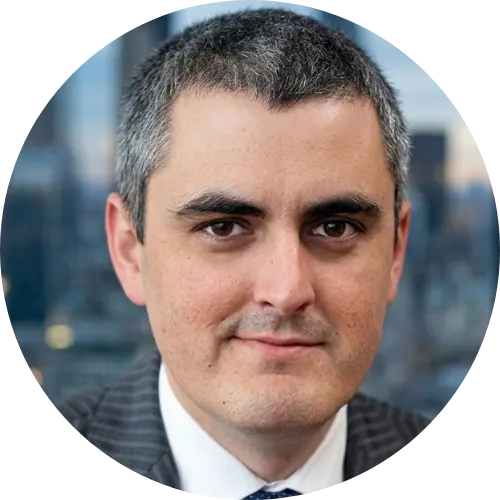
David Land is the head of analysis and publications at Think Caddie, with more than two decades of financial services experience spanning wealth management, strategic business operations and senior roles at Westpac Group, BT Financial Group and CMC Markets.