Friday 15th May 2026
Following the green lights, to the green fields
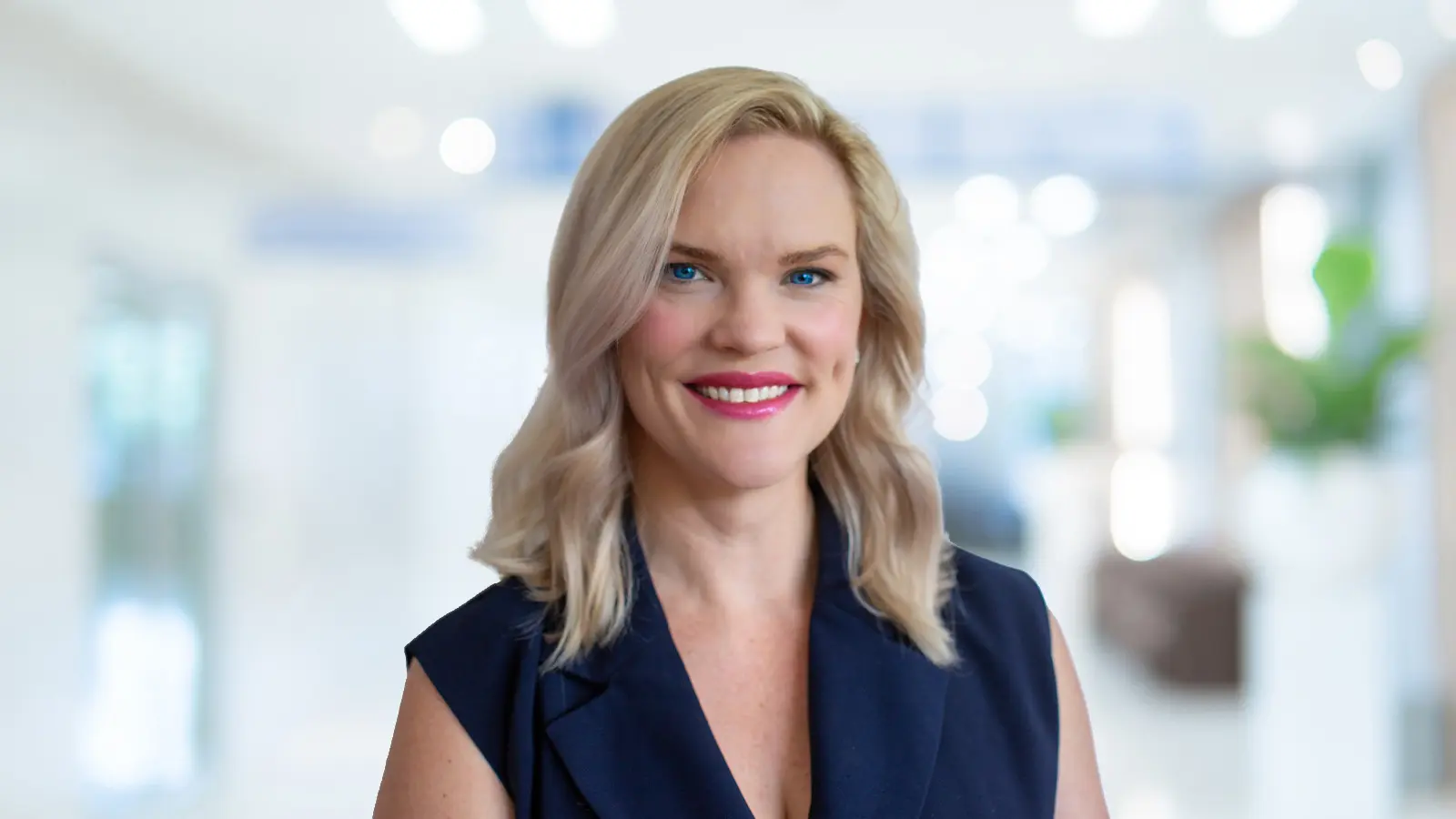
Emma McKenzie's path from city hospitality professional to a financial adviser and farmer in country New South Wales is a great example of the pathways by which motivated people find the profession.
Ten years ago, Emma McKenzie was working nights and weekends in hospitality management, building what looked like a promising career in Sydney. Today, she lives 254 kilometres west of Sydney, where she’s a financial adviser, and a farmer.
Oh, and she is also a mother of four, a netballer, secretary of the local netball Association and a board member of her local kindergarten.
Life in Canowindra
Her path from Sydney to Canowindra, 60 kilometres south of Orange in New South Wales’ Central West, wasn’t mapped out in advance. “I had resolved to pursue anything the universe put in my path,” she says. “Apparently, that was becoming an adviser in the country.”
McKenzie, 38, grew up in Sydney, the daughter of parents originally from Orange. Her early ambitions pointed in a very different direction: she studied languages and at one point considered becoming an Indonesian translator. But like many students, she fell into a part-time job, in her case, hospitality, and stayed.
“I fell in love with it,” she says. “I did my hospitality administration and management diploma and built a career there.”
The pivot to advice
At around 25, she started to rethink life. This was mainly because of the rising cost of living in Sydney and a desire for a different environment to raise the family she hoped she would one day have.
McKenzie relocated to Orange, seeking a different pace of life and a place where she might afford a home. Still working in hospitality, she met her now husband, and life shifted quickly.
“I was working late nights and weekends, and I was already jaded, because it just wasn’t as professional as in Sydney. It just started to feel misaligned with the life I wanted to build,” she says.
The pivot came from a simple question.
“His daughter asked me why I had to work nights and weekends, because she wanted to spend more time with me,” McKenzie says. “That was a no-brainer.”
She took a reception job at a local financial planning and accounting firm. It wasn’t a strategic career move, simply a practical one. But it proved decisive. McKenzie worked her way in to the advice profession, learning the mechanics from the ground up.
“I started on reception, then filing, then CRM, then processing transactions,” she says. “As soon as I got a handle on something, they gave me something else.”
That progression, from administration to client services manager, to implementation, and eventually to advice, gave her a broad, practical understanding of how advice businesses actually function. It also confirmed where her interests lay.
“I was much more drawn to the planning side, the people part, the problem-solving part. It’s an elective service. You really have to prove your value to your clients.”
Formal study and recognition
Formal study followed: a graduate certificate, then a graduate diploma through Deakin University, and then into a Masters in Financial Planning. “I withdrew from the Masters in 2025. The subjects changed and I didn’t see the value in it, and I switched into the SMSF Association Accreditation in 2025. I’m just about to start the Aged Care Steps Accreditation.”
Beginning this study program wasn’t without hesitation. McKenzie was raising young children at the time. But she committed fully once she decided to pursue it. “I did most of my study at night, from 2023 to 2025,” she says. “Kids in bed at 7:30, then straight into it.”
Along the way, McKenzie was “amazed and delighted” to be named the Financial Advice Association of Australia’s (FAAA’s) 2024 FAAA University Student of the Year, an award for which she self-nominated.
In 2025, she was named one of The Inside Network’s Insider’s 40 Under 40 Future Financial Leaders. She was also recently a finalist for Women in Wealth’s Rising Star of the Year 2026, an award she hadn’t even realised she’d been nominated for.
Earlier this year, she completed her Professional Year and is now building her client base as an adviser with Rise Financial, a Canberra‑based firm with a deliberately different model.
The RISE financial’s model
The firm’s acronym, RISE, standing for Returns, Insurances, Strategy and Estate planning, captures the technical components. But McKenzie is more interested in the outcome. “We aim to help clients get up every morning confident they’re in financial control,” she says.
“We want to help clients through each stage of life with a clear path, with a philosophy of patiently investing to capture the returns available from capital markets, reliably, over time,” McKenzie says.
The RISE model is designed to address one of the profession’s most persistent challenges: accessibility. “High fees are prohibitive for most families,” she says. “We think that an advice model with more accessible price points leads to better-informed communities.”
To that end, Rise operates largely remotely, without a traditional office footprint. McKenzie works from a purpose-built office at the front of her home, seeing clients both online and face-to-face in her local area. “Given modern technology, it allows us to meet people where they are,” she says.
In any given week, she might be speaking with a local farming family, a metropolitan client or a young family in another state. “This week, for example, through the Australian Defence Force (ADF) adviser referral program, I’ve been speaking to an ADF member posted in Egypt, who wants to buy a rural block as an investment.”
She says the remote model works because you are speaking to clients where they are, when it suits them. “It’s not only the best thing for clients, I think it’s the best thing for advisers, too, because it’s flexible. Flexibility is how we attract new advisers to the profession, and at the same time, we make advice viable for a broader population,” she says.
Flexibility and the profession’s future
McKenzie herself works a 22-hour week in advice, on paper, at least, alongside farming, family, and community commitments. It’s a model she believes the profession needs to embrace more fully.
“Everyone knows that adviser numbers have halved in the last ten years, but there are countless fantastic support staff who are not considered viable as advisers because they can’t do it full-time,” she says. “We think that the productivity you get from people in flexible roles is enormous, and the loyalty comes back in spades.”
That mindset underpins her approach to clients: open-ended, inquisitive, and grounded in education.
“The education piece is the most important part. Empowering clients to do their own thinking, to question the process, that’s how we make a difference.”
Living in a parallel world
Outside advice, McKenzie’s life is anchored in the family’s 450-acre farming operation, prime lambs and mixed cropping. It’s not a side hobby: it’s the primary business, complete with its own risks, rhythms, and rewards.
“I work a four-day week in advice, but as farmers, we are all involved. Not surprisingly, I do the book-keeping, but I also get right into the hard work when it’s time to mark the lambs, ‘rousing’ for the shearers or making hay while the sun shines. It’s a great family business to raise children with a sense of teamwork, work ethic and device down-time,” she says.
The dual roles, adviser and farmer, complement each other more than might be expected. “It’s a parallel world,” she says. A fencing decision becomes analogous to portfolio construction; livestock are the income-generating assets; cropping as more speculative exposure; baling hay for feeding stock in drought is the defensive exposure. That lived experience also builds credibility with rural clients.
“It does give you a bit of cred,” she says. “They know you understand their world. But I have to be careful not to make assumptions,” she adds. “Not every farmer thinks the same way.”
Away from work, McKenzie plays and umpires club and representative netball, as well as driving kids back and forth to games and training, and serves as secretary of the Cowra Netball Association, and also as a board member at the local pre-school. “It all sounds like hard work, but it fills my cup. I have to admit, quiet moments are rare,” she laughs.
Alignment and philosophy
If there’s a defining theme to McKenzie’s story, it’s alignment. Finding a business whose philosophy matches her own. Building a career that accommodates, rather than competes with, family and community life. Living in a place that reflects her values.
When asked what advice she would give her 18-year-old self, she pauses, then declines to offer any. “Nothing,” she says. “She’ll figure it out. Follow the green lights.”
It’s a deceptively simple philosophy. But in McKenzie’s case, it has led from a Sydney hospitality job to a career in financial advice, a life on the land and a growing role in shaping the future of the profession.
For an industry still grappling with how to attract and retain the next generation, that might be the most important signal of all.
James is an experienced senior journalist and editor of The Inside Network's publications.