Thursday 15th October 2026
What the trade data says about BRICS+ ambitions

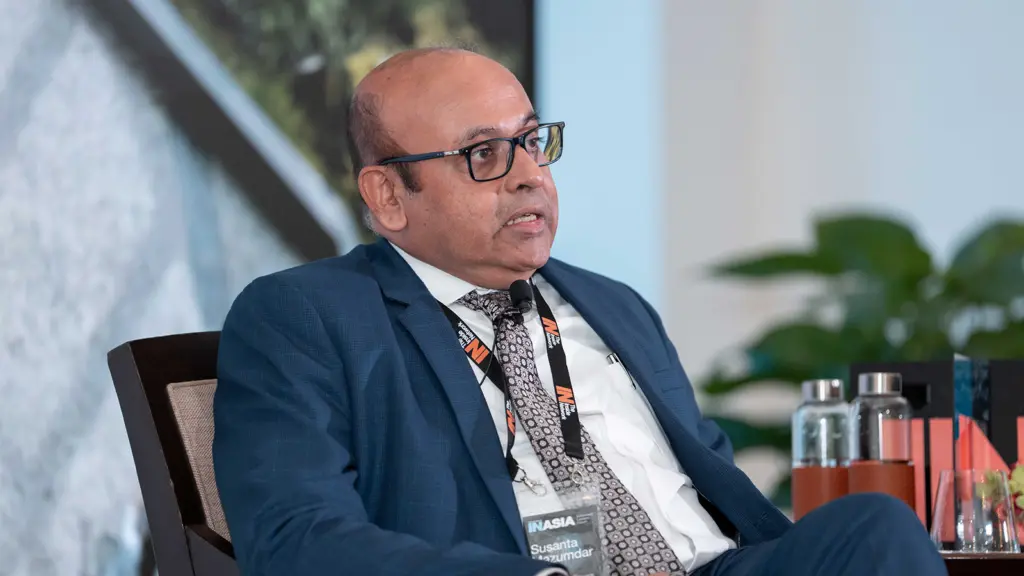
Kim Catechis, senior investment strategist at the Franklin Templeton Institute, argues that BRICS+ has become more representative and less able to act together with every round of enlargement. The trade and payments data behind this weekend's summit in India backs him up.
India’s year in the BRICS chair has brought fresh attention to a group that commands 27 per cent of global GDP and 24 per cent of world exports. Much of the commentary out of Washington reads its payments ambitions as a challenge to the US dollar.
Kim Catechis, senior investment strategist at the Franklin Templeton Institute, offers a more nuanced reading. Enlargement has lifted the group’s international standing, he argues, and its influence from here depends on how well a broader membership can work together.
India’s chairmanship follows Brazil’s 2025 Rio de Janeiro summit, and the priorities have shifted with the host. India retains Brazil’s emphasis on inclusion and people-to-people links while placing far greater weight on economic growth, energy security, innovation and artificial intelligence.
“The shift reflects different national circumstances,” Catechis says. “Brazil approached poverty primarily through welfare and sustainability, fast-growing India is more likely to emphasise growth and development as the route to poverty reduction. The US-Iran conflict has pushed energy security higher up the agenda, modifying the previous emphasis on clean energy transition.”
A broader membership
BRICS+ now includes Brazil, Russia, India, China, South Africa, Egypt, the UAE, Iran, Ethiopia and Indonesia, with 11 partner countries confirmed in 2025, among them Malaysia, Thailand, Vietnam and Kazakhstan.
The appeal for new members is easy to see. The group offers prestige, strategic flexibility and closer access to China, India and Russia. Unlike the International Monetary Fund or the World Bank, it attaches relatively few political or economic conditions to participation.
Saudi Arabia accepted its invitation and describes itself as considering membership rather than acceding to it. It works within the group on trade, payments and energy policy while keeping its options open with Washington.
Expansion prompted plenty of debate along the way. Brazil and India were initially cautious, wary that a larger group might dilute cohesion, while Moscow and Beijing supported it as a way to broaden participation and add geopolitical weight.
“The result is a grouping that is more representative but considerably less cohesive,” Catechis says. He notes the original five members continue to lead most of the group’s decision-making.
Trade flows
Trade inside the group has grown at a remarkable pace. UNCTAD tracked intra-BRICS merchandise exports climbing from US$84.2 billion in 2003 to US$1.17 trillion in 2024. That represents growth of 13.3 per cent a year, against 5.7 per cent for world trade. Internal commerce still amounts to roughly 5 per cent of world trade, which suggests considerable room to grow for a bloc holding a quarter of global exports.
The composition offers advisers more insight than the total. China has moved from labour-intensive manufacturing into high-technology exports, while most other members continue to ship primary products and import technology.
Chinese exports to India alone reached US$120 billion in 2024, and BRICS members now supply 42 per cent of India’s imports. Much of the trade inside the group flows through Beijing, and the members operate without a formal trade agreement binding it together.
Payments infrastructure
Payments are where shared interests run deepest. Many countries want to keep more transaction processing at home, lower fees, widen financial inclusion and reduce their dependence on foreign payment networks. BRICS gives members a forum to exchange knowledge and build that infrastructure together.
“For China and Russia, the US retreat from parts of the liberal international order has created strategic opportunity,” Catechis says. Those two, alongside Iran, have strong incentives to diversify away from reliance on the US dollar.
India and Brazil arrive at the same table by a different route, he observes, as recent shifts in US trade and diplomatic policy have tested relationships that were previously close.
Work on a shared system remains at an early stage. Reserve Bank of India governor Sanjay Malhotra has described cross-border payments as an area of common interest. The two proposals under discussion involve linking instant-payment networks such as UPI or connecting central bank digital currencies. India also pursues its own linkage work through Project Nexus with the Bank for International Settlements.
Recent tensions in the Middle East showed how national interests can diverge within the group, with members pursuing their own energy arrangements. Catechis sees that diversity shaping the kind of grouping BRICS+ becomes.
“An explicitly anti-Western BRICS+ remains unlikely.”
“India and Brazil retain extensive relationships with Western democracies, while several Gulf members are close US security partners,” he says. “The group is therefore more likely to remain a platform for selective Global South coordination than become an alternative military or political alliance.”
Quiet progress
Progress on the ground supports the view that the group’s influence builds through practical infrastructure. Russian officials now put the share of Russia-China trade settled in roubles and yuan above 90 per cent.
India has been building steadily too. It opened special rupee vostro accounts in 2022 and allowed those balances to flow into Indian corporate debt in October 2025. It has since amended its foreign trade policy so exporters paid in rupees keep their incentives. Currency infrastructure tends to develop at the pace of regulation, and it often arrives with little fanfare.
For advisers, the portfolio consequence is more specific than the headlines suggest. Client exposure to these economies typically comes through emerging market index funds. Their weightings follow market capitalisation rather than political alignment, and Taiwan and Korea rank among the largest holdings despite standing outside the bloc. Separating the political grouping from the asset class keeps client conversations grounded in what portfolios hold.
Two paths
Catechis sees two possible paths. In the stronger one, BRICS+ develops practical institutions that deliver infrastructure, financing and international coordination. It would eventually resemble a modern Non-Aligned Movement, diverse but influential in shaping global governance. In the weaker one, it enlarges without greater cohesion.
“Its future depends less on membership growth than on whether it can turn a handful of shared interests into concrete institutions and collective outcomes,” he says.
Settlement volumes and development finance commitments offer the clearest guide to that progress, and they are the numbers worth watching in the year ahead.

Cristina is a contributor and content manager at The Inside Network.