Thursday 16th July 2026
Ziller spent 20 years finding the one thing the world's best companies have in common
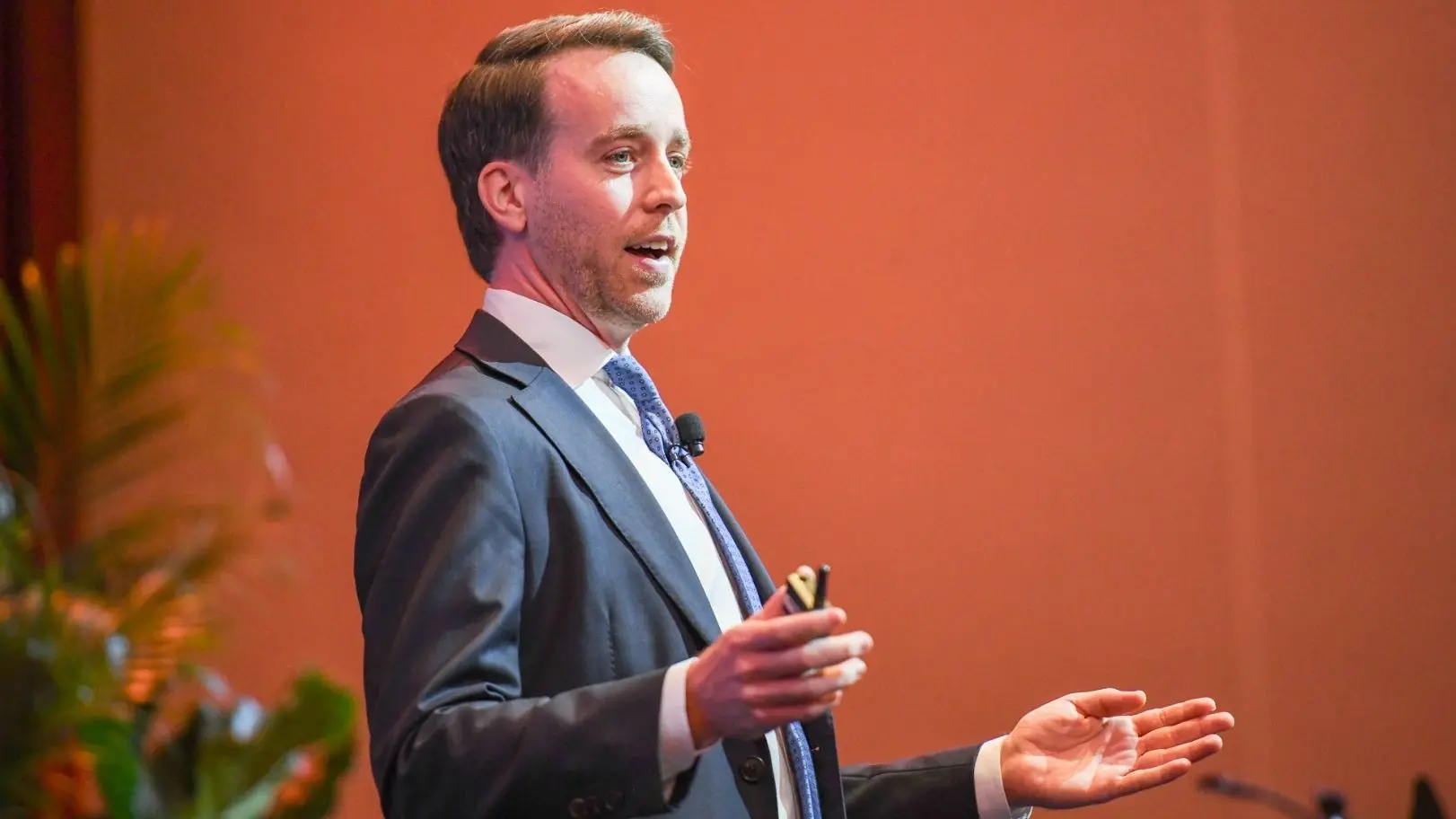
Ziller Funds Management's Joseph Ziller argues that founder-led investing is not a theme or a style tilt, but a durable, evidence-backed factor that has generated consistent alpha across market cycles.
Most investment factors are well known, widely used and increasingly arbitraged away. Joseph Ziller, chief investment officer of Ziller Funds Management, believes founder-led investing is different.
It has persisted because it is genuinely difficult to replicate, and because what drives it goes deeper than any quantitative screen can easily capture.
The numbers make a compelling starting point. Ziller’s proprietary study, covering 20 years of global returns, finds that founder-led stocks outperform all stocks by 3.3 per cent per annum.
That figure aligns closely with the broader corporate and academic research, which points to approximately 4 per cent alpha per annum from founder-led companies over the long term. Around 800 of roughly 7,000 global stocks with a market capitalisation of $500 million and above, or 11 to 12 per cent, are founder-led.
“This pool of 800 founder-led stocks has historically been a really interesting pool to fish in,” Ziller says. “Almost a little bit of an unfair advantage before you even get started.”
What makes founder-led investing structurally different
Ziller draws on research by Chris Zook from Bain to explain why the outperformance persists. Three qualities tend to define the best founder-led businesses:
The first is frontline obsession, a genuine and active connection to the customer experience that most professional managers lose over time.
The second is an owner’s mindset, which manifests as a distaste for bureaucracy, a bias towards speed and a tendency to allocate capital as though it were their own.
The third is business insurgency, the drive to positively disrupt, to remake industries rather than simply compete within them.
These qualities flow from the founder, energise the culture and workforce, shape the product and value proposition, and ultimately drive the financial results that produce long-term stock performance. This chain of causality is what makes the factor both powerful and durable.
Not all founders are equal
Ziller’s process does not stop at identifying founder-led businesses. It goes further, and the gap between where it stops and where most investors stop is where the real alpha lives. Of the 800 founder-led stocks globally, only 80, or the top 10 per cent, qualify for his fund’s Q1 category. That selectivity is deliberate and critical.
“Not only do you want to discard the weakest founders of this type, you want to align with the top 10 per cent because that’s where the asymmetric upside is.”
The assessment uses two axes. Output rank measures what the founder has accomplished, almost like an Olympic dive rating that scores both difficulty and execution. Quality rank assesses something more subtle: the character and operating mode of the founder.
Ziller describes this as the difference between above-the-line and below-the-line behaviour. Above the line sits reason, logic and what he calls love of company and customer. Below the line sits behaviours that tend to destroy value, extracting it from stakeholders rather than creating it.
He uses WeWork’s Adam Neumann as an instructive example. High on output, visibly impressive, but borderline on quality. “A little too chaotic,” Ziller says.
Done correctly, the quartile analysis gets to the core of who a person is, and that tends not to change quickly.
Why tenure is a safety feature to value
The median tenure of a corporate CEO is 4.8 years. The median tenure of a founder in Ziller’s portfolio is 23 years. Eighteen years of additional time in the same seat, through the same crises and transitions, produces a quality of judgement and institutional knowledge that no hiring process can replicate.
There is a related point for advisers thinking about portfolio resilience. Founders with long track records have proven their ability to protect and rebuild value under pressure.
As Ziller notes, Brian Armstrong of Coinbase, when asked what he would do if part of the business failed, answered simply: “I’m going to build it again. I built it once. I’ll build it again.”
The structural growth dimension
Beyond the alpha case, Ziller makes a second argument that speaks directly to advisers trying to position client portfolios for the themes shaping the next decade.
His analysis of global GDP growth over the coming ten years identifies ten key structural themes that account for over 55 per cent of projected growth. In almost every case, founders are at the centre of those themes.
The best founders have always gravitated toward where structural demand is building, and the current opportunity set is no different. Founder-led businesses dominate the key areas: AI, e-commerce in emerging markets, digital media, cybersecurity and energy infrastructure.
For advisers building global equity allocations with a long-term lens, anchoring around founder-led investing in structural growth themes offers something genuinely rare: durable alpha potential alongside exposure to the parts of the global economy most likely to matter over the next decade, without the concentration risk that a narrow thematic bet would imply.

Laurence Parker-Brown is head of content at The Inside Network and managing editor of The Inside Adviser and Investor Strategy News.