Friday 26th June 2026
Knowing the full private markets spectrum is now table stakes
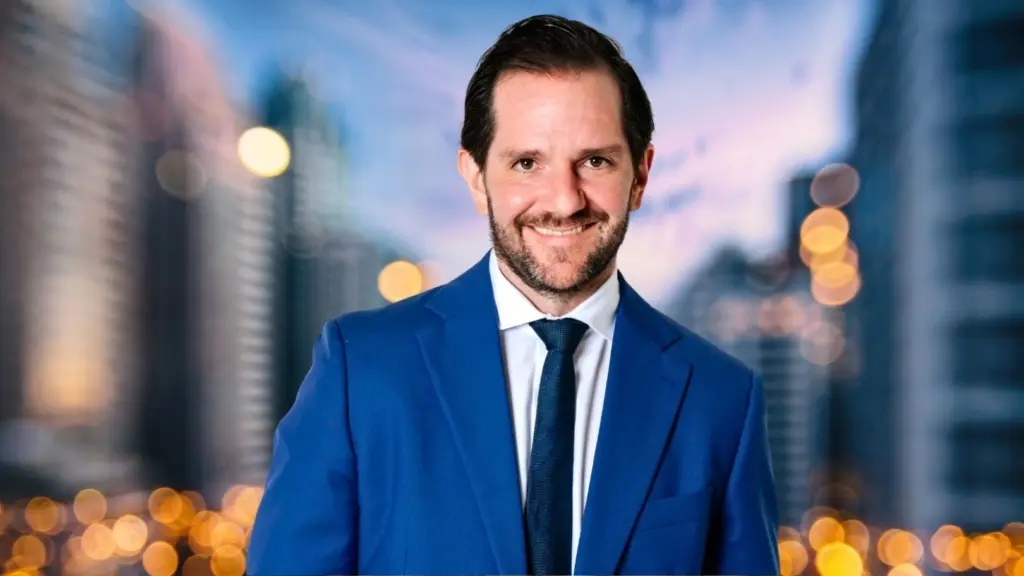
Escala Partners' Will Hauser says public markets are becoming increasingly commoditised, the adviser edge is narrowing and the practices that do not understand the full spectrum of private markets will struggle to justify their value proposition in the years ahead.
There is a version of financial advice that benchmarks client portfolios against the ASX 200 or the S&P 500 and calls that good governance. Having worked at some of the larger and more complex private wealth mandates in the market, Will Hauser has a different view.
Hauser is a partner at Escala Partners, a non-aligned wealth manager where the desk client book spans $5 million to $100 million in assets under management. His conviction on this is settled: the edge in advice is migrating away from public markets. For advisers who have not yet grasped the full spectrum of private markets, they are already behind.
Hauser brings a unique vantage point on what portfolio construction looks like when there are no constraints on the opportunity set. The democratisation of those structures has opened the conversation well beyond clients at the top end of town.
The benchmark conversation
Before getting to where the edge lies, Hauser addresses a problem that sits upstream of every portfolio construction decision. It is the benchmark clients use to evaluate their own performance.
Financial news surrounds clients. The ASX 200 gets quoted constantly. The S&P 500 pushes through all-time highs. It is entirely natural for a client to look at those numbers and expect their portfolio to respond in kind.
For Hauser, it is the adviser’s job to redirect that instinct before it creates misaligned expectations.
“It’s quite natural for them to want to benchmark their portfolio against the ASX 200 or the S&P 500,” he says, “but that is an unrealistic benchmark to set for your portfolio, because you’re running a multi-asset class portfolio that is not going to behave that way.”
The currency dimension compounds the problem for clients with significant international exposure.
When the Australian dollar moves from 65 to 70 cents against the US dollar in a matter of weeks, unhedged international equity returns take a visible hit. That can happen even when the underlying holdings are performing well.
Hauser’s approach is to bring client attention back to the fundamentals of what they own rather than the short-term noise of currency moves.
“If the underlying fundamentals of the companies and strategies they’re invested in remain sound, then ride through this shorter-term headwind,” he says. “Currency tends to be a shorter-term thing.”
The hedging conversation has changed
On hedging, the prevailing approach for the past five to ten years was to run international equity exposure largely unhedged. The reasoning was straightforward: the Australian dollar had been on a broadly downward trajectory and the currency cushion provided natural protection during equity market stress.
But the sharp move in the Australian dollar from 65 to 70 cents in early 2025 forced a reconsideration.
Hauser is candid about how the house view at Escala has had to evolve. The firm now targets at least 20 to 30 per cent hedged across client portfolios. It is also increasingly selecting fund managers who incorporate active or dynamic hedging policies as part of their strategy.
“We generally had a rule of below 65 cents we’d hedge, but we’ve had to evolve the thinking of that,” Hauser says.
For advisers managing significant international equity exposure, the hedging decision is no longer a set-and-forget policy. It requires active review as the currency outlook shifts.
Not every practice can dedicate the internal resource to monitor currency continuously. For those that cannot, delegating that responsibility to managers with dynamic hedging mandates solves the problem without adding operational complexity.
Where the adviser edge is actually moving
Public markets, in his view, are becoming increasingly commoditised. Equities, fixed income, ETFs, model portfolios: competitors are driving down costs and replicating them at scale.
For advisers, that makes portfolio construction in the traditional sense a diminishing source of edge. The question for every advice practice is where the genuine differentiation sits.
His answer is private markets, but not in the vague sense the phrase is often used.
“You need to embrace private markets much more, and advisers need to understand the full spectrum of what’s available. Understand from large cap buyout down to growth managers, down to venture capital, down to secondary venture capital. Understand the full spectrum.”
The reason runs deeper than a preference for illiquidity. The most exciting companies of the next decade are not going to list early. Private markets will find and scale them, keeping them private longer and allowing them to capture a greater share of their growth before public market investors can access them.
An adviser whose toolkit stops at listed equities is, in Hauser’s view, systematically excluding clients from the part of the market where the next generation of value creation is happening.
“The next generation of what’s exciting is going to be founded and scaled in private markets,” he says. “More and more, public markets, be it equities, be it fixed income, that’s all getting commoditised. How do we advisers still maintain an edge? I think there still is a slight edge advantage in alternatives, and within alternatives, really understanding the key managers and being targeted across that private growth spectrum.”
The adviser edge is not disappearing. It is concentrating in the places that are hardest to commoditise. Hauser’s message is that getting there requires both the right portfolio construction thinking and the operational discipline to deliver it consistently.

Laurence Parker-Brown is head of content at The Inside Network and managing editor of The Inside Adviser and Investor Strategy News.