Monday 15th June 2026
Concentration risk is hiding in plain sight
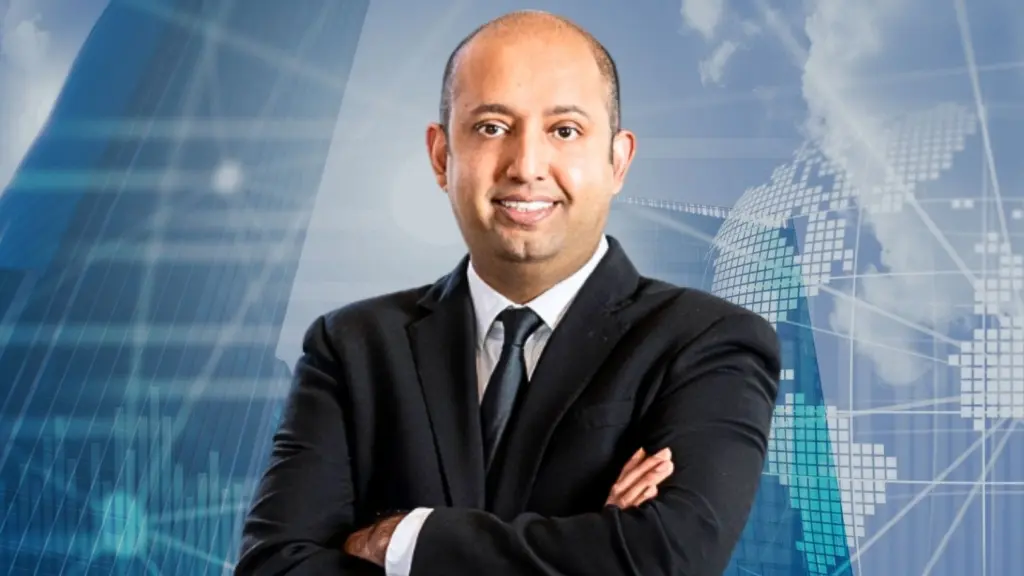
With market concentration reaching historically elevated levels across the US, the advisers best positioned to navigate it are the ones who understand exactly what role each manager in their portfolio is actually playing.
The top ten stocks in the S&P 500 now represent 35 to 36 per cent of the index. The 20-year average is 21 to 22 per cent. That gap is not noise. It is a structural shift, and according to Mercer’s Hewad Safi, it is changing how equity allocations need to be built right now.
Safi observes that the concentration risk across global equity markets is one that should sit uncomfortably with any adviser who has not yet examined what it means for the portfolios they are running.
“It’s a massive difference from the average,” he says.
Concentration is not just an American problem
The US large cap story gets most of the attention. Safi pushes the concentration conversation beyond where most people leave it.
Australia has had a concentrated market for years. It is not a new problem domestically, but it is one that fund managers have been dealing with quietly and that advisers need to factor into how they blend managers across their equity allocations. Emerging markets tell a different and arguably more instructive story.
The top ten stocks in the Emerging Market (EM) index now also represent around 35 to 36 per cent of the index, comparable to the US. But the composition of that concentration is striking. Roughly two thirds of the top ten’s weight in the EM index is chipmakers, dominated by TSMC, Samsung and SK Hynix.
“The concentration within the top ten, so 20 out of that 35 per cent, is just chipmakers,” Safi continues.
For advisers with EM exposure in client portfolios, that creates a specific challenge. A manager who is underweight AI-exposed semiconductors on valuation grounds is not making a small active bet. They are making a significant structural call relative to the benchmark, one that will drive performance outcomes in a way that may be difficult to explain to clients if the sector continues to run.
The role of each manager needs to be explicit
Benchmark-relative positioning has become more consequential as concentration has risen, and Safi has a clear view on what that means for how adviser portfolios are actually structured.
His approach starts with the structure of the asset class allocation itself. How many managers? What styles? What is the role of each?
For developed markets, having one or two benchmark-unaware managers taking large sector and regional bets can make sense if there is sufficient diversification around it. But for a single-line exposure, which you may have in EM, the calculus changes.
Safi’s point is that a single-line EM manager taking massive sector and regional bets away from the benchmark is not playing the role the portfolio needs them to play. “You’re not sufficiently capturing that EM beta, which is the role the EM manager is playing.”
Before evaluating whether a manager is performing well or poorly, advisers need to answer a more fundamental question first. Is the role that manager has been given in the portfolio clearly defined? Are they being measured against a benchmark that fairly reflects what they are supposed to be doing?
A manager who is structurally underweight a concentrated sector is not necessarily failing. They may simply be doing exactly what their process demands, and the portfolio construction question is whether that is the right role to be filling at this point in the cycle.
Thematic investing requires correlation analysis before conviction
On thematic investing, a topic that generates consistent client interest and consistent implementation challenges, Safi offers a filter worth building into any due diligence process.
Before assessing whether a thematic fund has a compelling story, check its correlation to the broad benchmark. If a technology-focused thematic fund has a 0.95 correlation to the Nasdaq, the smart beta or active management fee is very difficult to justify. The story may be compelling. The differentiation may not exist.
“If that strategy just looks like a reassembled Nasdaq top ten, then that is probably the first clue to maybe look a little bit deeper.”
Where a thematic fund closely replicates a broad-based benchmark, a cheaper passive exposure will deliver a similar result with less drag. The burden of proof for active thematic management is high. Correlation analysis is the quickest way to establish whether a fund clears it.
Building portfolios that can withstand what has not happened yet
Safi’s closing view on portfolio construction is measured but clear. The past 18 months have seen markets absorb multiple simultaneous shocks without a major drawdown. That resilience is real, but it should not be mistaken for permanence.
His approach at Mercer is to stress-test portfolios against scenarios that have not yet materialised, asking which managers, asset classes and structures are genuinely likely to provide downside protection if conditions deteriorate, rather than assuming the patterns of the recent past will hold.
If three of the risks currently in the market crystallised at the same time, which parts of your portfolio would you be comfortable with, and which would you be explaining to clients under pressure?
Knowing the answer before it matters is the whole point.

Laurence Parker-Brown is head of content at The Inside Network and managing editor of The Inside Adviser and Investor Strategy News.